
History of Activated Charcoal in Pharmaceuticals
A concise history of activated charcoal’s medical use, from ancient wound care to modern poison treatment, drug purification, and activation methods.

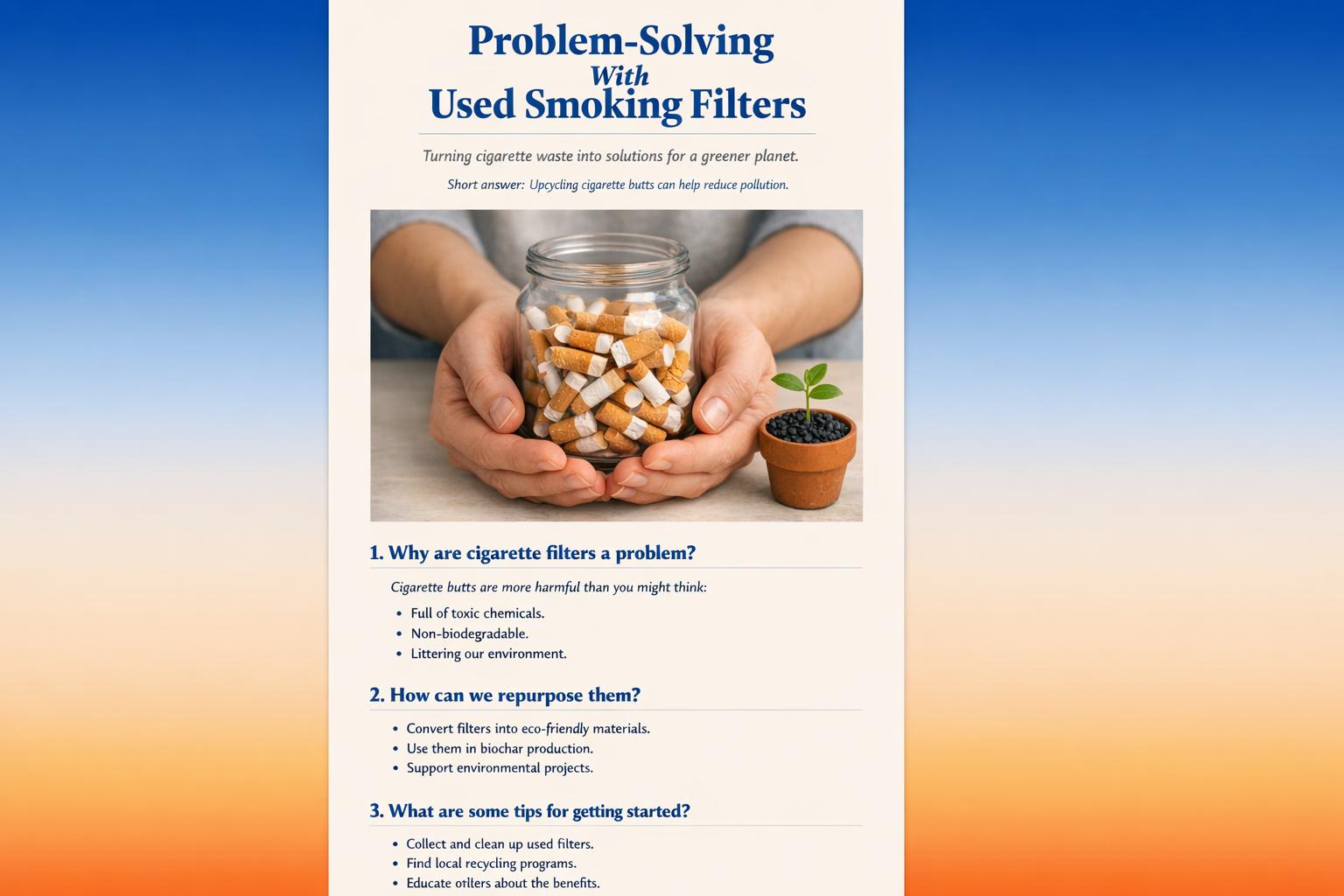
Every year, 4.5 trillion cigarette filters are discarded worldwide, making them the most littered item on Earth. These filters, made of non-biodegradable cellulose acetate, pollute ecosystems with toxins like nicotine, arsenic, and lead. They also release up to 51 trillion microfibers annually, contributing to plastic pollution and harming wildlife.
Solutions include recycling programs like TerraCycle, which converts filters into industrial plastics, and pyrolysis, which transforms them into activated carbon for air and water purification. Eco-friendly alternatives, such as Charco Filters, reduce waste by using biodegradable materials like coconut-shell charcoal and ceramic tips.
Key takeaways:
These approaches aim to reduce waste, protect ecosystems, and repurpose harmful materials into valuable resources.
Smoking filters are primarily made from cellulose acetate, a type of semi-synthetic plastic that doesn’t naturally decompose. Each filter contains over 15,000 tiny cellulose acetate strands. Shockingly, when these filters hit water, they start releasing 24 microfibers within just 20 seconds.
But the problem doesn’t stop there. These filters leach harmful chemicals like nicotine, heavy metals, carcinogens, and plasticizers into the environment. Nicotine acts as a pesticide, while heavy metals such as arsenic, lead, and cadmium poison soil and water. Adding to the issue, filters can absorb external toxins like PFAS – often called "forever chemicals" – and carry them deeper into ecosystems.
"You get both physical pollution of the fibers and chemical pollution of everything that’s stuck to them. In a way, this is a new ‘bad thing’ associated with cigarettes." – John D. Atkinson, Associate Professor, University at Buffalo
The effects on wildlife are devastating. A 2015 study by Plymouth University and the Marine Institute found that ragworms exposed to filter toxins at levels 60 times lower than typical urban runoff lost over 30% of their body weight and suffered double the DNA damage, which disrupted their burrowing behavior. Freshwater larvae exposed to just two smoked filters per liter of water became completely immobile.
The environmental impact of smoking filters isn’t just immediate – it lingers for years. While filters degrade in about 1.8 years in coastal waters, they can persist for up to 14 years on land. The high concentration of acetate in cellulose acetate makes it difficult for microorganisms to break down the material.
As filters slowly disintegrate, they release between 14 trillion and 51 trillion microfibers into aquatic systems annually. Many of these microfibers are smaller than 0.2 mm, making them nearly impossible to remove. Wildlife often mistakes them for food, leading to the transfer of concentrated toxins up the food chain.
Studies using the Pollution Load Index (PLI) have shown that discarded filters typically score above 30, a level indicating severe contamination. With such a prolonged presence, every discarded filter continues to harm ecosystems long after it’s tossed away.
TerraCycle’s Cigarette Waste Free Recycling Program provides a simple way to prevent cigarette filters from ending up in landfills. This program accepts a range of waste, including extinguished cigarettes, filters, loose tobacco pouches, rolling papers, and even plastic or foil inner packaging. The best part? It’s entirely free, thanks to sponsorship by the Santa Fe Natural Tobacco Company. Plus, for every pound of waste collected, $1.00 is donated to the Keep America Beautiful Cigarette Litter Prevention Program.
To participate, collect waste in airtight containers that include odor control additives. Once your container is full, you can download a free shipping label from your TerraCycle account and drop it off at any UPS location. TerraCycle handles the rest: they shred and sanitize the waste, compost the tobacco and paper, and convert the filters into plastic powder. This powder is then used to make products like pellets and pallets. Additionally, advanced techniques like pyrolysis showcase other ways filters can be repurposed into industrial materials.
Another innovative way to upcycle cigarette filters is through pyrolysis, a thermal process that breaks down cellulose acetate (a key component of filters) without oxygen. This method transforms used filters into activated carbon, which has a variety of practical uses. Studies have shown that heating filters to temperatures between 500°C and 850°C (932°F to 1,562°F) produces activated carbon with impressive properties. For instance, it can achieve surface areas up to 2,867 m²/g and adsorb acetaldehyde at 17.54 mg/g. Additionally, it can be used to create supercapacitor electrodes with 52 F/g capacitance and 97.2% stability after 5,000 charge-discharge cycles.
These materials are incredibly useful in applications like air purification, water treatment, and energy storage, proving that even something as seemingly disposable as a cigarette filter has potential beyond the trash bin.
Used cigarette filters can also find new life in creative projects, such as acoustic insulation panels – provided they’re properly decontaminated. Researchers at the University of Extremadura have developed a method to transform these filters into sound-absorbing materials. They collected discarded filters from campus grounds and cleaned them using a step-by-step process involving diluted sulfuric acid (0.02%), sodium chloride (5%), and absolute ethanol.
This cleaning process reduced the weight of the filters by 15% ± 3% and improved their sound absorption capabilities by softening the fibers. After drying the filters for three hours at 80–105°C, the researchers found that the resulting material had sound absorption coefficients between 0.46 and 0.50 in the 500–6,400 Hz frequency range. These results are on par with commercial acoustic products like mineral wool.
As the researchers emphasized:
"a second use of this waste must be associated with previous cleaning and even an improvement to its image"
Charco Filters offer a smart, eco-conscious alternative to traditional cigarette filters, helping to reduce waste and environmental damage. Unlike conventional filters, which are made from non-biodegradable cellulose acetate and contribute to microplastic pollution while leaching harmful metals like cadmium, lead, and arsenic into the environment, Charco Filters are crafted with sustainability in mind. They feature coconut-shell activated charcoal, unbleached paper, and dual ceramic tips – materials that are biodegradable and gentle on the planet.
But these filters don’t just reduce waste – they actively improve the smoking experience. The activated charcoal inside them is designed to trap toxins and impurities effectively. Studies highlight that activated carbon filters can cut gas-phase radicals by up to 47% and particulate-phase radicals by around 27% compared to standard filters. Filters with higher charcoal content (300 mg or more) can capture 90% of certain toxins, while formaldehyde exposure can be reduced by a median of 32%.
As Charco explains:
"Packed with activated Charcoal and capped with ceramic tips, it cools, refines, purifies, and reduces toxins without killing the flavor"
The ceramic tips further enhance the experience by cooling the smoke and ensuring consistent airflow. This design eliminates the harshness often associated with cardboard or plastic-based filters, delivering a smoother, more enjoyable experience.
Charco Filters combine eco-friendly innovation with practical benefits, offering smokers a cleaner, less toxic option while cutting down on waste. Even better, they’re affordable and easy to integrate into your routine.
Charco Filters are available in two sizes:
Both options feature a slim 6mm design, making them compatible with standard rolling papers and pre-rolled cones. Each filter is designed for single use, ensuring maximum filtration efficiency before disposal.
To maintain their effectiveness, it’s important to store filters in a dry, sealed container. Activated carbon can absorb moisture and odors from the environment, which diminishes its filtration power. Once used, the carbon’s pores become saturated, so replacing filters regularly is key to maintaining optimal toxin removal. By choosing Charco Filters, you’re not just reducing your exposure to harmful substances – you’re also helping to tackle the massive problem of non-biodegradable filter waste that pollutes our planet.

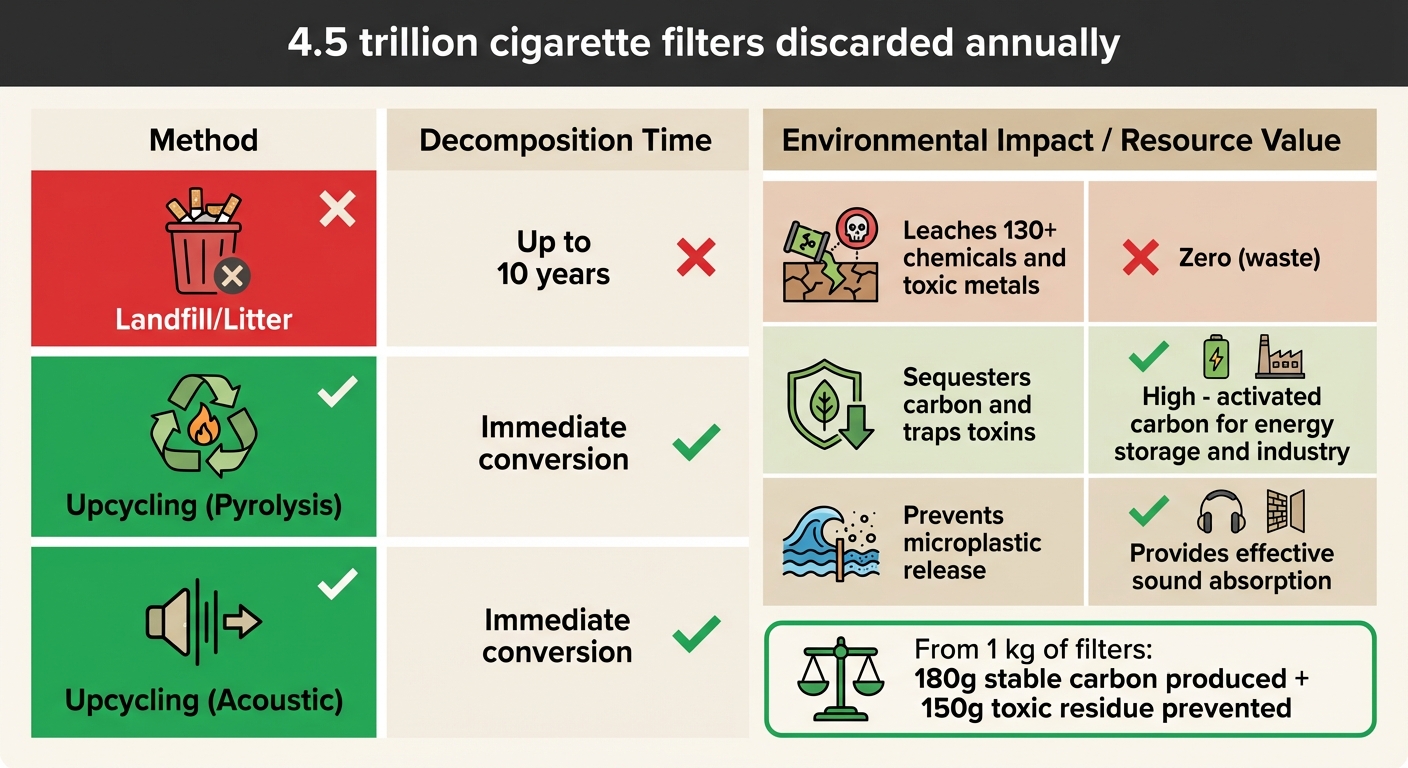
Environmental Impact: Cigarette Filter Disposal vs Upcycling Methods
Understanding your waste reduction efforts starts with estimating the volume of cigarette filters you’ve collected. For example, a 16 oz jar can hold between 200-400 filters, while a 1-gallon container fits 800-1,200 filters loosely or 1,500-2,000 filters densely packed. If you’re using a 1-liter container, expect it to hold around 170 filters. Once your collection reaches 3 lbs (about 1.4 kg) – equivalent to roughly 1,000 filters – you might be eligible for recycling programs like TerraCycle, which typically offers $1.00 per pound.
Each filter you divert from landfills has a direct environmental benefit. For instance, a single cigarette butt soaked for 24 hours releases enough toxins to contaminate 1 liter of water, making it lethal to aquatic life. By keeping filters out of landfills and waterways, you’re not just reducing waste – you’re actively protecting ecosystems.
When cigarette filters end up in landfills, they release over 130 harmful chemicals and eventually degrade into microplastics. This ongoing environmental harm makes disposal an unsustainable option. On the other hand, upcycling offers a way to transform waste into something useful while minimizing its ecological footprint.
Take pyrolysis, for example – a process where filters are thermally converted at around 550°C. From just 1 kg of filters, this method produces approximately 180 g of stable carbon while preventing the release of 150 g of toxic residue. The resulting carbon can be used for industrial filtration, energy storage, or acoustic insulation, proving that waste can indeed become a resource.
Here’s a quick comparison of the environmental and resource outcomes for different methods:
| Method | Decomposition Time | Environmental Impact | Resource Value |
|---|---|---|---|
| Landfill/Litter | Up to 10 years | Leaches 130+ chemicals and toxic metals | Zero (waste) |
| Upcycling (Pyrolysis) | Immediate conversion | Sequesters carbon and traps toxins | High (activated carbon for energy storage and industry) |
| Upcycling (Acoustic) | Immediate conversion | Prevents microplastic release | Provides effective sound absorption |
Each year, over 4.5 trillion cigarette butts are discarded worldwide, introducing 130+ harmful chemicals into our soil and waterways. This toxic waste stream is a pressing problem, but it doesn’t have to stay that way. Through innovative upcycling techniques like pyrolysis or repurposing cigarette filters into sound-absorbing materials, these pollutants can be turned into practical resources. Think activated carbon for water treatment, building materials, or even substrates for plant growth. Experts emphasize the importance of this shift:
"But if we can create this circular economy where we can collect these cigarette butts, transform them into char and then use that to mitigate pollution, then that is much more sustainable."
– Dr. Elsa Antunes, Lecturer in Mechanical Engineering, James Cook University
Prevention also plays a crucial role. Opting for eco-friendly filters made from sustainable materials can significantly cut down on plastic waste. For example, Charco Filters – crafted from coconut-shell activated charcoal, unbleached paper, and ceramic tips – offer a biodegradable alternative. At $12 for a pack of 30 or $7 for 10, these filters not only help trap toxins but also align with zero-waste principles. Pairing such sustainable choices with upcycling innovations like pyrolysis creates a comprehensive approach to waste management.
Consider this: a single cigarette filter can contaminate up to 1,000 liters of water. Diverting these filters from landfills isn’t just about reducing waste – it’s about protecting water sources and minimizing the release of toxic metals into marine ecosystems. Every small action, from joining TerraCycle programs to using eco-friendly filters, contributes to a larger positive impact.
To store used filters safely for recycling, place them in a clean, dry, and secure container to avoid spills or contamination. Opt for a sturdy, sealable bag or container to collect the filters until you’re ready to send them to a recycling service that handles tobacco waste. This simple step ensures proper disposal, minimizes pollution, and contributes to efforts to repurpose materials effectively.
No, cleaning used filters at home is not safe. Methods like washing or leaving them in sunlight can damage the filter, reduce its ability to function properly, and even lead to mold growth. Because of this, reusing filters for crafts or other purposes could pose risks.
Biodegradable cigarette filters are often promoted as a more environmentally friendly option, but their actual impact is questionable. While they do break down more quickly than traditional plastic filters, they can still release harmful chemicals and degrade into microplastics. Studies indicate that these filters, despite their "biodegradable" label, still contribute to pollution and may harm ecosystems. Some experts even warn that this could be a case of greenwashing, emphasizing that cigarette butts – no matter the material – are inherently toxic and damaging to the environment.
A concise history of activated charcoal’s medical use, from ancient wound care to modern poison treatment, drug purification, and activation methods.

Biodegradable smoking filters use coconut-shell charcoal, unbleached paper and ceramic tips to reduce toxins and decompose in 1–3 years.
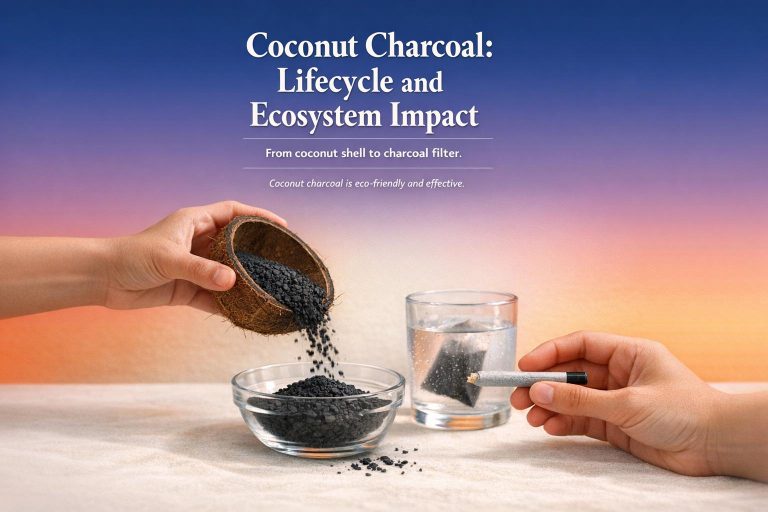
From discarded shells to activated carbon: lower-emission production, waste-to-resource benefits, and uses in water and smoking filtration.
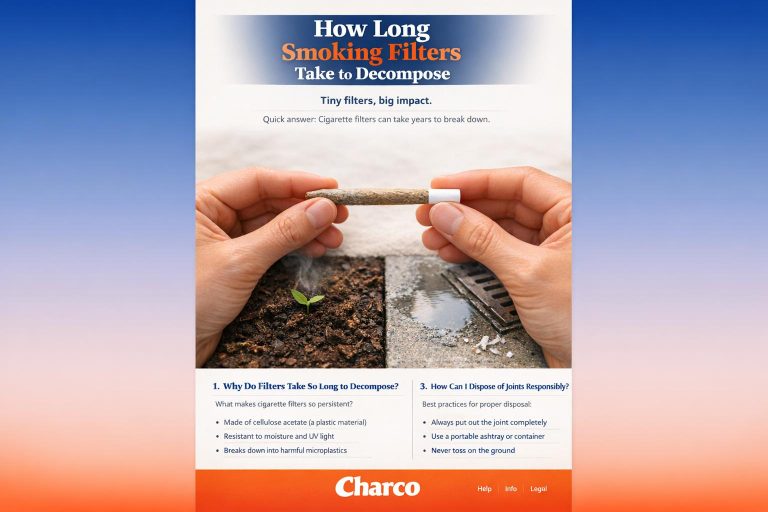
Cigarette filters can persist for years, fragment into microplastics, and only decompose fast in managed compost—material and disposal shape their harm.
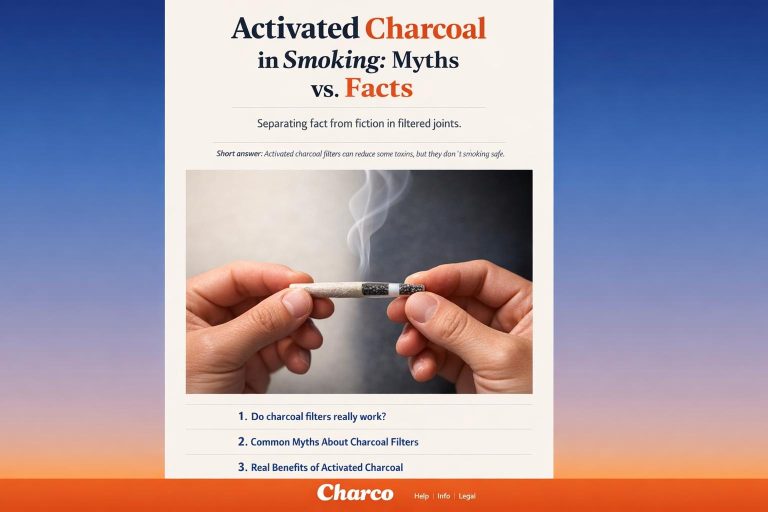
Activated charcoal filters trap many gas-phase toxins, reduce throat irritation and preserve THC/CBD, but they don’t remove gases like CO or eliminate smoking risks.

Charcoal-driven smoke rituals blend spiritual meaning with practical purification—from Indigenous ceremonies to modern activated charcoal filters.