
History of Activated Charcoal in Pharmaceuticals
A concise history of activated charcoal’s medical use, from ancient wound care to modern poison treatment, drug purification, and activation methods.

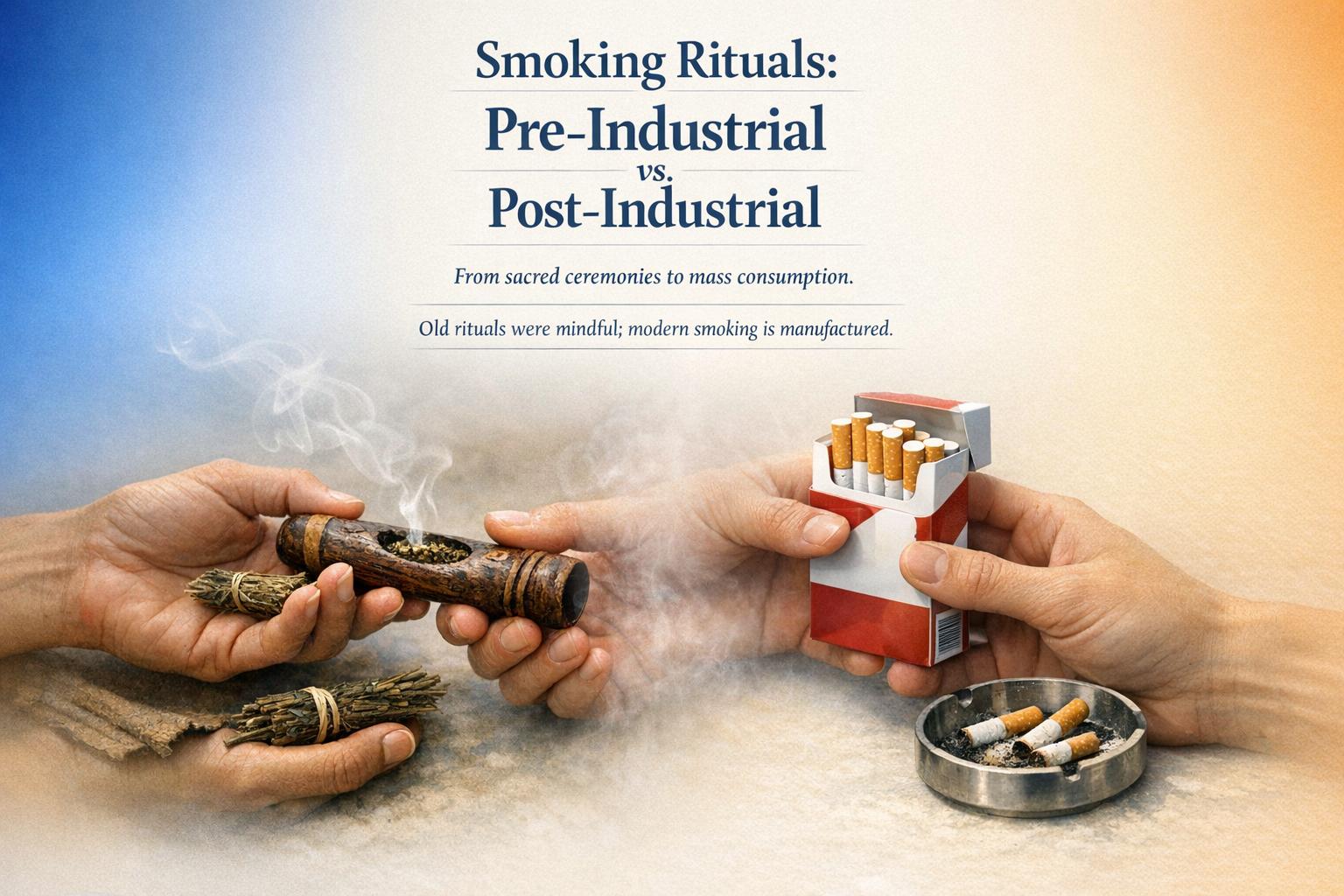
Smoking has changed drastically over the centuries. In pre-industrial times, it was deeply tied to social and spiritual practices, often involving shared rituals and natural materials like clay and wood. Tobacco was seen as sacred and medicinal. With industrialization, mass production made smoking widely accessible, but it lost its communal essence and became more individual-focused. Cigarettes became everyday items, contributing to health risks and waste. Today, smoking is a global health concern, with 4.5 trillion cigarette butts discarded annually, polluting the environment. The shift reflects broader societal and ecological challenges, from sacred rituals to mass consumption.
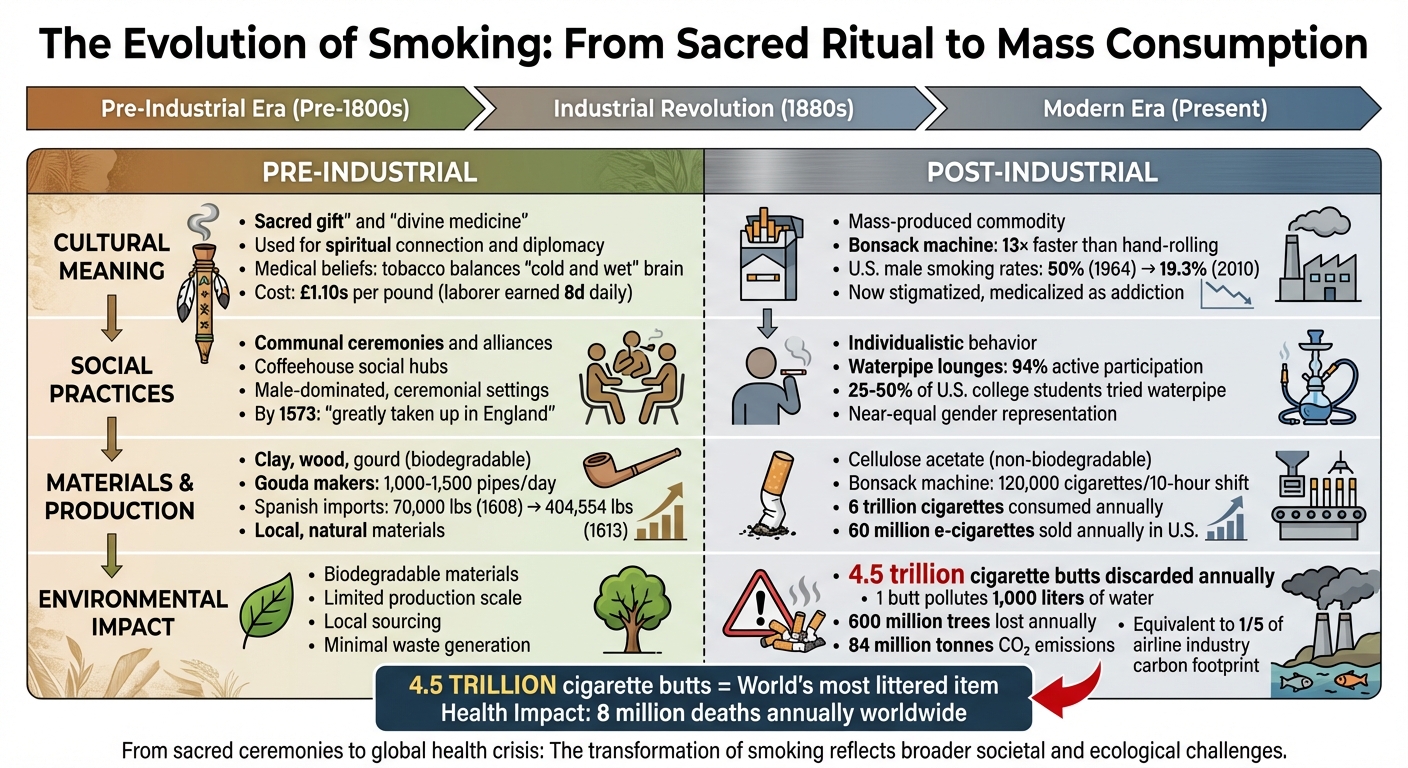
Pre-Industrial vs Post-Industrial Smoking: Cultural, Social and Environmental Comparison
Before industrialization, smoking held deep spiritual and medicinal importance across various societies. For Indigenous Americans, tobacco was considered a "sacred gift" and "divine medicine", used to connect with spirits, strengthen diplomacy, and stave off hunger during long journeys. In Mississippian societies (AD 1000–1600), pipes symbolized myth and ritual within the Southeastern Ceremonial Complex. Over time, these practices transitioned from being elite-controlled to more inclusive communal ceremonies.
In the Ottoman Middle East, tobacco initially served as a remedy for burns and poisons before becoming a central part of social life in coffeehouses. Early Modern Europeans, influenced by ancient medical theories, believed tobacco’s "dry and hot" smoke could balance the brain’s "cold and wet" nature. This belief sometimes led to unusual medical interventions – such as the Royal Humane Society’s 1780s installation of tobacco-enema kits along the River Thames, intended to revive drowning victims by introducing smoke into their intestines.
Beyond its spiritual and medicinal uses, tobacco was a powerful tool for building social connections.
Smoking rituals often revolved around communal sharing, strengthening social ties. Indigenous cultures, for instance, used tobacco to cement alliances and foster goodwill during significant encounters. Researcher Dennis Blanton, analyzing over 300 pipes from the South Appalachian Mississippian region, found that smoking rituals acted as "costly signals" to maintain group cohesion during periods of cultural change.
By the late 16th century, smoking had become a mark of refinement for English gentlemen, alongside skills like hawking and card-playing. The practice spread quickly – by 1573, smoking was already described as being "greatly taken up and used in England". Similarly, Damascus jurist ‘Abd al-Ghani al-Nabulsi noted in 1682 that "Tobacco has now become extremely famous in all the countries of Islam … People of all kinds have used it and devoted themselves to it".
The materials used for smoking also reflected broader environmental and economic changes. Pre-industrial pipes were crafted from local resources like clay, wood, and gourd. In Europe, clay pipes dominated production from the 16th to 19th centuries, with major hubs in London, Bristol, Gouda, and Amsterdam. In Gouda, individual pipe makers could produce 1,000–1,500 pipes daily, while in 1694, ordinary English pipes sold for 18 pence per gross (144 units).
The booming tobacco trade fueled colonial expansion and environmental exploitation. Spanish tobacco imports into Seville skyrocketed from 70,000 pounds in 1608 to 404,554 pounds by 1613. Tobacco cultivation required vast land acquisitions in the Americas, with the Chesapeake plantation system heavily reliant on enslaved African labor to meet Europe’s growing demand. Despite being made from natural materials, even pre-industrial pipes carried health risks – pipe smoking increased the likelihood of heart disease by 30% and significantly elevated lung cancer risk.
As society transitioned from pre-industrial communal practices, modern smoking habits began to reflect the rapid changes brought on by industrialization and shifts in societal norms.
With industrialization, smoking evolved from a sacred ritual into a mass-produced commodity. The introduction of the Bonsack machine in 1881, capable of producing cigarettes 13 times faster than hand-rolling, transformed smoking into a habitual and widely accessible activity. By the early 20th century, cigarettes became symbols of modernity and rebellion. Tobacco companies even targeted women, marketing cigarettes as emblems of liberation.
Over time, smoking’s cultural significance shifted dramatically. For example, in 1964, half of all adult men in the U.S. smoked. By 2010, that number had plummeted to 19.3%. Smoking, once a universal social activity – common in spaces like churches, hospitals, and even airplanes – became heavily stigmatized. Today, it is largely relegated to "smoking islands" or private settings and is framed primarily as a medical issue, focusing on nicotine addiction rather than any spiritual or communal importance. This cultural evolution has deeply influenced how smoking is perceived and practiced today.
Smoking has transitioned from a shared ritual to a more individualistic behavior. Between 1988 and 1999, tobacco companies spearheaded campaigns like the Associates for Research in the Science of Enjoyment (ARISE). These efforts rebranded smoking as a form of stress relief and leisure, shifting the narrative to emphasize enjoyment while downplaying addiction concerns.
The rise of waterpipe tobacco smoking highlights this shift. In U.S. waterpipe lounges, 94% of patrons actively smoke during their sessions, with 55% of gatherings involving everyone present. Interestingly, between 25% and 50% of U.S. college students have experimented with waterpipe smoking, with participation rates showing near-equal gender representation – a stark contrast to the historically male-dominated smoking culture. However, this practice is not without risks. A single 45–60 minute waterpipe session can expose users to more carbon monoxide, tar, and heavy metals than smoking one cigarette.
The materials used in modern smoking products have moved far from the natural, locally sourced components of pre-industrial times. Today, the global consumption of approximately 6 trillion cigarettes annually results in the disposal of 4.5 trillion cigarette butts, making them the most common form of solid tobacco waste. These butts, made from non-biodegradable cellulose acetate and containing harmful substances like heavy metals and nicotine, pose serious environmental threats.
"Each discarded cigarette acts as a miniature hazardous waste capsule, contributing to severe ecological risks and contaminating water systems with toxic leachate." – Anthony P. Graesch, Archaeologist
The environmental challenges don’t end with traditional cigarettes. Electronic cigarettes introduce their own set of issues, such as waste from lithium-ion batteries, electronic components, and concentrated nicotine residue, which can pollute landfills and waterways. In the U.S. alone, around 60 million e-cigarettes and refills are sold annually, with one-third being single-use products. Additionally, industrial tobacco farming consumes roughly 11.4 million metric tons of wood per year, contributing to deforestation. Alarmingly, a single cigarette butt can pollute up to 1,000 liters of water, rendering it toxic to aquatic ecosystems.
For those looking to reduce their environmental impact while maintaining their smoking habits, options like Charco’s activated charcoal filters provide a more eco-conscious alternative. These filters, made from coconut-shell activated charcoal and unbleached paper, effectively trap toxins while being biodegradable, offering a less harmful way to smoke.
Examining the evolution of smoking from pre-industrial to post-industrial times reveals a mix of benefits and drawbacks across several dimensions.
| Dimension | Pre-Industrial Rituals | Post-Industrial Rituals |
|---|---|---|
| Cultural Meaning | Pros: Smoking was deeply tied to spirituality, offering shamanic insights and a sense of connection through the revered "divine breath", often inspiring profound reflection. Cons: Tobacco was expensive and limited in accessibility; in the early 1600s, it cost £1.10s per pound, while a laborer earned only 8d daily. |
Pros: Mass production made tobacco affordable and widely available, dropping costs from 80 cents to 8 cents per 1,000 cigarettes. Cons: Smoking shifted from a sacred ritual to a widespread addiction, losing much of its traditional value. |
| Social Function | Pros: Smoking rituals, like the Calumet ceremony, fostered alliances and communal bonds, while coffeehouses became vibrant hubs for social exchange. Cons: These practices were often confined to ceremonial settings and largely male-oriented. |
Pros: Smoking became more socially inclusive, with broader acceptance across genders. Cons: It transformed into a solitary habit, often linked to isolation and social stigma. |
| Environmental Impact | Pros: Materials like clay pipes and corn husks were biodegradable, and local production methods generated minimal waste. Cons: Limited production capacity restricted widespread participation. |
Pros: Industrial innovations like the Bonsack machine boosted efficiency, replacing 40 skilled workers with a single device. Cons: Mass production led to significant non-biodegradable waste, contributing to environmental pollution. |
| Health Perception | Pros: Smoking was historically viewed as a medicinal remedy and spiritual aid. Cons: The long-term health risks were poorly understood. |
Pros: Modern science provides consumers with better information about smoking’s effects. Cons: Smoking is now recognized as a leading public health issue, causing over 8 million deaths annually worldwide. |
The environmental challenges of industrial smoking have inspired new solutions, such as Charco Filters. These filters use biodegradable, coconut-shell activated charcoal to offer a cleaner and smoother smoking experience, addressing some of the waste concerns.
The most striking change is the shift from communal, ceremonial smoking to an individualized habit. A 1903 report captured this transformation:
"The old-fashioned Indian pipe, which is reasonably innocuous, has almost disappeared, and now nearly every Indian… has his folded cigarette paper, his little bag of Bull Durham, and a vest pocket full of matches".
This evolution underscores the broader cultural and environmental shifts that have defined smoking’s journey over time.
Smoking has undergone a dramatic transformation over time. What once served as a communal ritual – whether through shared pipes in coffeehouses or sacred ceremonies marking treaties – shifted into a mass-produced, individual habit. The introduction of innovations like the Bonsack machine, capable of churning out 120,000 cigarettes in a 10-hour shift compared to just 3,000 hand-rolled ones, played a major role in this shift.
The environmental toll of modern tobacco use is staggering. Tobacco farming alone results in the loss of 600 million trees annually and contributes 84 million tonnes of CO₂ emissions – equivalent to about one-fifth of the carbon footprint of the commercial airline industry. On top of that, 4.5 trillion cigarette filters are discarded worldwide every year, making them the most littered item on the planet.
Amid these challenges, there’s a growing call to reconsider smoking practices with greater intention. Some American Indian tribes provide an inspiring example by distinguishing between ceremonial tobacco, used in sacred rituals, and recreational smoking, which can lead to addiction. This mindful approach offers a way to preserve cultural significance while addressing modern concerns.
Sustainable solutions are also emerging to tackle the environmental impact of smoking. Take Charco Filters, for example. Made from biodegradable coconut-shell activated charcoal and unbleached paper, these filters not only reduce plastic waste but also offer a cleaner smoking experience. With prices of $12 for a pack of 30 or $7 for a pack of 10, they provide an affordable option for smokers looking to minimize their ecological footprint. These innovations bridge the gap between the natural materials of historical smoking rituals and today’s environmental consciousness.
The future of smoking doesn’t lie in recreating the past but in learning from it. By blending the mindfulness of earlier traditions with a commitment to environmental responsibility, smoking can evolve into a practice that respects both cultural heritage and the health of our planet.
Smoking has shifted from being a communal activity to a more private habit, largely influenced by changes in social norms and expectations. Gender-specific spaces and societal rules often excluded women from smoking in public, while smoking became closely tied to ideas of masculinity and power. These dynamics gradually turned smoking into a private, male-oriented practice, shaping how it was perceived and practiced over time.
Industrial cigarettes have worsened health risks and addiction by incorporating higher nicotine levels and using aggressive marketing strategies. These practices have fueled stronger dependency and contributed to a surge in smoking-related diseases, intensifying the harmful effects of smoking.
Smokers have a responsibility to minimize waste and protect the environment. Disposing of e-cigarettes at hazardous waste collection sites is crucial since these devices contain toxic materials that can harm ecosystems. Cigarette butts are another major issue – they degrade into harmful microplastics, so tossing them on the ground is a big no. On top of that, supporting policies aimed at reducing tobacco-related waste can drive meaningful change. For a more eco-conscious approach, consider using alternatives like activated charcoal filters, which not only reduce environmental harm but can also improve the overall smoking experience.
A concise history of activated charcoal’s medical use, from ancient wound care to modern poison treatment, drug purification, and activation methods.
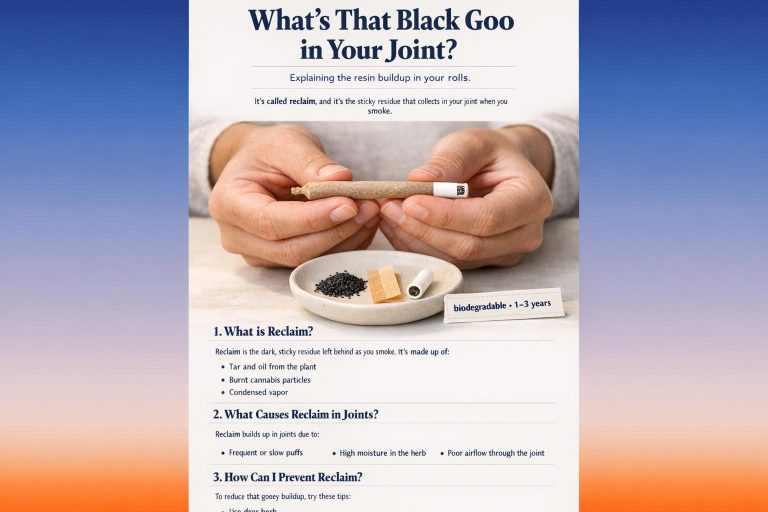
Biodegradable smoking filters use coconut-shell charcoal, unbleached paper and ceramic tips to reduce toxins and decompose in 1–3 years.
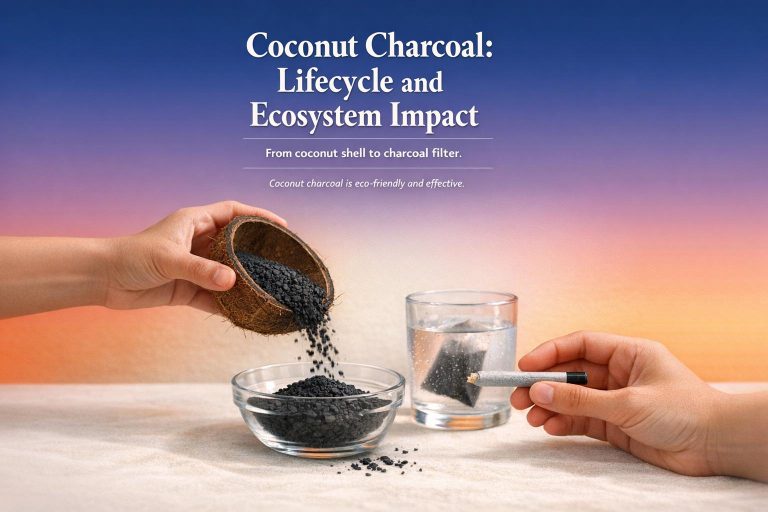
From discarded shells to activated carbon: lower-emission production, waste-to-resource benefits, and uses in water and smoking filtration.
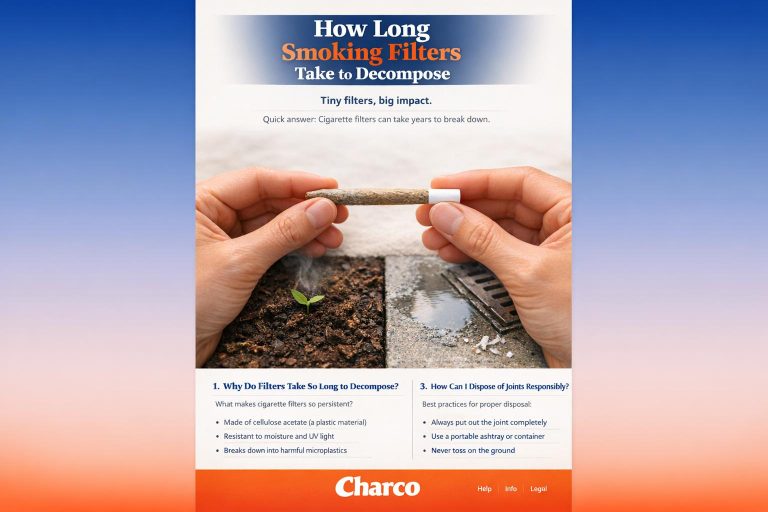
Cigarette filters can persist for years, fragment into microplastics, and only decompose fast in managed compost—material and disposal shape their harm.
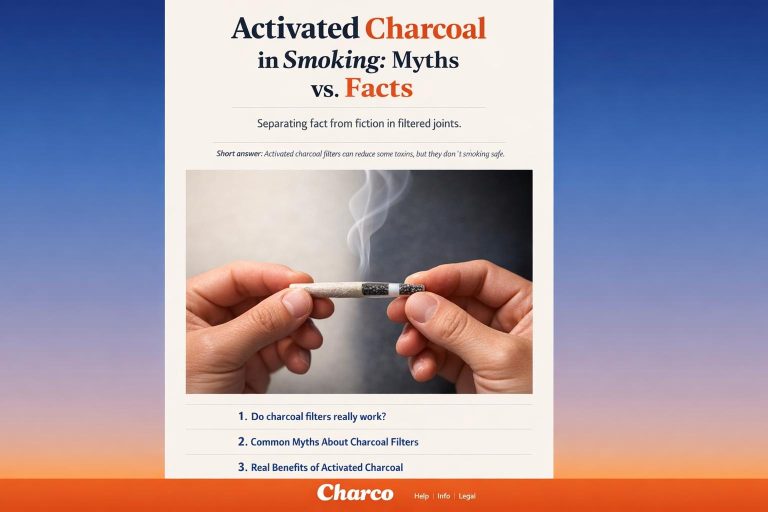
Activated charcoal filters trap many gas-phase toxins, reduce throat irritation and preserve THC/CBD, but they don’t remove gases like CO or eliminate smoking risks.
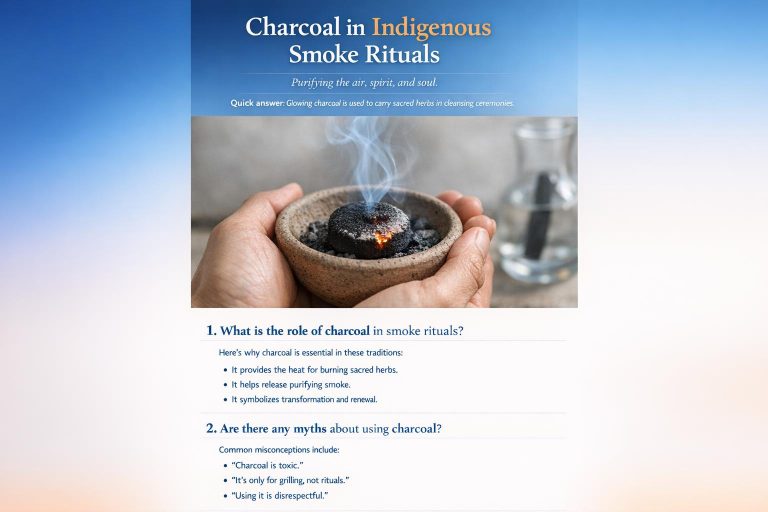
Charcoal-driven smoke rituals blend spiritual meaning with practical purification—from Indigenous ceremonies to modern activated charcoal filters.