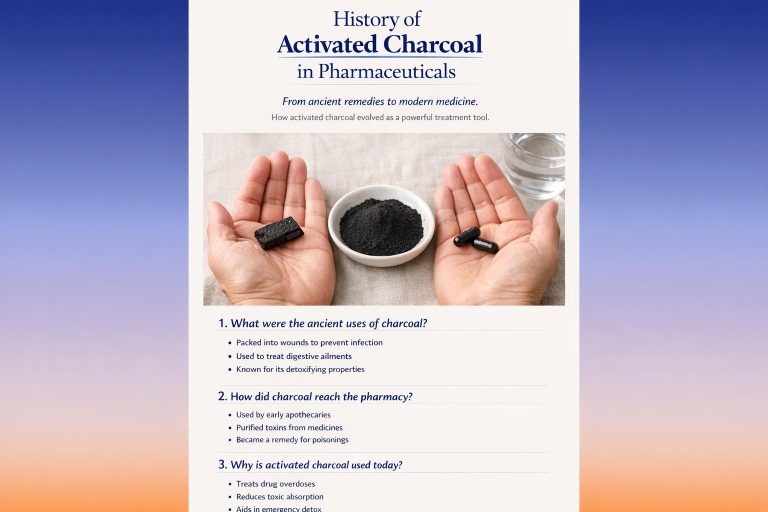
History of Activated Charcoal in Pharmaceuticals
A concise history of activated charcoal’s medical use, from ancient wound care to modern poison treatment, drug purification, and activation methods.

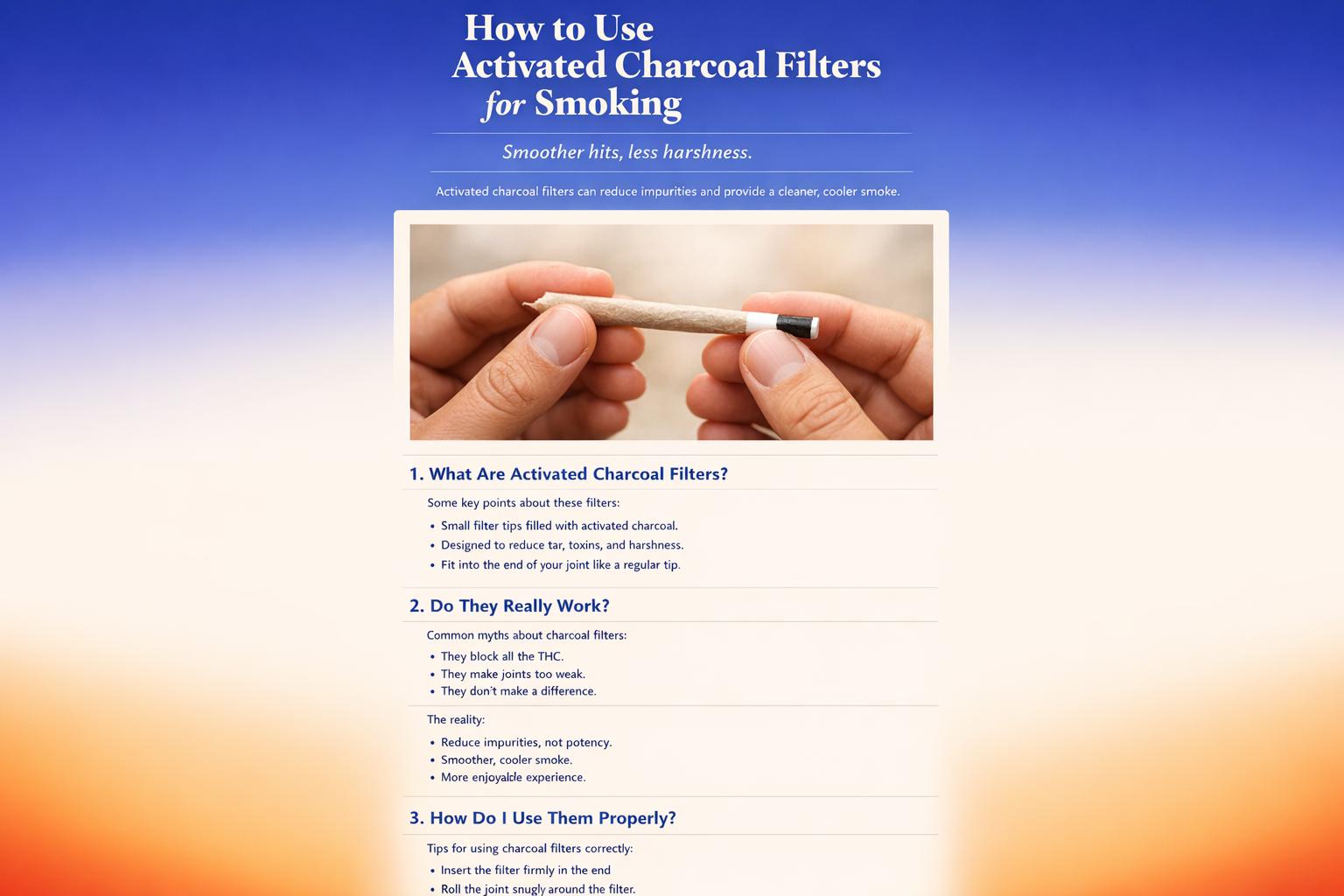
Activated charcoal filters offer a practical way to reduce harmful toxins in smoke while improving the overall experience. These filters work by using a high surface area of microscopic pores to trap harmful compounds like benzene and formaldehyde. Made from materials like coconut shells, they are also designed for ease of use with joints, pipes, and cigars. Here’s what you need to know:
While they don’t eliminate all risks, activated charcoal filters are a straightforward choice for reducing exposure to harmful substances while maintaining the smoking experience.
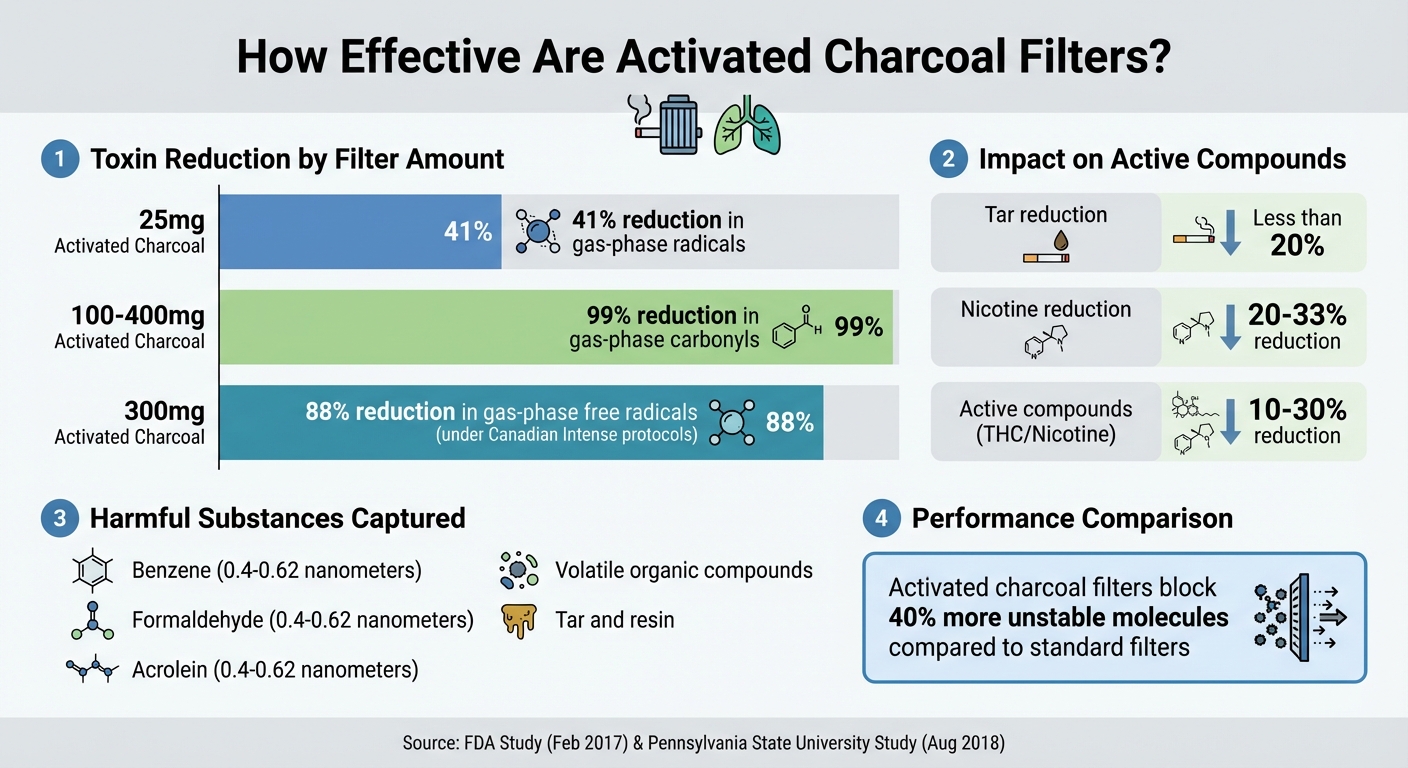
Activated Charcoal Filter Effectiveness: Toxin Reduction Statistics
Activated charcoal filters are designed to trap harmful toxins before they enter your lungs. According to a February 2017 FDA study, using 100–400 mg of activated charcoal in cigarette filters reduced gas-phase carbonyls by nearly 99%, while lowering tar and nicotine levels by less than 20%. These filters are particularly effective at capturing harmful substances like benzene, formaldehyde, and acrolein, which are typically sized between 0.4 and 0.62 nanometers. Another study from Pennsylvania State University in August 2018 revealed that 300 mg of activated charcoal could cut gas-phase free radicals by 88% under Canadian Intense protocols, while reducing nicotine delivery by 33%. This means you can still achieve the desired effects while dramatically cutting exposure to carcinogens and irritants that are linked to serious conditions like COPD and lung cancer. On top of that, these filters help refine the overall smoking experience.
Activated charcoal filters also elevate your smoking experience by delivering a smoother and cooler inhale. They effectively remove tar, resin, and fine particulates that contribute to a harsh or burning sensation. While the filters may reduce the delivery of active compounds by around 10% to 30%, many users feel the trade-off is worth it for the reduced irritation. Some smokers have noted a slight change in flavor, describing the smoke as a bit flatter, but the filters also act as a barrier, preventing ash and resin from reaching your mouth. For many, the benefits of a cleaner and more comfortable experience far outweigh these minor adjustments.
Activated charcoal filters are crafted with eco-friendliness in mind. Made from renewable materials like coconut shell–activated charcoal, unbleached paper, and ceramic caps, these filters avoid the use of synthetic chemicals. Coconut shells, in particular, are a sustainable resource that can be harvested up to four times a year without damaging the trees. This makes them a far greener option compared to coal-based charcoal, which requires mining, or wood-based alternatives that involve deforestation. By choosing these filters, you can take a step toward reducing your environmental impact while also prioritizing your health.
Using activated charcoal filters is simple once you’ve identified the right size for your smoking tool. For joints and blunts, opt for a slim or mini filter. Place the filter at one end of the rolling paper before adding your herb and rolling it up as usual. Unlike regular tips, these filters actively trap toxins rather than just serving as a convenient grip.
When it comes to pipes and bongs, you’ll need a silicone adapter to connect the filter to the mouthpiece. Micro adapters are ideal for hand pipes and small bubblers with diameters between 6mm and 30mm, while larger adapters work with water pipes ranging from 10mm to 50mm. Insert the filter into the silicone adapter until it fits snugly. If it doesn’t seem to fit right away, try flipping the adapter – many are designed to work in multiple orientations.
Once your filter is securely in place, you’re ready to smoke as usual, though you might notice a slight change in draw resistance.
Prepare your joint or bowl as you normally would. Keep in mind that the filter will slightly increase draw resistance, which is a sign that it’s working. Studies indicate that even a small amount of activated charcoal – 25mg – can reduce gas-phase radicals by 41%. With 300mg, that reduction jumps to 88% under heavy smoking conditions.
You might detect a difference in flavor compared to smoking without a filter. Activated charcoal is highly effective at capturing volatile organic compounds, including some terpenes that contribute to aroma. This can lead to a slightly "flatter" taste, but many users find the trade-off worthwhile for the smoother, cooler inhale and reduced throat irritation. Filters with ceramic caps, like those from Charco, enhance the experience by cooling the smoke even further, making each draw more enjoyable.
When your session is over, make sure to safely remove and dispose of the used filter.
Let your smoking tool cool completely before handling the filter to avoid burns. If you’re using a pipe, gently twist the filter as you remove it to prevent sticking caused by moisture. For joints, you can simply discard the entire roach once you’re done.
"You need to place your carbon filters in the general waste bin once the remains of your joint have fully cooled down; they’re now loaded with tar, after all." – Royal Queen Seeds
Used filters should always go in the trash, not compost or recycling bins. Although they’re made from eco-friendly materials like coconut shells and unbleached paper, they’re now saturated with tar and toxins. Promptly removing the filter after each session can also help keep your pipes cleaner and reduce resin buildup in the stem.
Activated charcoal filters are a great addition to hand-rolled cigarettes and joints. If you’re using standard rolling papers, the "XTRA Slim" size filters are the way to go – they keep things neat without adding unnecessary bulk. Filters with ceramic caps on both ends are especially convenient since you can insert them either way without affecting how they work. The ceramic tips not only cool the smoke but also enhance its aroma, while the activated charcoal captures harmful toxins. Compared to standard filters, these can block about 40% more unstable molecules.
Activated charcoal filters aren’t just for rolled products – they work just as well with pipes and hookahs. For pipes, these filters act as small canisters filled with carbon granules. You simply place them into the stem or shank before lighting up. Most pipe models are compatible with standard 9mm filters.
These filters do more than just clean the smoke. They help regulate your draw, preventing you from inhaling too quickly, and they keep the smoke cooler. They also serve as a barrier in pipes with larger draught holes, stopping bits of ash or tobacco from reaching your mouth. By reducing the harshness of the smoke, they can even help prevent the dreaded "tongue bite", a burning sensation some smokers experience. Just remember to remove the filter once your pipe has cooled to avoid issues with moisture or tar buildup.
If cigars are your preference, using filters requires a slightly different setup. Activated charcoal filters are available in various sizes to accommodate cigars, but you’ll need the right adapter to pair them. For larger smokes like cigars or blunts, 9mm filters are ideal since smaller 6mm filters might restrict airflow too much and dampen the flavor. While these filters can reduce harmful gas-phase free radicals by as much as 70% to 88%, they might also strip away some of the aromatic compounds that give cigars their rich character. The trade-off? A cleaner, cooler smoke, albeit with a slightly less pronounced flavor profile.
Each filter is designed for a single use because the carbon pores become saturated after just one session. While some smokers might attempt to reuse filters, this is not recommended. The charcoal’s ability to trap harmful compounds drops significantly after the first use, reducing its effectiveness. You’ll know it’s time to replace the filter if you notice increased resistance when drawing air through it. A clogged filter not only hampers your experience but also diminishes its ability to capture toxins.
To keep unused filters in peak condition, store them in airtight containers like sealed glass jars. This prevents the charcoal from absorbing odors or pollutants from the air. When stored correctly, filters can last for years without losing their effectiveness.
"As long as they remain sealed in their jars, you can keep these filters stored away for several years (they have no expiry date)." – Royal Queen Seeds
If you’ve been storing filters in cold environments, let them acclimate to room temperature (around 72°F) for at least 48 hours before using them. This ensures they’re properly conditioned for use.
Proper disposal of used filters is essential since they accumulate toxic substances during use. These contaminants make them unsuitable for composting or recycling. Even though the charcoal is made from natural materials like coconut shells, the toxins it traps prevent it from being reused as clean organic matter.
For a more environmentally conscious choice, opt for filters made from sustainable materials like coconut shells. These have a smaller environmental footprint during production, making them a better choice for eco-minded smokers.
Activated charcoal filters provide a practical way to enjoy your smoking ritual while cutting down on exposure to harmful toxins. By trapping carbonyls and reducing gas-phase free radicals, these filters offer a smoother, cooler smoke without entirely sacrificing the desired effects. However, you might notice a slightly muted flavor during use.
Here’s how it works: activated charcoal has an impressively large adsorption surface that attracts and holds toxins, preventing them from reaching your lungs. This process effectively captures volatile organic compounds and harmful byproducts of combustion that standard filters often miss. It’s a straightforward and efficient way to reduce exposure to harmful substances.
Switching to these filters is simple. Whether you’re using them with joints, pipes, or hookahs, they’re easy to integrate into your routine. Opt for filters made from sustainable materials, like coconut-shell charcoal, which not only perform well but are also eco-friendly. To ensure they work effectively, it’s important to replace them after each use.
For smokers who want to reduce harm while preserving their ritual, activated charcoal filters offer a cleaner, more mindful option. While they don’t eliminate all risks, they significantly reduce exposure to toxins, making the experience safer and still enjoyable. Pairing this performance with sustainable materials creates a win-win for both personal health and the environment.
For optimal performance, make it a habit to replace your activated charcoal smoking filters regularly. Over time, their ability to filter diminishes with use. How often you need to swap them out depends on your smoking frequency and the specific type of filter you’re using. A good rule of thumb is to replace the filter after a few sessions or as soon as you notice a drop in flavor or filtration quality.
Keep an eye out for changes in airflow or taste – these are clear signs that it’s time for a fresh filter. Regular replacements not only enhance your smoking experience but also ensure the filter continues to effectively reduce harmful toxins.
Activated charcoal filters can make smoking more pleasant by reducing harshness and filtering out unwanted compounds. This creates a smoother smoking experience while preserving the flavors you enjoy.
Coconut shell-based filters provide an environmentally conscious solution by transforming agricultural waste into activated carbon. This approach not only cuts down on landfill waste but also reduces the need for fossil-based materials, making it a greener option for filtration.
Made from renewable coconut shells, these filters support a cleaner production process while effectively reducing toxins, offering a healthier smoking experience. It’s a simple yet meaningful way to embrace a more sustainable way of living.
A concise history of activated charcoal’s medical use, from ancient wound care to modern poison treatment, drug purification, and activation methods.

Biodegradable smoking filters use coconut-shell charcoal, unbleached paper and ceramic tips to reduce toxins and decompose in 1–3 years.
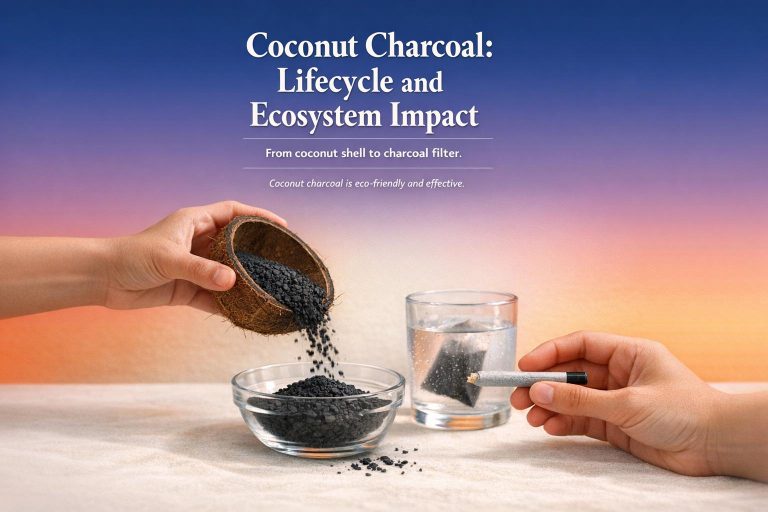
From discarded shells to activated carbon: lower-emission production, waste-to-resource benefits, and uses in water and smoking filtration.
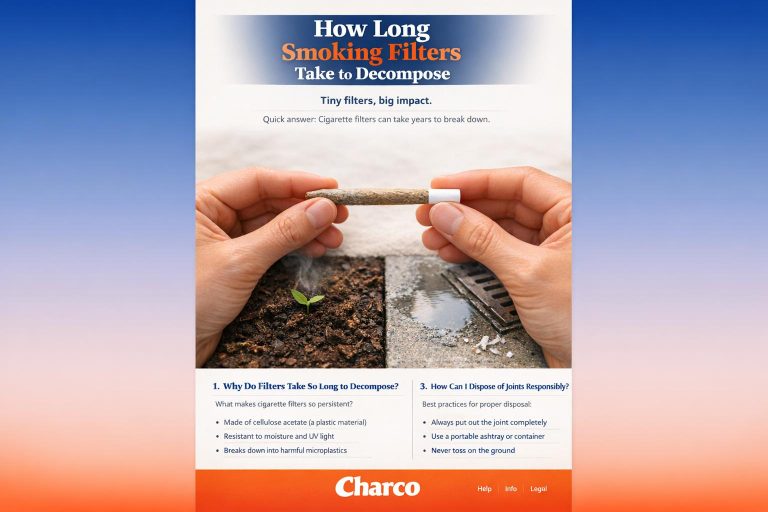
Cigarette filters can persist for years, fragment into microplastics, and only decompose fast in managed compost—material and disposal shape their harm.
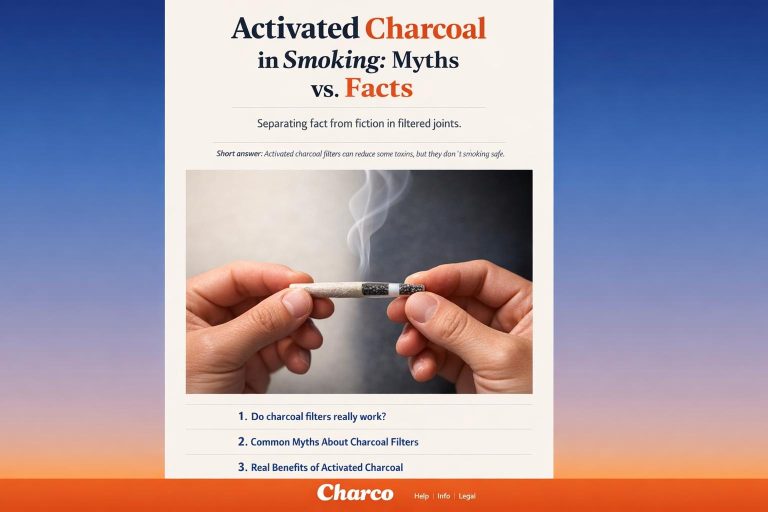
Activated charcoal filters trap many gas-phase toxins, reduce throat irritation and preserve THC/CBD, but they don’t remove gases like CO or eliminate smoking risks.

Charcoal-driven smoke rituals blend spiritual meaning with practical purification—from Indigenous ceremonies to modern activated charcoal filters.