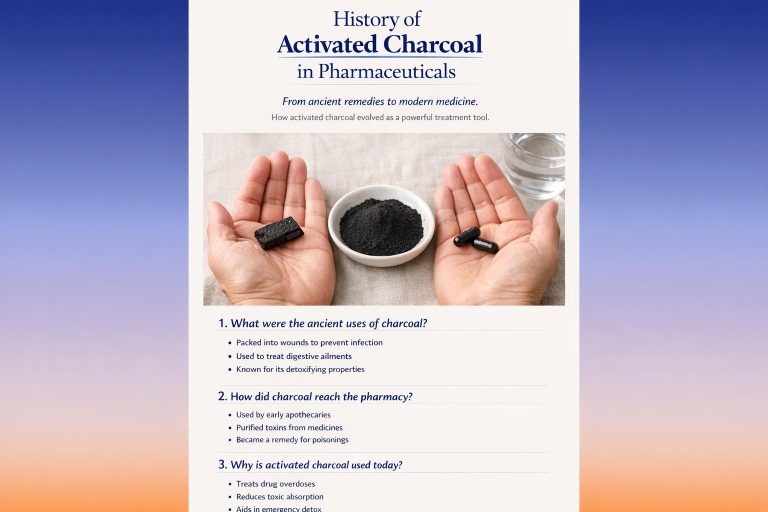
History of Activated Charcoal in Pharmaceuticals
A concise history of activated charcoal’s medical use, from ancient wound care to modern poison treatment, drug purification, and activation methods.

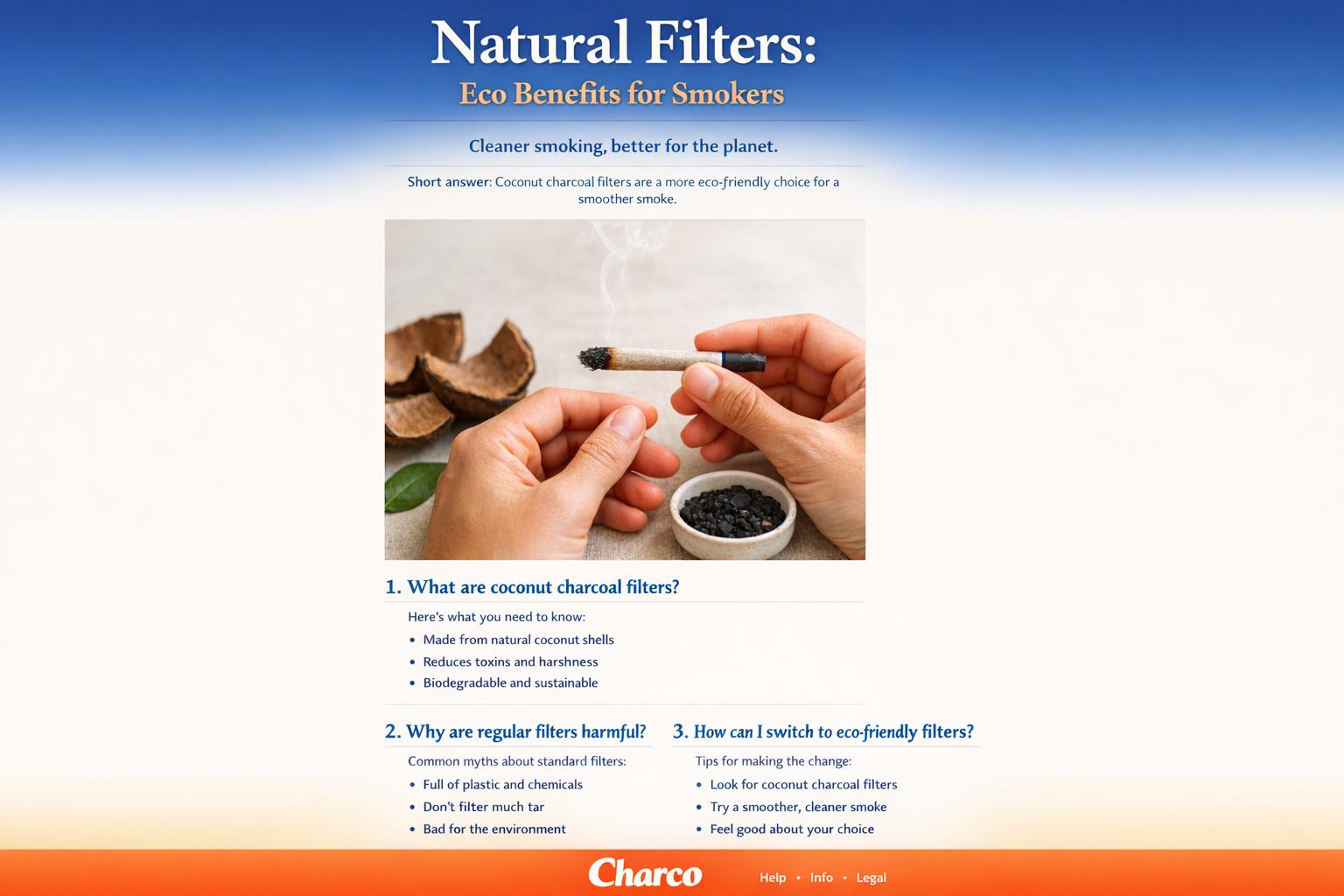
Each year, 4.5 trillion cigarette butts are tossed into the environment, adding 800,000 metric tons of plastic waste globally. These filters, made from cellulose acetate, don’t break down easily and release harmful toxins like nicotine and heavy metals into soil and water. Just one cigarette butt in a liter of water can kill 50% of exposed fish.
Natural filters, made from biodegradable materials like coconut-shell activated charcoal, offer a better solution. They reduce harmful smoke toxins – cutting carbonyls like formaldehyde by up to 99% – while decomposing naturally. Switching to options like Charco Filters can help smokers reduce pollution without changing their habits. At $7 for 10 filters, they’re an affordable step toward cleaner ecosystems.
Synthetic filters are made from cellulose acetate, a type of semi-synthetic plastic that sticks around in the environment for decades. While cellulose itself is natural, the chemical tweaks that turn it into cellulose acetate make it a long-lasting plastic. Depending on conditions, these filters can take anywhere from 5 to 30 years to break down. To put it in perspective, a single filter is packed with 12,000–15,000 tiny cellulose acetate strands. These strands break apart faster than PET bottles but still contribute significantly to the growing problem of microplastic pollution.
When tossed away, these filters don’t just sit there harmlessly. They release a toxic cocktail of over 800 chemicals, including nicotine, heavy metals, PAHs, and plasticizers like triacetin. On top of that, the microfibers act like tiny sponges, soaking up external pollutants such as PFAS (those infamous "forever chemicals") and even pathogens, spreading them throughout ecosystems. Lab studies have shown just how harmful these filters can be – exposing freshwater larvae to concentrations as low as two filters per liter caused 36% to 100% immobility within just 48 hours.
This paints a pretty clear picture: synthetic filters aren’t just a litter problem – they’re a source of persistent, widespread pollution.
The idea that synthetic filters make smoking safer is a myth. The very term "filter" is misleading. Internal industry documents reveal that these filters were never truly designed to protect smokers’ health. Instead, they were crafted as a clever marketing ploy to give the illusion of safety. For instance, R. J. Reynolds Tobacco Company’s documents show that filters were engineered with pH-sensitive chemicals that turn brown, tricking smokers into believing the filter is "working" by trapping harmful substances.
Thomas E. Novotny, a Public Health Professor at San Diego State University, put it bluntly:
"The cellulose acetate filter is simply a marketing tool that encourages smoking initiation and reduces intentions to quit smoking… it makes smoking easier and implies added safety through the presumed filtration of inhaled smoke."
Adding to the issue, many synthetic filters feature ventilation holes that dilute smoke during machine tests. However, in real-world use, smokers often block these vents with their fingers or lips, which leads to deeper inhalation – a behavior called compensatory smoking. This practice has been linked to a higher risk of lung adenocarcinoma.
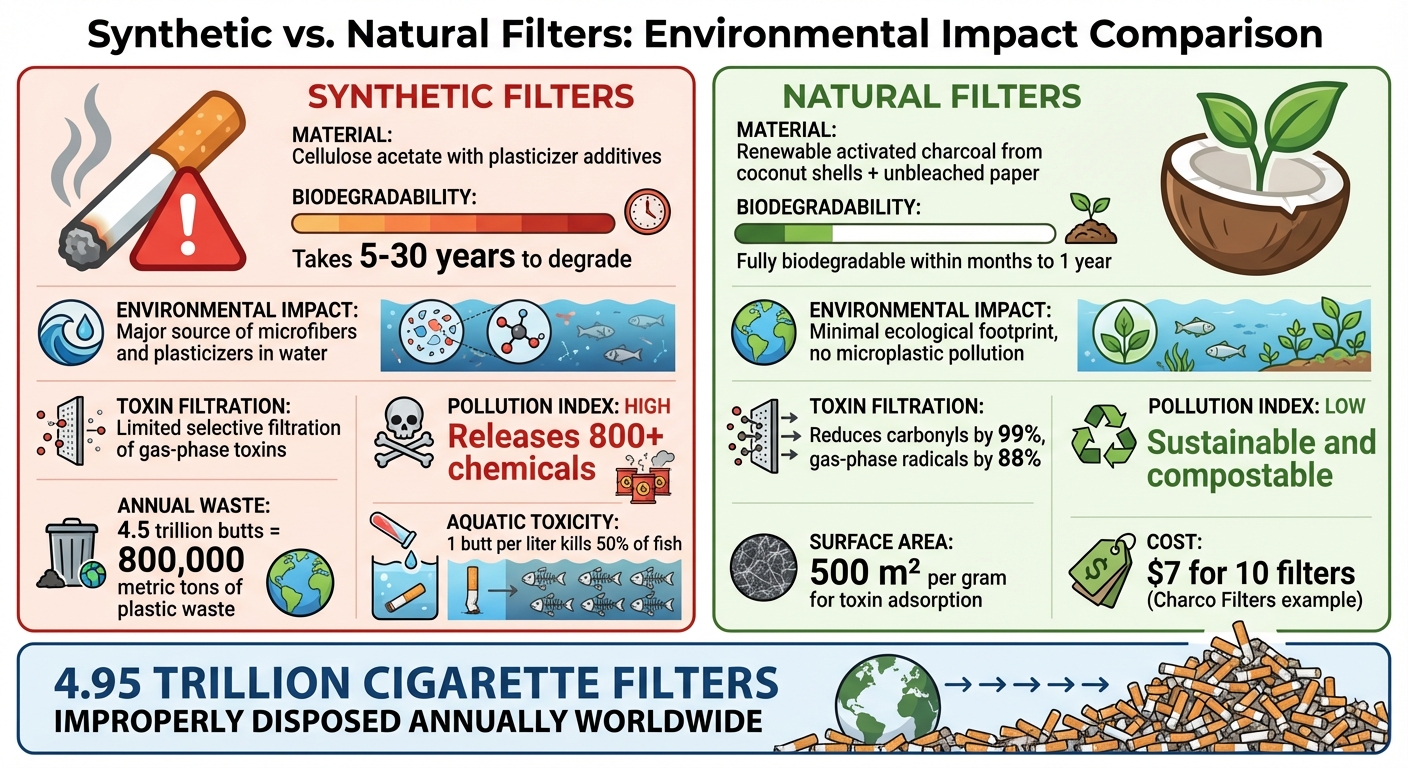
Synthetic vs Natural Cigarette Filters Environmental Impact Comparison
Natural filters are crafted from renewable, biodegradable materials, steering clear of semi-synthetic plastics. A key ingredient is activated charcoal derived from coconut shells – a plentiful and cost-efficient byproduct. Coconut fiber is rich in natural polymers like cellulose, lignin, pectin, and hemicelluloses, all of which decompose effectively without leaving harmful residues.
The porous structure of activated charcoal works by physically adsorbing volatile organic compounds (VOCs) and harmful gases. Combined with unbleached paper and ceramic tips, these filters are fully compostable without compromising functionality.
According to research by the U.S. Food and Drug Administration, activated charcoal filters at higher concentrations can cut harmful carbonyls – such as formaldehyde and acrolein – by nearly 99%. Even a small amount, like 25 mg of activated charcoal, can reduce toxic gas-phase radicals by 41%.
This eco-friendly composition stands in stark contrast to the pollutants left behind by synthetic filters.
A direct comparison showcases the advantages of natural filters over their synthetic counterparts.
| Feature | Synthetic Filters (Cellulose Acetate) | Natural Filters (Activated Charcoal/Coconut Shell) |
|---|---|---|
| Material Composition | Cellulose acetate with plasticizer additives | Renewable activated charcoal (coconut shells) and unbleached paper |
| Biodegradability | Non-biodegradable; can take up to 30 years to degrade | Biodegradable and renewable |
| Environmental Effect | Major source of microfibers and plasticizers in water | Reduces chemical load in smoke with minimal ecological impact |
| Toxin Filtration | Limited selective filtration of gas-phase toxins | High adsorptive capacity for carbonyls, VOCs, and free radicals |
| Pollution Index | High pollution load in aquatic systems | Lower ecological risk due to reduced chemical leaching |
For instance, Charco Filters’ charcoal-infused filters outperform cellulose acetate ones, reducing gas-phase radicals by 40–47%. Considering that approximately 4.95 trillion cigarette filters are improperly disposed of worldwide each year, adopting natural filters could significantly cut the release of microfibers into oceans and soils, making a meaningful difference for the planet.
Activated charcoal takes natural filtration to the next level by significantly reducing toxins through a process called adsorption. Unlike absorption, where substances are soaked into a material, adsorption captures toxins on the surface of the carbon. This process is highly effective, thanks to the material’s incredible porosity – a single gram of activated charcoal boasts a surface area of 500 m², while just one pound can cover nearly 125 acres. This vast surface area allows it to trap an impressive range of contaminants.
What makes activated charcoal stand out is its ability to filter volatile organic compounds (VOCs), gas-phase radicals, and carbonyls – pollutants that synthetic filters often fail to catch. The production process involves heating raw coconut shells in an oxygen-free environment, followed by steaming to create the porous structure. This structure is particularly effective at capturing harmful substances like benzene and formaldehyde.
"Activated carbon significantly reduces air pollution by adsorbing various gaseous pollutants onto its large surface area, effectively trapping contaminants like volatile organic compounds (VOCs), odors, and harmful gases." – Tanke Chemical
The numbers speak for themselves: with a loading of 300 mg, gas-phase radicals are reduced by up to 88%, while 400 mg eliminates nearly 99% of harmful carbonyls like formaldehyde. Even particulate-phase radicals see a reduction of about 25% to 27% compared to standard cellulose acetate filters . These results highlight the effectiveness of activated charcoal in addressing air pollution while being a more sustainable option.
Coconut-shell charcoal stands out as a sustainable choice, combining high performance with eco-friendly benefits. This material is derived from coconut shells, a byproduct of the coconut industry that would otherwise go to waste. By converting these shells into activated carbon, the process supports a circular bioeconomy, repurposing agricultural leftovers into a valuable resource.
Compared to coal-based alternatives, coconut-shell charcoal has a smaller environmental impact. Producing 1 kg of coconut-shell activated carbon generates around 1.209 to 1.255 kg of CO₂ emissions and requires 27.063 to 28.314 MJ of energy. Additionally, replacing conventional oven drying with sunlight drying can cut energy use by 7.5% and reduce carbon emissions by 7.7%.
Another advantage is that coconut-shell activated carbon produces less dust during processing compared to wood or coal-based options. Once used, these filters are fully biodegradable, breaking down naturally without harming soil or water. This is a stark contrast to the nearly one million metric tons of synthetic filter waste that pollutes the environment each year. By choosing coconut-shell charcoal, we not only improve filtration but also contribute to a cleaner, greener planet.
Switching from synthetic to natural filters is simple – no special skills or adjustments needed. Natural filters function just like standard tips, but they’re made from renewable materials that trap toxins effectively and break down naturally. By making the switch, you’re helping to reduce the lasting microplastic pollution caused by synthetic filters.
Activated charcoal filters start working immediately without requiring any extra effort. As smoke passes through, toxins are captured through a process called adsorption. The result? Smoother draws, less throat irritation, and a reduction in lingering odors.
A great example of this shift is Charco Filters, which combine eco-friendly materials with an enhanced smoking experience.
Charco Filters are crafted with coconut-shell activated charcoal, unbleached paper, and ceramic tips to provide a smooth, environmentally conscious smoking option. The coconut-shell charcoal comes from agricultural byproducts that would otherwise go unused, making it a renewable choice. Plus, it produces minimal dust during processing and fully decomposes after disposal.
Each 6 mm filter is designed with dual ceramic tips, ensuring it holds its shape while rolling and offers a comfortable feel. The unbleached paper avoids the use of harsh chemicals commonly found in synthetic filters. At just $7 for a pack of 10 filters or $12 for a pack of 30, Charco Filters are an affordable way to reduce your environmental footprint without sacrificing quality.
Here’s how you can seamlessly incorporate Charco Filters into your routine in just three steps.
The facts speak for themselves – synthetic filters are a major contributor to pollution. These cellulose acetate filters can linger in the environment for up to 30 years, breaking down into harmful microplastics that aquatic animals ingest, causing long-term damage to ecosystems.
Natural filters offer a better option. Activated charcoal filters made from renewable coconut shells not only excel at filtration – cutting harmful carbonyls by nearly 99% and gas-phase free radicals by up to 88% – but also help reduce plastic waste. They’re made from sustainable materials, leaving a much smaller environmental footprint compared to traditional cellulose acetate filters.
Experts highlight the urgency of addressing this issue:
"Roughly 4.5 trillion cigarette filters pollute our oceans, rivers, city sidewalks, parks, soil and beaches every year." – Dr. Ruediger Krech, Director of Health Promotion at WHO
Switching to natural filters doesn’t mean overhauling your habits. Options like Charco Filters combine coconut-shell activated charcoal, unbleached paper, and ceramic tips to provide both environmental benefits and a smoother smoking experience. At $7 for 10 filters or $12 for 30, they’re an affordable way to cut down on microplastic pollution while improving filtration.
Every choice counts. By choosing natural filters, you’re taking a simple but impactful step to reduce microfiber pollution and protect aquatic ecosystems. It’s a small change that can lead to meaningful results for the planet.
Smoking with natural filters doesn’t make it any less dangerous. While these filters might be better for the environment than synthetic ones, they do nothing to reduce the health risks tied to smoking. No matter the filter type, smoking is still harmful to your health.
When you’re done with your natural filters, make sure to dispose of them thoughtfully to reduce any harm to the environment. Charco filters, crafted from materials like activated charcoal derived from coconut shells, might be suitable for composting or local recycling programs – it’s worth checking. If composting or recycling isn’t an option, toss them in the trash, but make sure they’re securely contained. Whatever you do, avoid littering or throwing them into waterways, as this could negatively impact the environment.
Charcoal filters can improve your smoking experience by delivering smoother and cooler hits while helping to maintain the flavor. That said, they might subtly affect the taste or the draw, depending on their design and usage. These adjustments are usually minor and are intended to enhance the overall experience.
A concise history of activated charcoal’s medical use, from ancient wound care to modern poison treatment, drug purification, and activation methods.

Biodegradable smoking filters use coconut-shell charcoal, unbleached paper and ceramic tips to reduce toxins and decompose in 1–3 years.
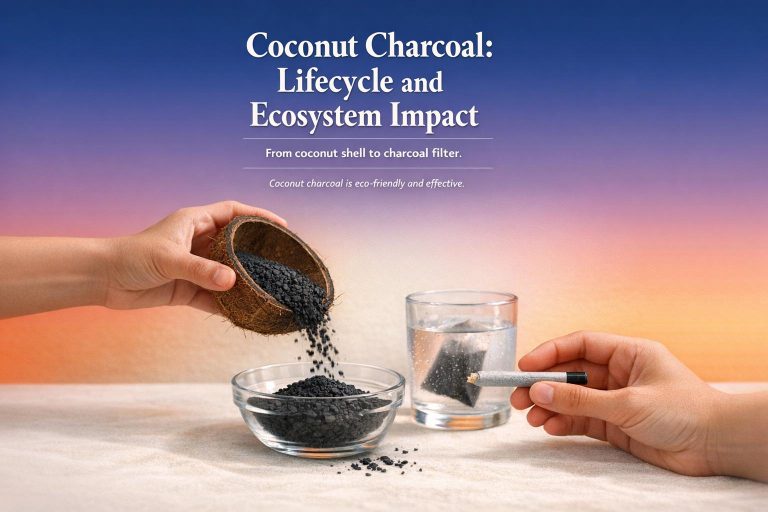
From discarded shells to activated carbon: lower-emission production, waste-to-resource benefits, and uses in water and smoking filtration.
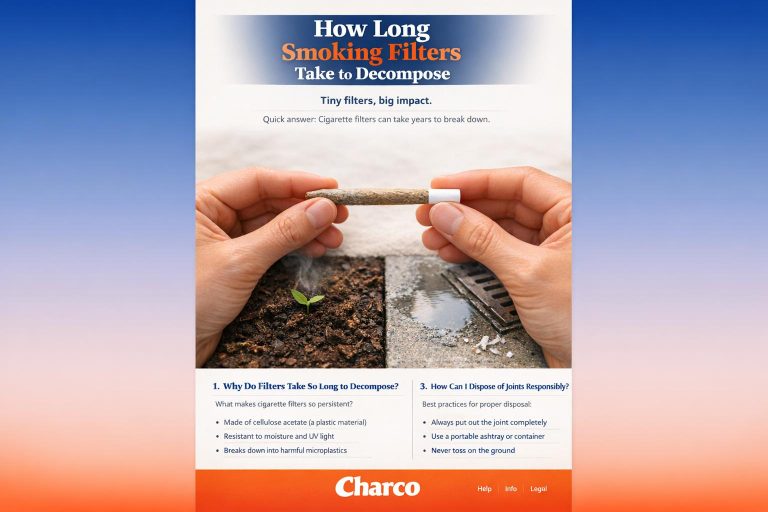
Cigarette filters can persist for years, fragment into microplastics, and only decompose fast in managed compost—material and disposal shape their harm.
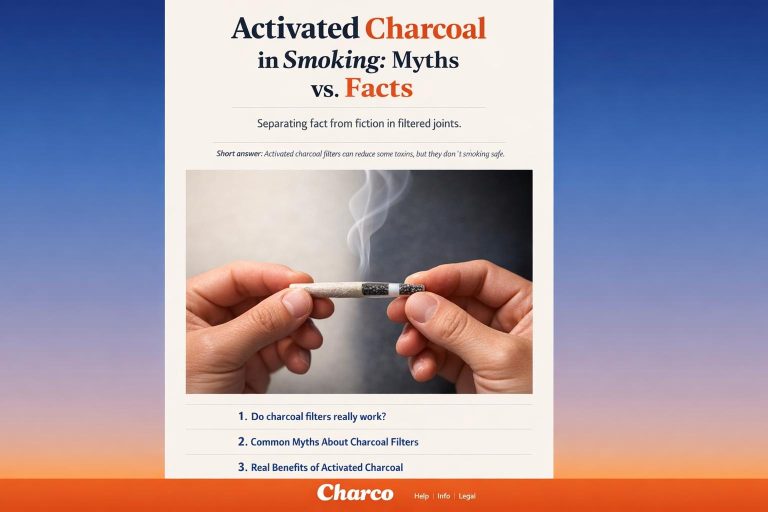
Activated charcoal filters trap many gas-phase toxins, reduce throat irritation and preserve THC/CBD, but they don’t remove gases like CO or eliminate smoking risks.

Charcoal-driven smoke rituals blend spiritual meaning with practical purification—from Indigenous ceremonies to modern activated charcoal filters.