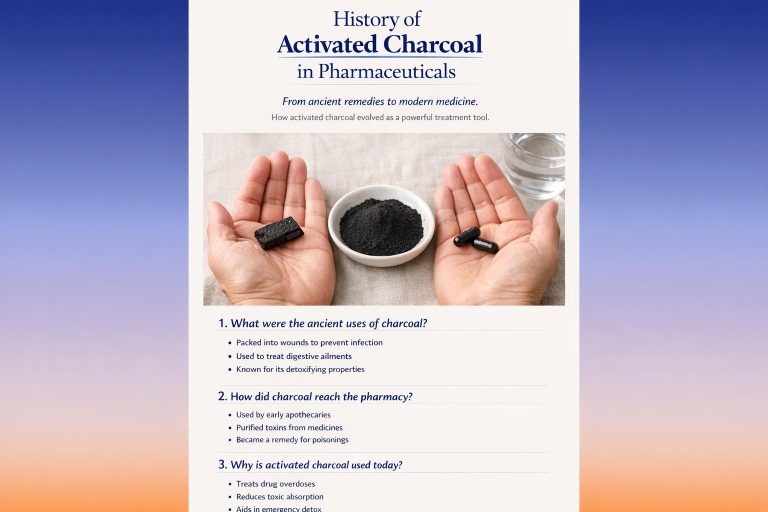
History of Activated Charcoal in Pharmaceuticals
A concise history of activated charcoal’s medical use, from ancient wound care to modern poison treatment, drug purification, and activation methods.

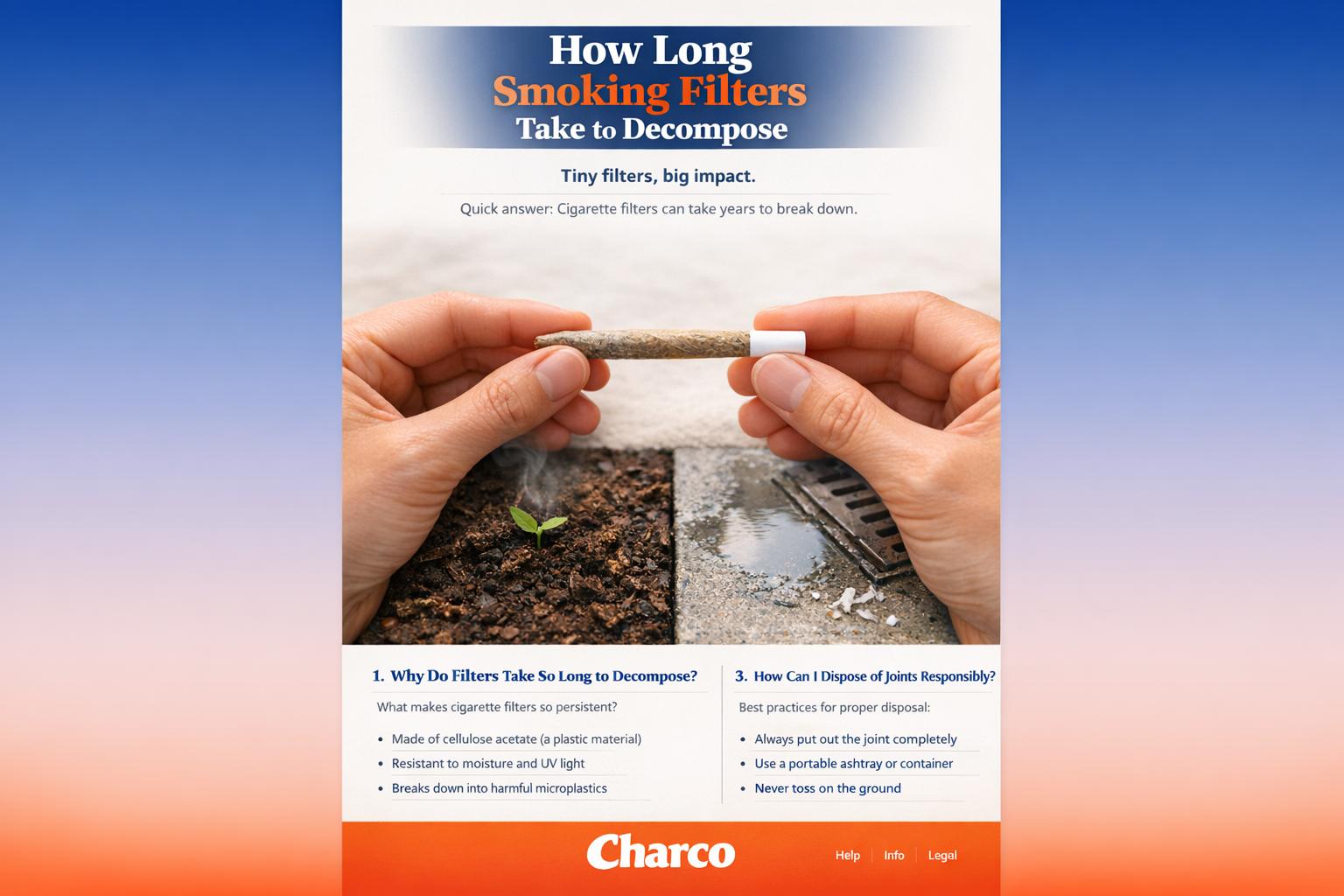
Cigarette filters are the most common litter globally, with 4.5 to 5 trillion discarded every year. These filters, made mostly of cellulose acetate (a type of plastic), can take 10 to 15 years to break down in the environment. However, they don’t biodegrade fully; instead, they fragment into microplastics, polluting soil, water, and harming wildlife.
Key insights:
While biodegradable options reduce waste longevity, proper disposal in composting systems is critical to minimize their impact.
The materials used in cigarette filters play a big role in how long they stick around in the environment. Most conventional filters are made up of about 95% cellulose acetate, which is a chemically altered form of cellulose. During production, hydrogen atoms in cellulose are swapped out for acetyl groups, making the material resistant to water and microbial breakdown. This resistance is why these filters take so long to decompose.
Unlike natural cellulose, which microbes can easily break down, cellulose acetate needs to go through a process called deacetylation before enzymes can digest it. Unfortunately, this rarely happens efficiently in nature. Instead, these filters rely on sunlight to break them down into microplastics through photodegradation. Let’s take a closer look at how these material differences influence decomposition.
Cellulose acetate acts more like plastic than plant-based material. Its chemical modifications make it highly resistant to being broken down by microbes, which is why these filters can linger in the environment for 10 to 15 years. Over time, they break apart into tiny microplastic fragments. Globally, discarded cigarette filters contribute around 1.2 million tons of waste each year, adding to the growing problem of microplastic pollution in ecosystems and food chains.
Eco-friendly filters, on the other hand, are made with natural components that break down much faster. These alternatives often use pure cellulose, which microbes in soil and water can digest naturally. Some also incorporate activated charcoal, made from coconut shells, along with unbleached paper and ceramic caps. Because these materials don’t have the chemical modifications found in cellulose acetate, they decompose more quickly. The charcoal is a renewable material, and the unbleached paper retains the natural structure of cellulose, allowing enzymes to process it.
However, even biodegradable filters face hurdles. Once used, they absorb tar, nicotine, and other harmful chemicals from smoking, which can slow down microbial decomposition. Despite these challenges, eco-friendly designs aim to minimize the environmental impact of discarded filters over time.
Conventional filters stick around for a long time. In a compost bin with active microbes and sufficient moisture, they take roughly 7.5 years to break down. On the soil surface, this timeline stretches to about 14 years – and in harsh conditions, it can even go up to 30 years.
After two years in the environment, these filters don’t fully biodegrade; instead, they fragment into microplastics, which pose ongoing threats to ecosystems. Even after 1,000 hours of simulated intense sunlight, cellulose acetate filters showed physical fragmentation but no meaningful chemical breakdown. Essentially, these filters don’t disappear – they just turn into smaller pieces that continue polluting soil and water.
On the other hand, eco-friendly alternatives break down much faster.
Filters made from natural materials like pure cellulose and activated charcoal break down much more quickly than their conventional counterparts. For instance, eco-friendly filters composed of pure cellulose can decompose in about 2.3 years in compost – roughly three times faster than traditional filters under similar conditions.
Products like those from Charco, which use activated charcoal from coconut shells, unbleached paper, and ceramic caps, are designed to be more biodegradable. Unlike chemically modified cellulose acetate, these natural materials maintain their original cellulose structure, making them easier for soil microbes to digest. However, it’s worth noting that the tar, nicotine, and chemicals absorbed during use can slow the process. Even on soil, pure cellulose filters may take around 13 years to decompose.
The environment where filters are discarded plays a huge role in how quickly they break down. Key factors include moisture levels, temperature, and the presence of microbes. Filters decompose faster in moist, biologically active environments compared to dry, nutrient-poor areas. For instance, in controlled composting systems with high temperatures, microbial activity, oxidation, and enzymatic processes significantly speed up decomposition.
"Cigarette filters degrade over time due to the action of weathering elements such as sun, wind, rain, and mechanical action in the environment."
- Sudesna Parida, ITC Life Sciences & Technology Centre
Sunlight, particularly ultraviolet (UV) rays, also plays a major role in breaking down plastic-based filters. For cellulose acetate filters, UV exposure causes photodegradation, splitting the material into smaller fragments. However, instead of fully biodegrading, these fragments often turn into microplastics, which persist in the environment. Soil type is another important factor. Nutrient-rich soils, such as those in grasslands, provide nitrogen that supports microbial activity, speeding up decomposition. On the other hand, filters discarded in nutrient-poor areas, like railways, pavements, or sandy beaches, decompose far more slowly. Interestingly, some environments, like sand dunes, host specialized fungi that can enhance filter breakdown.
All these external conditions interact with the material properties of the filter itself, which further influences how long decomposition takes.
The materials used in filters are just as important as environmental factors when it comes to decomposition. Most conventional filters are made from cellulose acetate, a chemically modified form of cellulose. With an acetate substitution level around 2.45, this material is highly resistant to microbial breakdown. For decomposition to occur, the cellulose acetate must first undergo chemical hydrolysis or photodegradation to lower its substitution level to about 1.0 – a process that is painfully slow in natural settings.
On the other hand, filters made from pure cellulose are fully biodegradable, breaking down easily in both soil and water environments. However, used filters present a different challenge. Contaminated with over 7,000 chemicals, including heavy metals like lead and mercury, these residues can inhibit microbial activity and slow decomposition. Additionally, the high Carbon-to-Nitrogen (C/N) ratio of around 200 in filters makes it harder for microbes to efficiently break them down unless they can access external nitrogen sources.
Even so-called eco-friendly filters, like those from Charco Filters, made using activated charcoal and unbleached paper, face decomposition delays after use. The smoking residues that accumulate on these filters create barriers to microbial activity, extending the time needed for them to break down.
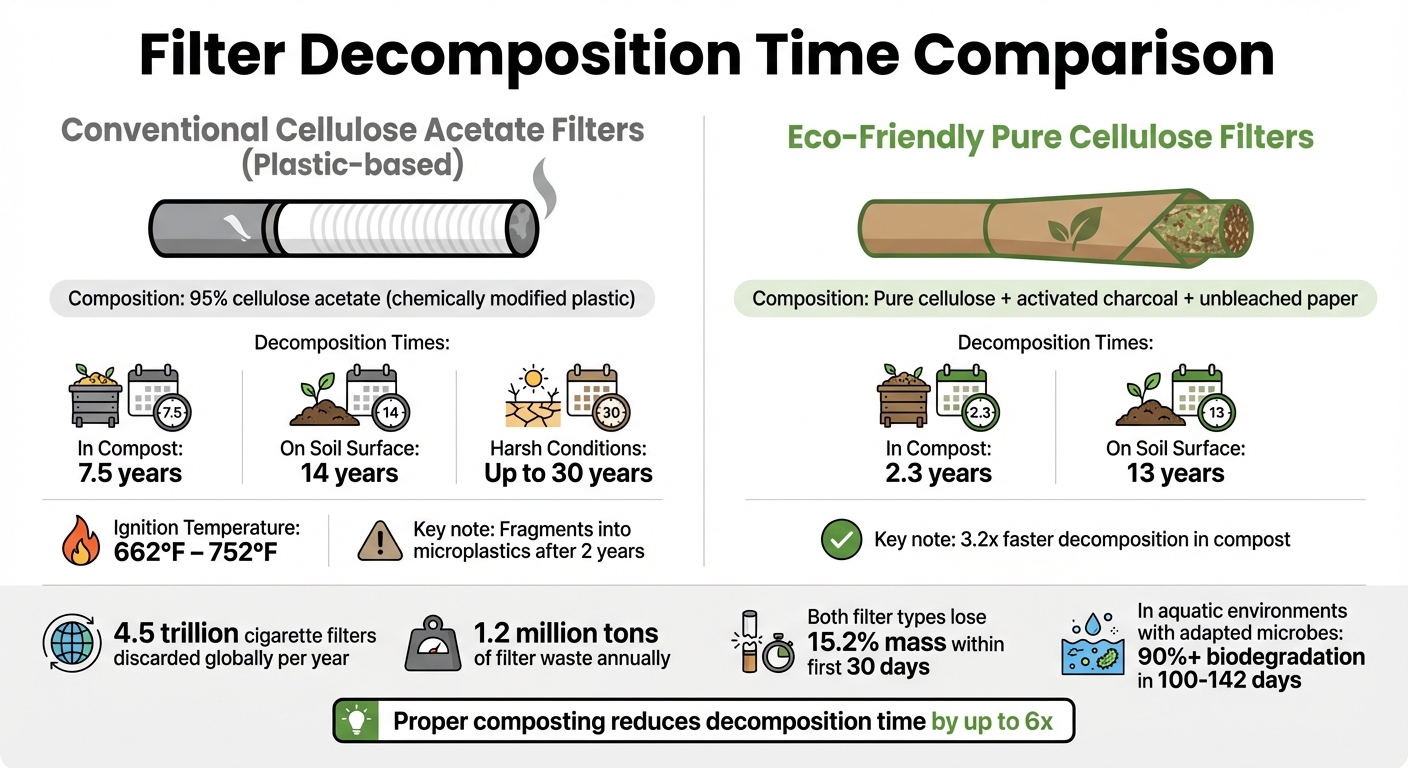
Cigarette Filter Decomposition Time Comparison: Conventional vs Eco-Friendly
Recent research sheds light on the differences in decomposition rates for various filter materials. A study by F. Joly and M. Coulis, published in Waste Management, evaluated OCB® slim filters over six months in a Mediterranean environment. Their findings revealed that cellulose acetate filters take about 7.5 years to decompose in compost, compared to just 2.3 years for pure cellulose filters. However, when placed on soil, both types require more than a decade to break down.
In compost, pure cellulose filters decompose 3.2 times faster than cellulose acetate filters. On bare soil, both materials persist for over ten years, highlighting the challenges of decomposition outside controlled environments. These results confirm earlier observations: while pure cellulose breaks down faster in compost, neither material degrades quickly on soil.
"Conventional plastic filters take 7.5–14 years to disappear, in the compost and on the soil surface, respectively. In contrast, we estimated that cellulose filters take 2.3–13 years to disappear."
- F. Joly and M. Coulis, Waste Management
Even filters marketed as eco-friendly, such as those from Charco Filters – made with activated charcoal from coconut shells and unbleached paper – face decomposition hurdles. Smoking residues, including tars, nicotine, and heavy metals, create toxic barriers that inhibit microbial activity. As F. Joly and M. Coulis observed, "the accumulation of tars and other chemicals during filter use can strongly affect its subsequent decomposition". This contamination reduces the environmental advantages of natural materials, especially if filters are not disposed of in proper composting systems.
| Filter Type | Environment | Estimated Time to Decompose | Ignition Temperature |
|---|---|---|---|
| Cellulose Acetate (Plastic) | Compost | 7.5 Years | 662°F – 752°F |
| Cellulose Acetate (Plastic) | Soil Surface | 14 Years | 662°F – 752°F |
| Pure Cellulose (Eco-friendly) | Compost | 2.3 Years | N/A |
| Pure Cellulose (Eco-friendly) | Soil Surface | 13 Years | N/A |
Both filter types lose about 15.2% of their mass within the first 30 days after disposal.
The data highlights the benefits of eco-friendly filters, particularly when disposed of in managed composting systems. In aquatic settings, cellulose diacetate can achieve over 90% biodegradation within 100 to 142 days if the microbial community is pre-adapted to the material. Without such adaptation, the process takes much longer. These findings emphasize the importance of proper disposal and composting to reduce the environmental impact of smoking-related waste.
Conventional cellulose acetate filters can linger in the environment for 7.5 to 14 years, while more biodegradable filters break down in about 2.3 years under ideal composting conditions. With an estimated 4.5 trillion cigarette filters littered globally each year, the environmental impact is staggering. These filters don’t simply disappear – they fragment into microplastics, release toxins into waterways, and endanger wildlife.
Switching to alternatives like Charco Filters – crafted with activated charcoal, unbleached paper, and ceramic tips – offers a way to reduce long-lasting waste. Though no filter is entirely harmless when contaminated with smoking residues, materials designed to decompose naturally break down far quicker than traditional cellulose acetate. Still, material innovation alone won’t solve the problem.
Proper disposal plays a critical role. Even biodegradable filters can persist for over a decade in soil but decompose in as little as 2.3 years in compost. As researchers F. Joly and M. Coulis pointed out, "The shift to cellulose filters should not exempt users from disposing their waste in appropriate collection systems".
Cigarette filters are primarily composed of cellulose acetate, a material that doesn’t completely break down in nature. These filters can linger in the environment for a decade or more – sometimes up to 15 years – adding to pollution and endangering wildlife. Choosing eco-friendly alternatives and ensuring proper disposal are practical steps to lessen their impact on the planet.
"Biodegradable" filters might sound like an eco-friendly choice, but they decompose at a frustratingly slow pace. The reason? They’re primarily made of cellulose acetate, which is a form of plastic. Rather than completely breaking down, these filters break into tiny plastic particles that can linger in the environment for years. This slow fragmentation means they still pose risks to soil and ecosystems long after being discarded, making their "green" label somewhat misleading.
Proper disposal of used cigarette filters plays a key role in reducing their impact on the environment. Traditional filters are typically made from cellulose acetate, a type of plastic that can take anywhere from decades to centuries to decompose. Over time, they contribute to microplastic pollution, which is harmful to ecosystems. To help lessen this damage, you might want to switch to eco-friendly options like activated charcoal filters. These are made from sustainable materials, break down more quickly, and generate less waste.
A concise history of activated charcoal’s medical use, from ancient wound care to modern poison treatment, drug purification, and activation methods.

Biodegradable smoking filters use coconut-shell charcoal, unbleached paper and ceramic tips to reduce toxins and decompose in 1–3 years.
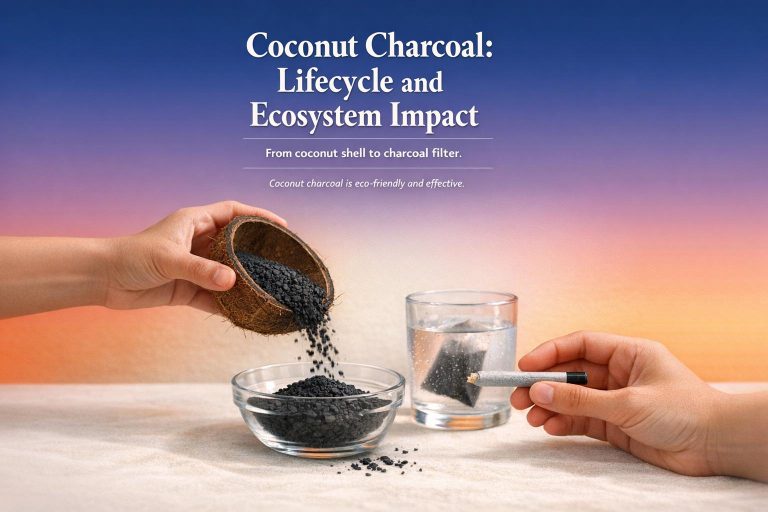
From discarded shells to activated carbon: lower-emission production, waste-to-resource benefits, and uses in water and smoking filtration.
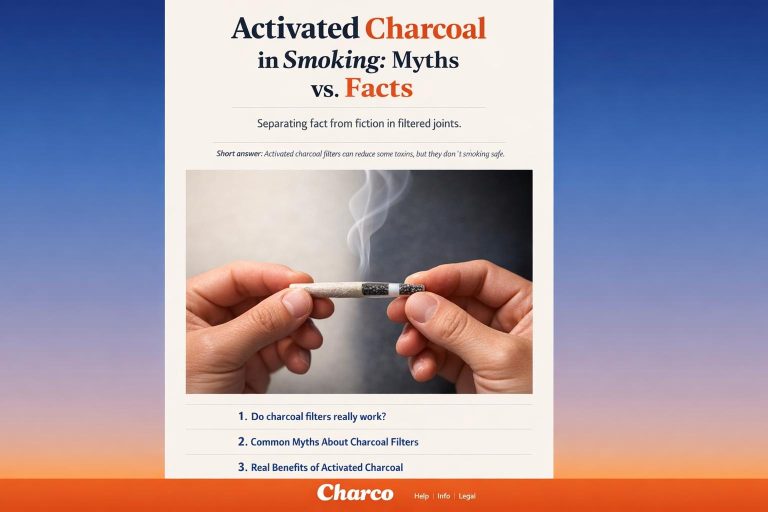
Activated charcoal filters trap many gas-phase toxins, reduce throat irritation and preserve THC/CBD, but they don’t remove gases like CO or eliminate smoking risks.

Charcoal-driven smoke rituals blend spiritual meaning with practical purification—from Indigenous ceremonies to modern activated charcoal filters.
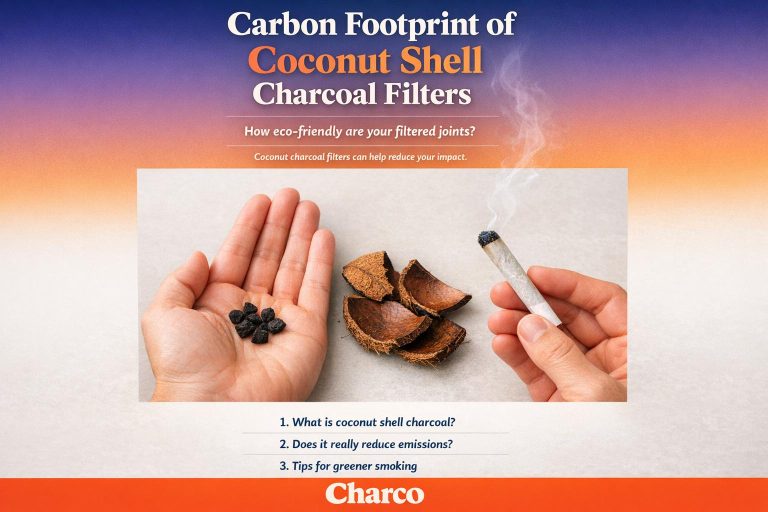
Coconut shell charcoal filters cut lifecycle emissions versus coal, but pyrolysis and pit charring remain the largest sources of carbon impact.