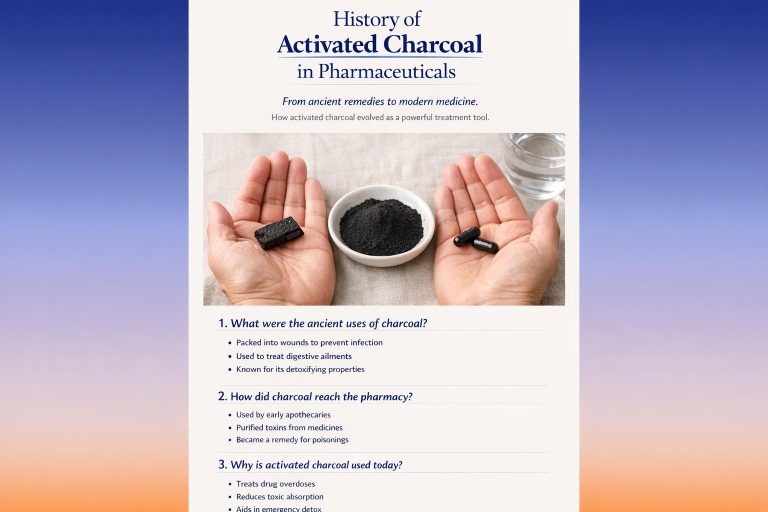
History of Activated Charcoal in Pharmaceuticals
A concise history of activated charcoal’s medical use, from ancient wound care to modern poison treatment, drug purification, and activation methods.

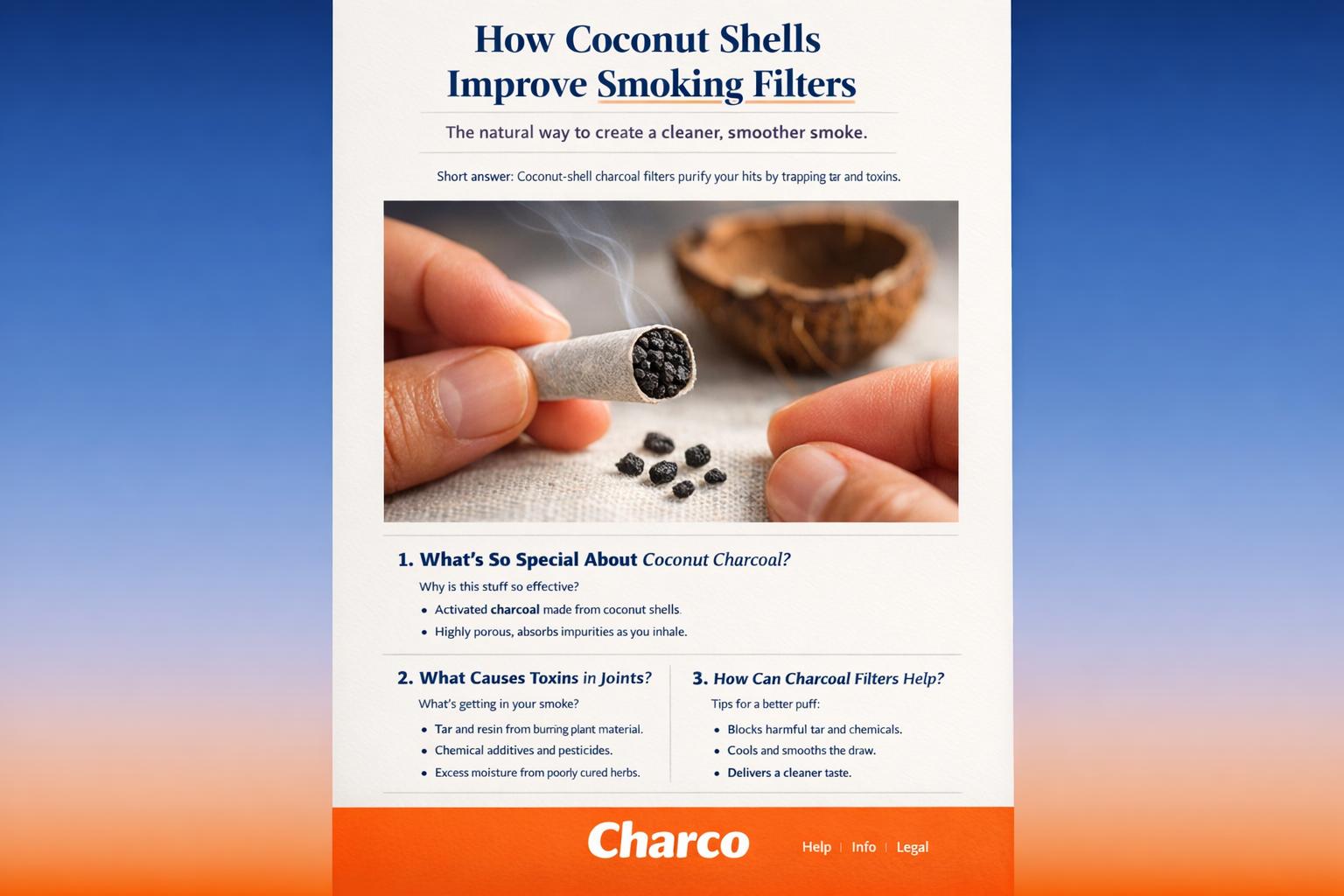
Coconut shells are transforming smoking filters by being processed into activated charcoal, a material with a massive surface area and micropores that trap harmful toxins in smoke. This charcoal is made through high-temperature heating and steam activation, creating a structure that effectively removes volatile compounds like aldehydes, cyanides, and ketones while preserving flavor.
By combining toxin reduction, flavor retention, and sustainability, coconut shell charcoal is becoming a preferred material for smoking filters.
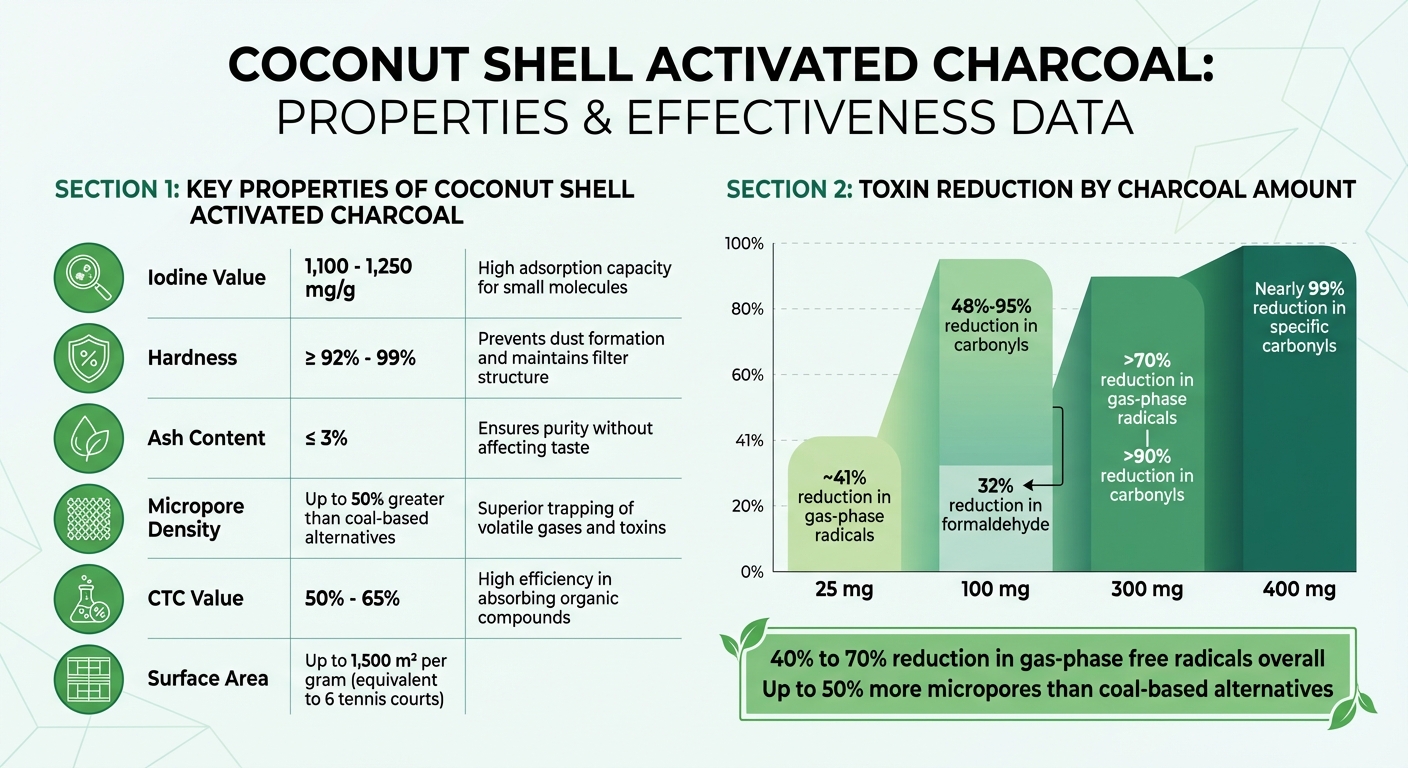
Coconut Shell Charcoal Filter Properties and Toxin Reduction Rates
Coconut shell charcoal stands out for its exceptional adsorption capabilities, eco-conscious production, and purity, making it a top choice for smoking filters.
The secret to coconut shell charcoal’s efficiency lies in its microporous structure, with pores less than 2 nanometers in size. These tiny pores are perfectly suited for capturing harmful molecules in smoke, giving coconut shell carbon up to 50% more micropores than coal-based alternatives. This makes it highly effective at trapping volatile organic compounds (VOCs) and gas-phase free radicals.
To put it into perspective, just one gram of premium coconut shell charcoal can provide up to 1,500 m² of surface area – the size of six tennis courts. This vast surface area allows it to absorb a wide range of toxins. Studies reveal that coconut shell filters can reduce gas-phase free radicals in smoke by 40% to 70%, with as little as 25 mg of activated charcoal cutting these radicals by 41%.
"Activated charcoal filters are better at capturing carcinogenic compounds than standard cigarette filters. Their many pores, large surface area, and ability to adsorb non-polar compounds makes them much more effective." – Luke Sumpter, Author, Royal Queen Seeds
Coconut shell charcoal also boasts a hardness rating of up to 99%, ensuring it withstands pressure and heat without breaking down into dust. This durability keeps filtration performance consistent throughout use. Additionally, its iodine adsorption value of up to 1,250 mg/g highlights its capacity to trap small molecules, enhancing the smoking experience by removing harmful substances.
| Property | Value | Why It Matters |
|---|---|---|
| Iodine Value | 1,100 – 1,250 mg/g | Indicates high adsorption capacity for small molecules |
| Hardness | ≥ 92% – 99% | Prevents dust formation and maintains filter structure |
| Ash Content | ≤ 3% | Ensures purity without affecting taste |
| Micropore Density | Up to 50% greater than coal-based alternatives | Superior trapping of volatile gases and toxins |
| CTC Value | 50% – 65% | High efficiency in absorbing organic compounds |
This impressive performance is further complemented by its environmentally friendly production process.
Coconut shell charcoal isn’t just effective – it’s also a greener choice. Made from agricultural byproducts, such as discarded coconut shells, it turns waste into a valuable resource. Since coconuts are harvested year-round, this material offers a steady supply without depleting natural resources.
Unlike coal-based carbon, which depends on fossil fuels and mining, coconut shell charcoal has a much lower carbon footprint. It also avoids the ecological damage linked to wood-based charcoal production. From 2020 to 2023, Heycarbons delivered 169.4 tons of granular coconut activated charcoal for cigarette filter manufacturing, showcasing the scalability of this sustainable option.
"This sustainable edge aligns with the growing demand for environmentally conscious smoking products." – UICHARCOAL
This eco-conscious sourcing not only reduces environmental harm but also supports cleaner smoking filters that effectively capture toxins.
Coconut shell charcoal’s purity is another reason it excels as a smoking filter material. With low ash content (≤ 3%) and carbon levels between 80% and 90%, it ensures no unwanted residues interfere with the smoking experience. Moisture is kept below 6%, maintaining optimal filtration efficiency.
"Selected grades of coconut shell are used in cigarette filters to remove undesirable constituents from cigarette smoke all while not influencing the flavor and aroma characteristics." – Calgon Carbon Corporation
Additionally, many coconut shell carbons meet food-grade quality standards and adhere to strict tobacco regulations. The production process avoids chemical additives, focusing on selectively targeting harmful compounds like formaldehyde, benzene, and heavy metals while preserving the flavor and aroma of tobacco or herbs. This clean approach ensures that smokers enjoy a safer and more pleasant experience without compromising taste.
Activated charcoal filters don’t absorb toxins like a sponge soaking up water. Instead, they work through adsorption, where harmful gases and toxins stick to the carbon’s massive internal surface area. This process happens thanks to the filter’s intricate network of microscopic pores, which bind toxins effectively.
The unique structure of activated charcoal is key to its performance. Micropores capture tiny vapor molecules, while mesopores allow smoke to flow smoothly during each puff. To give you an idea of its capacity, just one gram of activated charcoal has a surface area roughly the size of a football field. This immense surface area makes it highly effective at capturing harmful compounds.
Activated charcoal filters excel at targeting volatile organic compounds (VOCs) and low-molecular-weight gases that ordinary cellulose acetate filters can’t handle. These include dangerous carbonyls like formaldehyde, acrolein, and acetaldehyde – substances linked to smoke’s harshness and health risks.
The effectiveness of these filters depends on the amount of charcoal used. For example:
| Charcoal Amount | Reduction Rate of Harmful Chemicals |
|---|---|
| 25 mg | ~41% reduction in gas-phase radicals |
| 100 mg | 48%–95% reduction in carbonyls |
| 300 mg | >70% reduction in gas-phase radicals; >90% in carbonyls |
| 400 mg | Nearly 99% reduction in specific carbonyls |
These filters are particularly effective at removing substances like hydrogen cyanide, benzene, 1,3-butadiene, and tobacco-specific nitrosamines. For instance, formaldehyde levels drop by a median of 32% with 100 mg of charcoal, while acrolein is reduced by 73% at 120 mg. Gas-phase free radicals – known for causing DNA damage and respiratory issues – are reduced by 40% to 88%, depending on the charcoal amount.
However, activated charcoal filters have limitations. They’re not as effective at removing particulate-phase substances, heavy metals, or gases like carbon monoxide. Nicotine and tar levels also see only modest reductions, typically between 20% and 33%, even with high charcoal loadings.
One of the standout features of activated charcoal filters is their ability to reduce harshness while preserving flavor. They selectively adsorb irritating vapor-phase contaminants – like aldehydes, cyanides, and ketones – that contribute to throat irritation and the "bite" of smoke. At the same time, they allow the primary flavor compounds to pass through.
"Activated carbon products significantly improve the retention of a diverse array of vapor phase, semi-volatile, and low molecular weight contaminants found in cigarette smoke, such as Aldehydes, Cyanides, Ketones, Hydrocarbons, and Pyridine." – Yuanli
By removing these irritating compounds, charcoal filters soften the smoke, eliminating the "burnt" or "bitter" notes without stripping away the intended flavor. This also reduces oxidative stress, as gas-phase radicals are cut by up to 47%, making each puff feel smoother and cooler.
"The carbon takes out strong gases and some bitter stuff from the smoke. This makes each puff feel softer and nicer. Many people say the smoke feels cooler and does not hurt their throat as much." – Tanke Chemical
This ability to target specific toxins while preserving flavor sets activated charcoal filters apart from standard cellulose acetate filters, which focus more on tar and nicotine but leave gas-phase irritants largely untouched.
Numerous studies back up the effectiveness of activated charcoal filters. For example, commercial charcoal-filtered products produce 40% fewer gas-phase radicals under ISO protocols and 47% fewer under Canadian Intense (CI) protocols compared to standard filters. Experimental filters with 300 mg of charcoal have shown reductions in gas-phase radicals of up to 88%.
When it comes to carbonyl reduction, high charcoal loadings of 300 to 400 mg consistently reduce these harmful compounds by at least 90%. Formaldehyde, for instance, sees a median reduction of 32% at 100 mg of charcoal. Particulate-phase radicals are also reduced by about 25% to 27% compared to standard filters.
The relationship between charcoal amount and toxin reduction is clear: more charcoal equals greater reduction. However, filters lose effectiveness over time as their pores fill with trapped toxins, eventually allowing some to pass through – a process known as "breakthrough". This is why regular filter replacement is crucial.
To ensure consistent performance, high-quality coconut shell charcoal is often used. With an iodine value of at least 1,100 mg/g, it offers excellent porosity and adsorption capacity. Its physical strength – up to 99% hardness – prevents it from crumbling under heat and pressure, maintaining filtration efficiency throughout use.
Coconut shell charcoal filters stand out for their ability to enhance the smoking experience while promoting health and environmental responsibility.
Coconut shell charcoal filters are designed to trap harmful toxins that standard filters often miss. Their unique structure captures small molecules like tar, nicotine, and heavy metals, reducing exposure to irritants that can cause throat discomfort or respiratory issues.
These filters also help lower carbon monoxide exposure during smoking. A clinical comparison found that users of coconut shell-based filters experienced an average increase of just 2.5 ppm in end-tidal carbon monoxide, compared to a 9.41 ppm increase with wood charcoal filters. Plus, they are free from chemical additives and use chlorine-free, unbleached paper, minimizing the risk of inhaling harmful fumes.
Coconut shells, often discarded as waste in the coconut oil and water industries, are repurposed into charcoal filters, preventing them from ending up in landfills and reducing methane emissions from decomposition. This process supports a circular economy, where resources are reused rather than wasted.
"Coconut shells are a byproduct of the coconut industry, providing a sustainable and readily available source of raw material. This reduces dependence on nonrenewable resources and promotes a circular economy." – Wayne Perry, Inc.
Unlike traditional wood charcoal, which contributes to deforestation, coconut shell charcoal helps preserve forests and biodiversity. Additionally, the carbon dioxide released during its use is offset by the carbon absorbed by coconut trees during their growth, creating a carbon-neutral cycle. Between 2020 and 2023, manufacturers utilized 169.4 tons of granular coconut activated charcoal for filter production, proving its scalability and effectiveness.
Coconut shell charcoal filters offer a superior smoking experience thanks to their purity and low ash content (under 3%). The microporous structure removes harsh toxins while maintaining the aroma and flavor of the smoke.
"With coconut briquettes, the heat remains steady throughout the session, resulting in smoother smoke and richer flavor." – Djavacoal Team
Users often describe a smoother, cooler inhalation experience with no compromise on draw resistance. The filters also produce minimal ash, ensuring consistent and enjoyable sessions.
Now that we’ve covered why coconut shell charcoal is a standout choice for smoking filters, let’s dive into how to use them effectively.
The first step is picking filters that align with your rolling style. Charco filters, for instance, offer a 6mm slim fit, making them ideal for hand-rolled joints and blunts. At $7.00 for a pack of 10, these filters are crafted from coconut shell activated charcoal, unbleached paper, and feature dual ceramic tips that can be used from either end.
Pay attention to filters made with microporous coconut shell carbon, which efficiently traps tiny impurities. This carbon is sustainably sourced year-round, adding an eco-friendly edge. The dual ceramic tips not only cool the smoke but also ensure smooth, consistent airflow. Once you’ve picked the right filter, proper placement is key to getting the most out of it.
Before inserting, give the filter a gentle shake and take a single, unforced pull to clear out any loose carbon dust. Place the filter on either side of your rolling paper, ensuring it’s fully inserted to maintain steady airflow.
Roll your joint firmly, but don’t overdo it – too much pressure can restrict airflow and reduce the filter’s effectiveness. After rolling, take a dry pull. If you hear a whistling sound, adjust the seal to ensure it’s tight. The activated charcoal works to reduce harmful gas-phase radicals, giving you a cleaner, smoother draw.
For the best results, use a fresh filter with each session to maximize toxin absorption. When it’s time to dispose of the filter, toss it in the trash – or, for a more eco-conscious option, remove the charcoal residue and add it to your garden soil or compost. The activated charcoal can improve soil quality while breaking down naturally over time. Coconut shell carbon biodegrades 92% within two years, a stark contrast to coal-based carbon, which takes five years to reach just 38% biodegradation.
Coconut shell charcoal filters are a smart way to reduce toxins while keeping the flavor intact. Thanks to their thoughtful design, they effectively trap harmful substances without interfering with the taste. Since coconut shell activated charcoal is both tasteless and pure, it enhances the smoking experience rather than diminishing it.
On top of that, these filters are a more sustainable option. Made from renewable resources and fully biodegradable, coconut shell charcoal is kinder to the planet. It boasts a smaller carbon footprint and naturally breaks down over time, making it an eco-conscious choice.
Charco filters take it a step further by combining coconut shell activated charcoal, unbleached paper, and dual ceramic tips. Packaged in a slim, single-use 10-pack for $7.00, they ensure efficient toxin absorption and smooth airflow every time.
Activated charcoal made from coconut shells is effective at capturing harmful substances like carbon monoxide in smoking filters. By adsorbing carbon monoxide, it helps lower its presence in the smoke, resulting in a cleaner and smoother smoking experience.
Charcoal filters crafted from coconut shells can be reused several times, offering a decent lifespan. How long they last depends on usage frequency and conditions, but they typically remain effective for anywhere from a few weeks to a few months. For the best results, keep an eye on their performance – if you notice a drop in effectiveness or visible buildup, it’s time to replace the filter.
Coconut charcoal in smoking filters works to capture toxins and impurities, all while maintaining the flavor and strength of the smoke. This creates a smoother, cleaner smoking experience without sacrificing taste or intensity.
A concise history of activated charcoal’s medical use, from ancient wound care to modern poison treatment, drug purification, and activation methods.

Biodegradable smoking filters use coconut-shell charcoal, unbleached paper and ceramic tips to reduce toxins and decompose in 1–3 years.
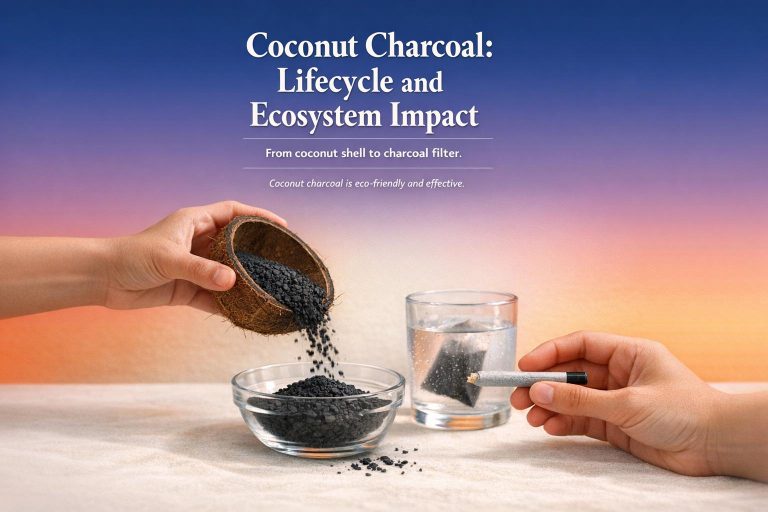
From discarded shells to activated carbon: lower-emission production, waste-to-resource benefits, and uses in water and smoking filtration.
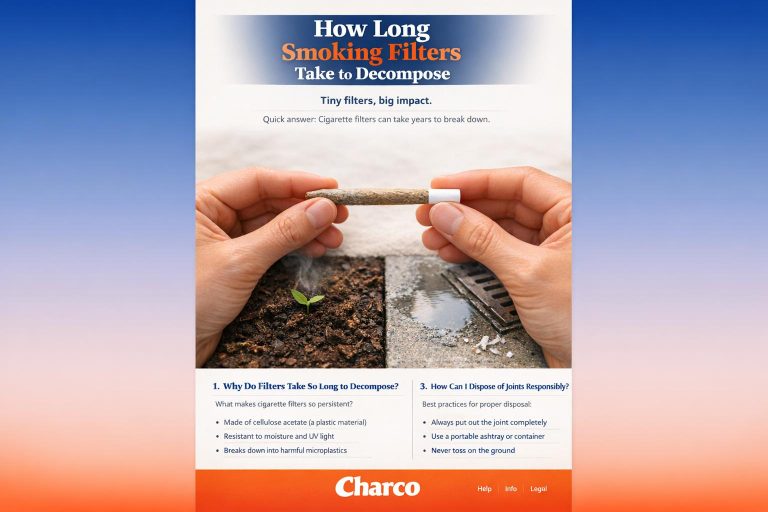
Cigarette filters can persist for years, fragment into microplastics, and only decompose fast in managed compost—material and disposal shape their harm.
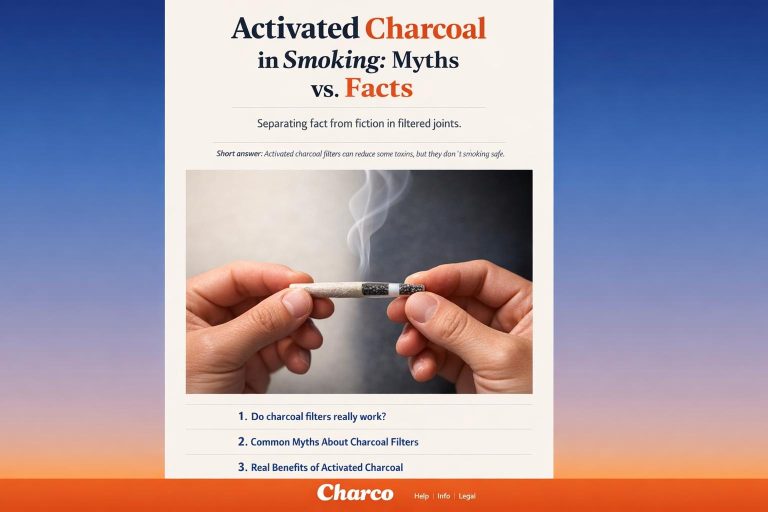
Activated charcoal filters trap many gas-phase toxins, reduce throat irritation and preserve THC/CBD, but they don’t remove gases like CO or eliminate smoking risks.

Charcoal-driven smoke rituals blend spiritual meaning with practical purification—from Indigenous ceremonies to modern activated charcoal filters.