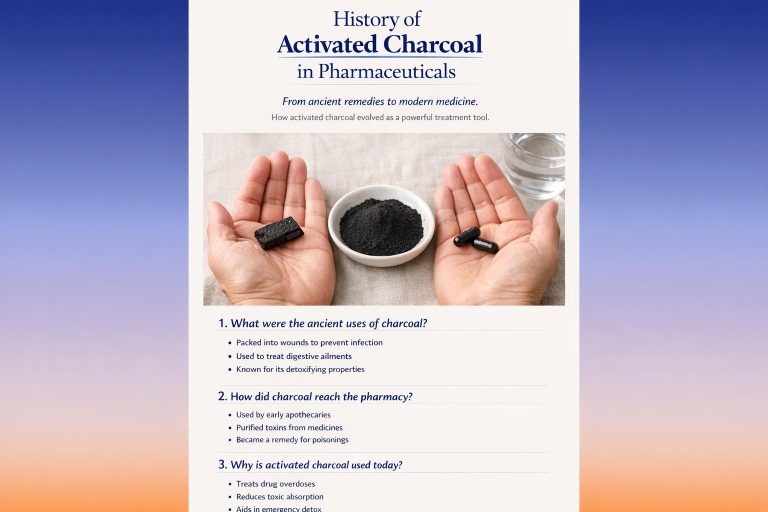
History of Activated Charcoal in Pharmaceuticals
A concise history of activated charcoal’s medical use, from ancient wound care to modern poison treatment, drug purification, and activation methods.

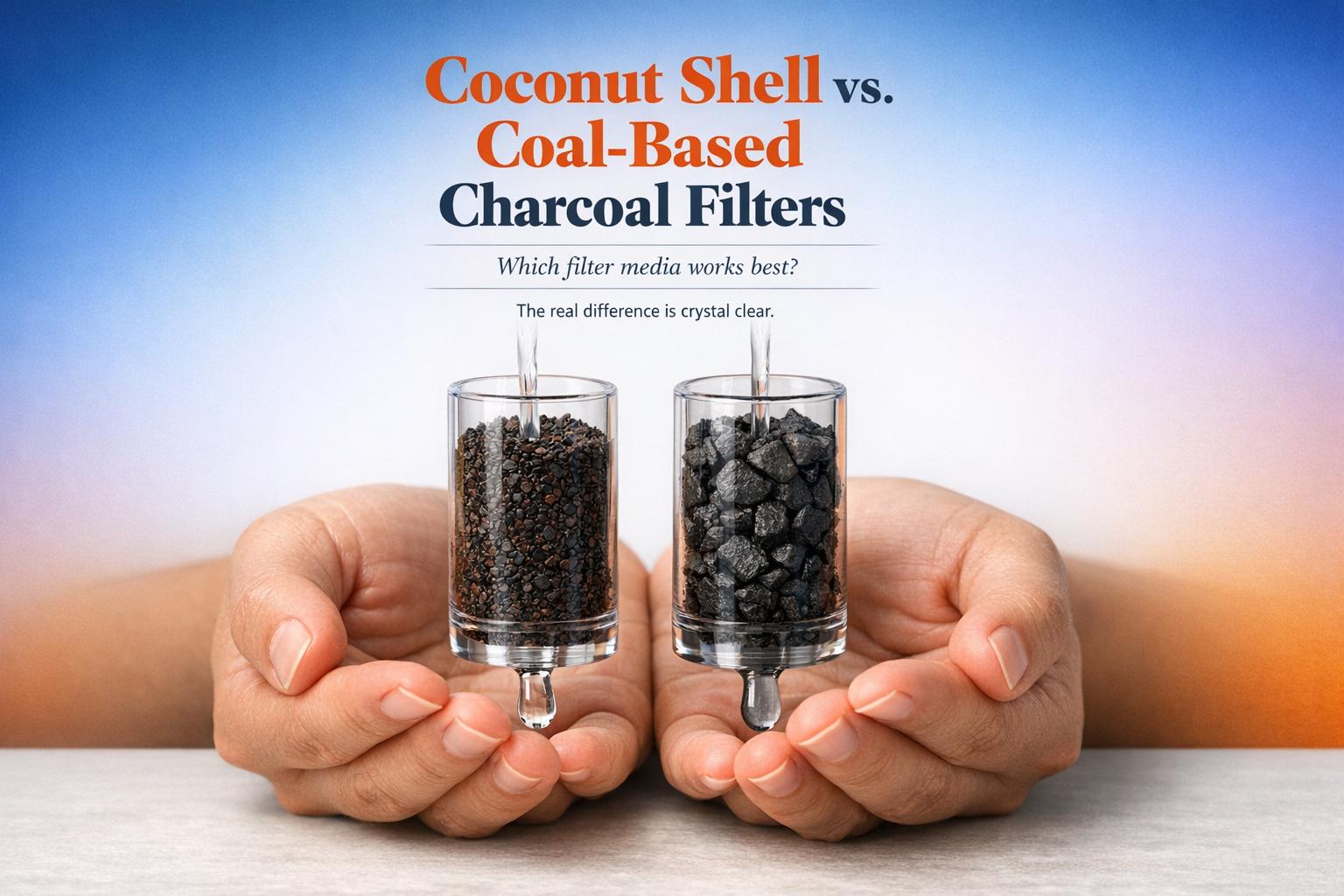
Looking for a cleaner, more effective charcoal filter? Coconut shell-based filters outperform coal-based ones in nearly every way. They trap toxins better, last longer, and are made from renewable resources, unlike coal, which is non-renewable and environmentally taxing.
| Feature | Coconut Shell Filters | Coal-Based Filters |
|---|---|---|
| Micropore Density | Higher (50% more) | Lower |
| Performance | Better for VOCs | Moderate |
| Durability | Higher (98% hardness) | Lower (90–95%) |
| Ash Content | Low (3%) | High (up to 10%) |
| Source | Renewable | Non-renewable |
Coconut shell filters are the top choice for anyone prioritizing cleaner filtration and eco-conscious practices.
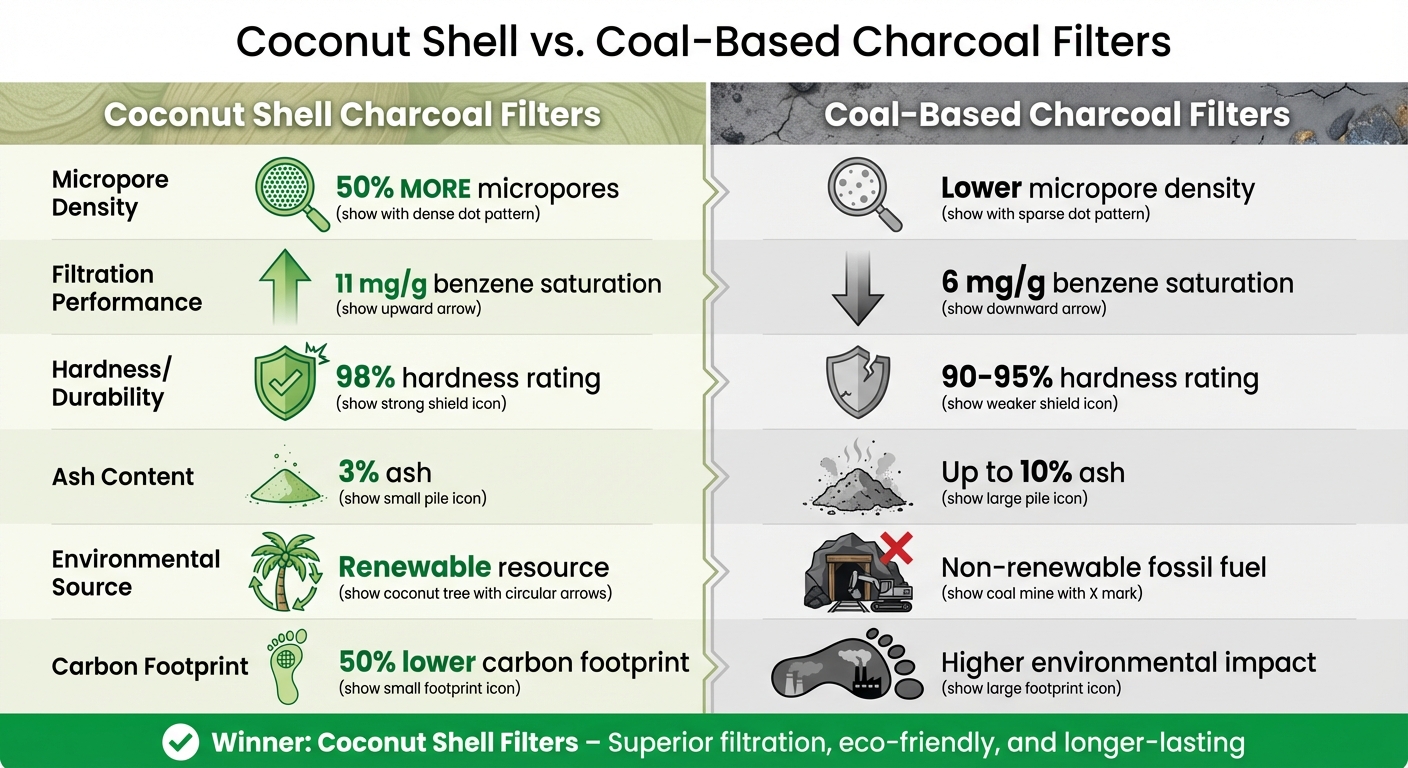
Coconut Shell vs Coal-Based Charcoal Filters Comparison Chart
Coconut shell charcoal begins as a byproduct of the coconut industry. After extracting the meat and water for food and beverages, the leftover shells are transformed into activated carbon. What makes this process so appealing is its sustainability – coconut trees produce fruit multiple times a year without being cut down. As Ken Schaeffer, President of Carbon Resources, LLC, explains:
Coconut trees yield shells without being cut down, making them renewable.
This process repurposes agricultural waste that might otherwise decompose or be burned, releasing methane – a greenhouse gas far more harmful than CO₂. Research from the University of Surrey highlights that coconut shell carbon has a much lower environmental impact compared to coal-based alternatives, particularly in terms of acidification potential, energy demand, and carbon footprint. Plus, using renewable energy sources like biomass during production can cut the global warming impact by as much as 80%. These eco-friendly credentials make coconut shell charcoal a standout choice over non-renewable coal options.
The key advantage of coconut shell charcoal lies in its microporous structure. These tiny pores – less than 2 nanometers in diameter – are highly effective at capturing volatile organic compounds (VOCs), such as benzene, nearly doubling its VOC-trapping power compared to other materials.
The Journal of Hazardous Materials emphasizes:
The source material of activated carbon significantly influences its porosity, surface area, and adsorption capacity, with coconut shell-derived carbons being particularly known for their high surface area and structural integrity.
For smoking applications, where fine toxins and odors are a concern, this microporous structure ensures cleaner filtration. Producing 1 ton of activated carbon requires approximately 6.7 tons of coconut shells, underscoring its precision in trapping even the smallest harmful particles. Beyond its high adsorption capacity, the durability of coconut shell charcoal enhances the overall experience by providing a reliable and effective filter.
Coconut shell charcoal also offers practical benefits for smokers. Its high mechanical hardness means it resists breaking down into dust or "fines" during handling. This matters because less ash and fewer residues result in a cleaner smoking experience. Additionally, the reduced charcoal dust ensures that fewer particles enter the smoke stream compared to coal-based alternatives.
Coconut shell charcoal also scores higher on the ASTM hardness scale – a standard measure of durability – ensuring that filters maintain their structure throughout use. For smokers, this translates to a smoother experience without the gritty residue often found with softer, coal-based filters.
Charco Filters takes full advantage of these properties by combining coconut shell-derived activated charcoal with unbleached paper and ceramic caps. The result? A filter that effectively traps toxins while preserving flavor, turning a renewable resource into a practical and enjoyable smoking accessory.
Coal-based activated carbon is derived from fossil fuels like bituminous coal, anthracite, or lignite – materials that took millions of years to form. As Ken Schaeffer, President of Carbon Resources, LLC, explains:
It took millions of years for bituminous coal to be formed; hence, it’s a non-renewable resource.
The environmental toll goes beyond its non-renewable nature. Coal mining disrupts land and raises safety concerns. A life cycle assessment published in PubMed revealed that coal-based activated carbon had the highest environmental impact in 10 out of 12 measured categories. Unlike coconut trees, which absorb CO₂ during their growth, coal offers no such environmental offset. Its production and use result in a higher carbon footprint. These environmental disadvantages also influence its practical applications and performance.
Coal-based charcoal has a pore structure predominantly made up of mesopores (20–500 Å) and macropores (>500 Å). These larger pores are effective for capturing bigger molecules, making coal-based filters a good choice for industrial uses like wastewater treatment, gas purification, and removing large-molecule odors or colors.
That said, this structure is less effective for filtering smaller contaminants. Coal-based carbon has about 50% fewer micropores compared to coconut shell carbon. For applications like smoking, where capturing fine VOCs (volatile organic compounds) is critical, this limitation becomes apparent. For example, its benzene saturation capacity is nearly half that of coconut shell carbon – 6 mg/g versus 11 mg/g.
Coal-based filters also produce more byproducts that can affect their usability, especially for smoking. Even after acid washing, coal-based carbon contains up to 10% ash, which is over three times the roughly 3% ash content found in coconut shell carbon.
Unwashed bituminous coal carbon has three times the ash or impurity levels of unwashed coconut shell carbon. – Karbonous
Additionally, coal-based carbon is mechanically softer, with a hardness level between 90% and 95%, compared to the 98% hardness of coconut shell carbon. This softer structure causes more particle breakdown during handling, leading to higher levels of dust and fines. For smokers, this means a grittier experience with more residue potentially entering the smoke stream. To address this, coal-based filters often require more extensive rinsing or backwashing to reduce dust levels before use.
The key performance difference between coconut shell and coal-based filters lies in their pore structure. Coconut shell carbon contains about 50% more micropores, giving it an edge in capturing smaller contaminants like volatile organic compounds (VOCs) and toxins.
Lab tests highlight this advantage: coconut shell carbon achieves 11 mg/g benzene saturation, nearly double the capacity of coal-based carbon. This means treating 1,000 gallons of water for benzene removal requires only 0.0076 lbs of coconut shell carbon, compared to 0.014 lbs of coal-based carbon.
| Metric | Coconut Shell-Based | Coal-Based |
|---|---|---|
| Micropore Density | Higher (about 50% more) | Lower |
| Adsorption Efficiency | Superior | Moderate |
| Ash Content | Low | High |
| Dust Production | Minimal | Higher |
Coconut shell filters also outperform in durability, with a hardness rating of 98% versus 90–95% for coal-based filters. This higher hardness results in reduced particle breakdown, leading to fewer fines and a cleaner filtration experience.
Historically, coal-based carbon was the more affordable option. However, anti-dumping duties ranging from 49% to 228% have significantly reduced the price gap. While coconut shell filters may have a higher initial cost, their longer lifespan and superior adsorption efficiency make them more economical in the long run. For example, treatment costs for removing MTBE can be up to 2.5 times lower with coconut shell carbon.
Coconut shell activated carbon is preferred to remove VOCs from drinking water in POU/POE systems because it is more economical than bituminous coal-based activated carbon.
- Ken Schaeffer, President, Carbon Resources, LLC
When it comes to environmental impact, coconut shell filters are the clear winner. Coconut shells are a renewable and biodegradable resource, harvested multiple times a year. They reduce the carbon footprint by about 50% compared to coal, and using renewable energy in their production can lower global warming potential by as much as 80%.
A life cycle assessment showed coal-based carbon has the highest environmental impact in 10 out of 12 categories measured. Coal, being a non-renewable fossil fuel, requires destructive mining and took millions of years to form, further compounding its environmental drawbacks.
Coconut shell and wood… have a clear environmental advantage over coal-based carbons, particularly in terms of acidification potential, non-renewable energy demand and carbon footprint.
- Noemi Arena, Researcher, University of Surrey
Additionally, coconut shell filters contain far less ash and impurities, making them a cleaner and more sustainable choice from production to disposal.
After weighing the performance, cost, and environmental factors, the decision becomes straightforward. Filters made from coconut shells stand out for their ability to deliver better health benefits, superior performance, and eco-conscious advantages. Thanks to their higher micropore density and minimal ash residue, these filters excel in adsorption efficiency, providing a cleaner and more effective filtration process.
The environmental aspect only strengthens their appeal. Coconut shells come from a renewable resource that can be harvested multiple times a year without harming the trees. In contrast, coal is a non-renewable fossil fuel extracted through destructive mining and takes millions of years to form. Plus, coconut trees actively absorb carbon dioxide during their growth, adding another layer of environmental benefit.
For those looking for a premium and eco-friendly smoking experience, Charco Filters offers an outstanding choice. These filters are crafted using activated charcoal from coconut shells, unbleached paper, and ceramic caps. They effectively trap toxins and impurities while maintaining the flavor of your smoke. Available in packs of 10 for $7 or 30 for $12, Charco Filters combine eco-friendly materials with the superior filtration power of coconut shell carbon, enhancing your smoking experience.
Coconut shell filters clearly provide better filtration, reduced environmental impact, and an overall cleaner experience. They are the perfect choice for consumers who care about both quality and the planet.
Coconut shell charcoal filters are known for influencing flavor, often delivering a cleaner taste by reducing off-notes when no chemical additives are used. On the other hand, filters that include chemical additives might bring in unwanted flavors. Opting for high-quality, additive-free filters can result in a smoother and more enjoyable experience.
Replacing a coconut shell charcoal filter is typically suggested every 3 to 6 months, though this can vary based on how often it’s used and the quality of your water. Keep an eye out for signs like a noticeable change in taste, odor, or a slower flow rate – these are clear indicators that it’s time for a new filter.
Coconut shell charcoal filters are valued for their ability to adsorb small molecules effectively, thanks to their higher micropore content. This makes them a reliable choice for filtration needs. Beyond performance, they stand out as a cleaner, more natural option compared to coal-based filters. Their production process and material also appeal to those prioritizing eco-friendly and health-conscious solutions.
A concise history of activated charcoal’s medical use, from ancient wound care to modern poison treatment, drug purification, and activation methods.

Biodegradable smoking filters use coconut-shell charcoal, unbleached paper and ceramic tips to reduce toxins and decompose in 1–3 years.
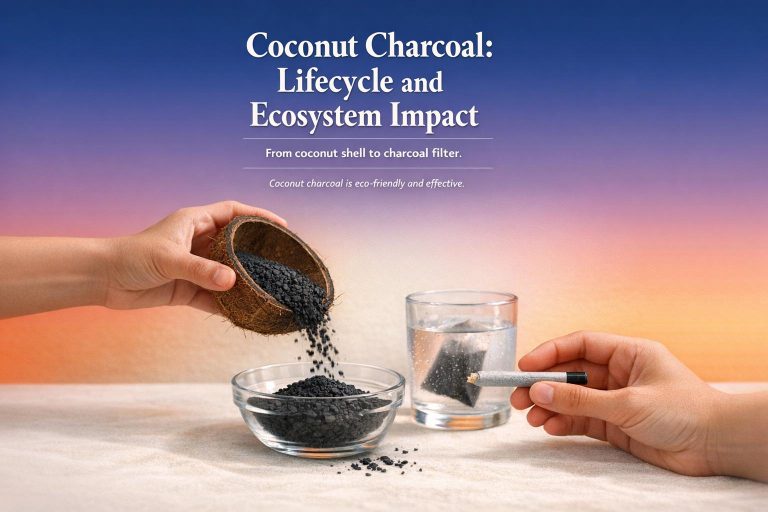
From discarded shells to activated carbon: lower-emission production, waste-to-resource benefits, and uses in water and smoking filtration.
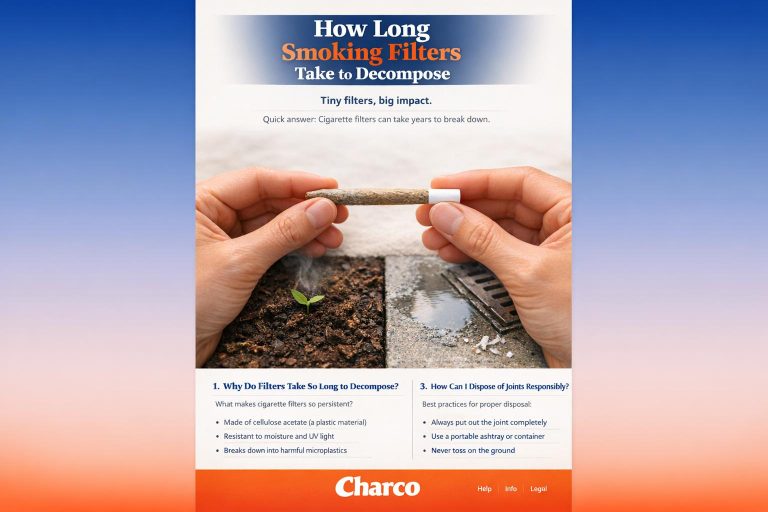
Cigarette filters can persist for years, fragment into microplastics, and only decompose fast in managed compost—material and disposal shape their harm.
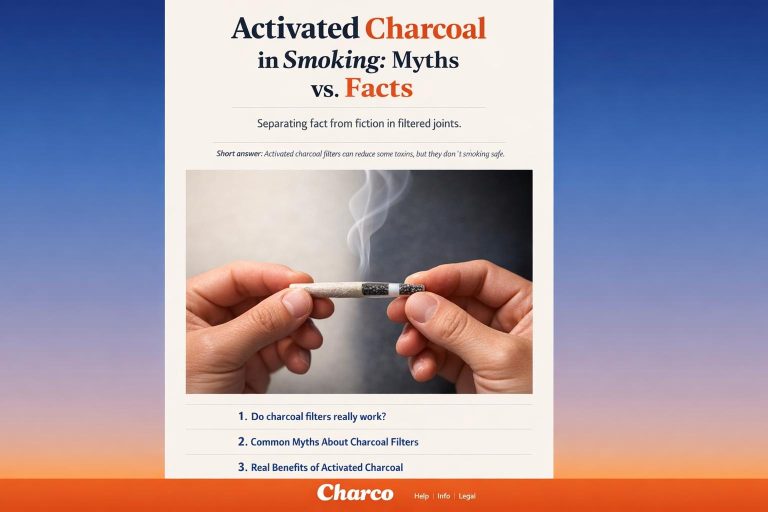
Activated charcoal filters trap many gas-phase toxins, reduce throat irritation and preserve THC/CBD, but they don’t remove gases like CO or eliminate smoking risks.

Charcoal-driven smoke rituals blend spiritual meaning with practical purification—from Indigenous ceremonies to modern activated charcoal filters.