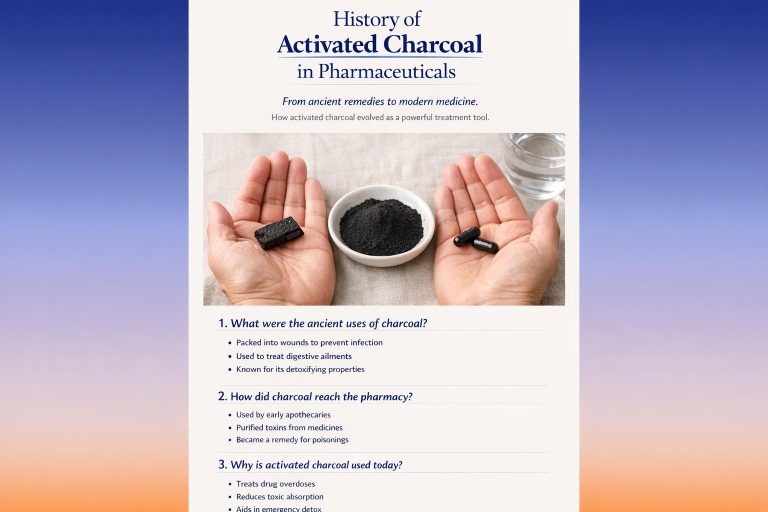
History of Activated Charcoal in Pharmaceuticals
A concise history of activated charcoal’s medical use, from ancient wound care to modern poison treatment, drug purification, and activation methods.

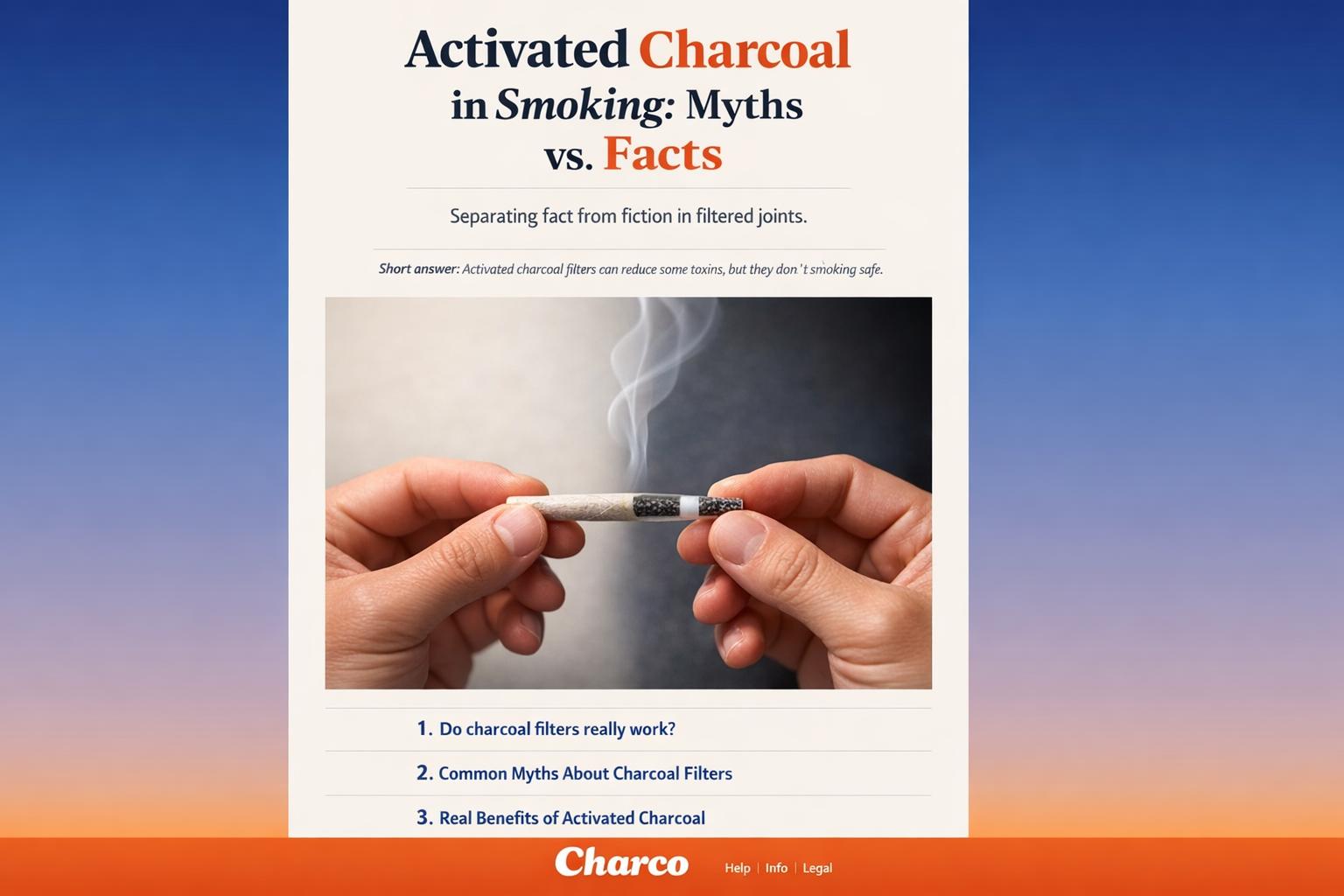
Activated charcoal filters are often promoted as a way to reduce harmful toxins in smoke, but they don’t make smoking risk-free. Here’s what you need to know:
While these filters can improve the smoking experience by reducing throat irritation and trapping some toxins, they’re not a complete solution. They provide harm reduction, not elimination. For the best results, choose high-quality filters made from coconut-shell charcoal, which are durable, effective, and more eco-friendly than other materials.
Activated charcoal works differently from traditional mechanical filters. Instead of physically blocking particles based on size, it relies on adsorption. Through its intricate microporous structure, activated charcoal attracts and traps heavier toxic molecules using van der Waals forces, while allowing lighter compounds to pass through freely. This makes it especially effective at capturing harmful substances like tars and volatile organic compounds (VOCs), while preserving smaller compounds such as cannabinoids and terpenes. Notably, it efficiently removes toxic gases with boiling points above -22°F.
The internal structure of activated charcoal is key to its effectiveness. It contains micropores, which are perfect for trapping vapor-phase toxins, and mesopores, which facilitate the movement of molecules. To put it in perspective, just one gram of high-quality activated charcoal can have an internal surface area of up to 1,500 square meters – that’s about the size of six tennis courts. Even a small amount, like 300 mg, can reduce gas-phase radicals by as much as 88%.
This extraordinary filtration capability is further enhanced by the materials used in crafting premium filters.
The type of charcoal used plays a crucial role in maximizing adsorption efficiency. Coconut-shell charcoal is often the material of choice for smoking filters, thanks to its predominantly microporous structure, which is ideal for capturing smoke vapor compounds. Beyond its filtering capabilities, it is also sustainable, generates minimal dust, and maintains a neutral taste, ensuring the natural flavor of the smoke remains intact.
"The activated carbon typically used in a cigarette filter is a microporous, coconut-based material… [It] has the desired mechanical properties to allow high-speed cigarette filter manufacture and is an excellent general adsorbent."
High-quality filters, like those offered by Charco, combine coconut-shell activated charcoal with unbleached paper and ceramic caps. This thoughtful design ensures effective toxin removal while preserving the flavor experience.
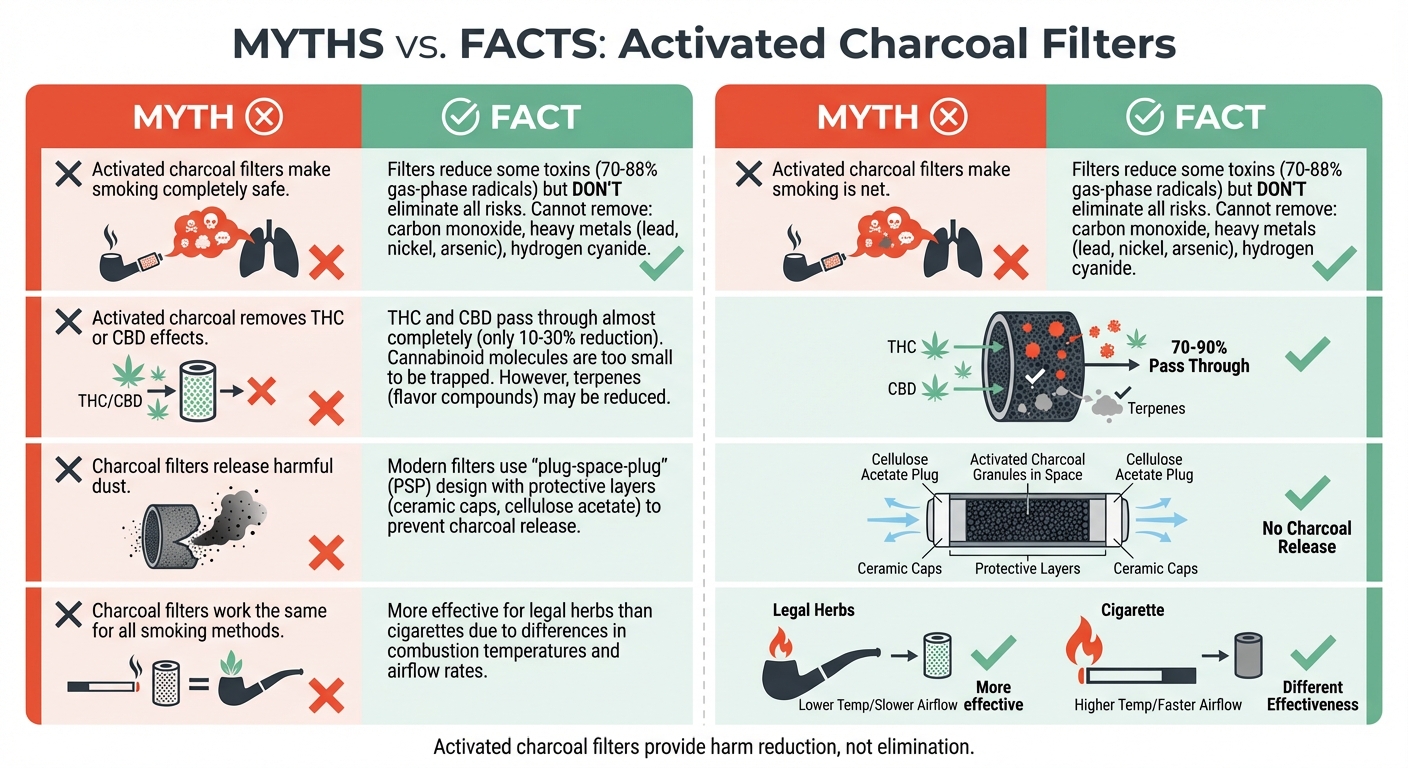
Activated Charcoal Filters: Myths vs Facts Comparison
Despite the science supporting activated charcoal, several misunderstandings continue to circulate about these filters. Let’s break down some of the most common myths.
The Reality: While activated charcoal filters can reduce certain toxins, they don’t eliminate the risks associated with smoking. These filters are designed to trap some harmful substances, but they can’t capture everything. For instance, they’re not effective at removing gases like carbon monoxide or particulate-phase components. Additionally, heavy metals such as lead, nickel, and arsenic, as well as hydrogen cyanide, often pass through the filter unimpeded.
"A better-tasting cigarette is not a safe cigarette. The filter only takes out some toxins." – Tanke Chemical
Another important point is that these filters have a limited capacity. Once saturated, they lose their ability to trap toxins effectively. The smoother taste they provide might also lead to a false sense of security, encouraging deeper inhalation. Ultimately, while filters can play a role in harm reduction, they’re far from a complete solution.
The Reality: Activated charcoal filters don’t significantly reduce THC or CBD in legal herbal smoke. The reason lies in the molecular structure – charcoal is designed to trap larger toxic molecules, not the much smaller cannabinoids like THC and CBD. Pollutants like tar and soot are large enough to be captured, but cannabinoids are not.
"THC and CBD molecules are too small to be retained by activated carbon or fiber caps due to their molecular size. The active ingredients pass through the filter completely." – Fabian Burger, Developer, Hybrid Filter
However, while cannabinoids remain mostly unaffected, the filters are effective at removing terpenes, which are responsible for flavor and aroma. This can result in a slightly muted taste. Studies suggest that only a small percentage (10–30%) of active compounds are reduced, which is far less than the reduction seen in harmful toxins.
The Reality: Modern activated charcoal filters are designed to prevent the release of charcoal granules or dust. Using a "plug-space-plug" (PSP) configuration, the charcoal is securely enclosed between protective layers like cellulose acetate plugs or ceramic tips.
"Although there have been reports of release of charcoal granules during smoking (Pauly et al., 1997), observation of the mouth end of experimental cigarettes after machine smoking did not suggest charcoal release in the present study." – Julie A. Morabito et al., U.S. Food and Drug Administration
Scientific testing confirms that properly constructed filters don’t release charcoal particles during use. For example, Charco Filters use ceramic caps to ensure no dust reaches the user. To avoid any risks, always choose filters with verified protective barriers at the mouth end.
The Reality: The effectiveness of activated charcoal filters varies depending on the smoking method. These filters tend to be more effective for legal herbs than for cigarettes. This difference comes down to combustion temperatures and flow rates. Cigarettes burn at temperatures and flow rates that can reduce the filter’s efficiency.
Smoking techniques also play a role. Filters designed for herbal use often have better airflow and lower draw resistance, making them more suitable for that purpose. To maintain performance, replace filters regularly and store them in a sealed, dry container. Exposure to moisture or pollutants can clog the carbon pores, making the filter ineffective before it’s even used.
Activated charcoal filters are known for elevating the smoking experience by trapping harmful toxins such as tar, ammonia, formaldehyde, and benzene. Studies reveal that these filters can reduce gas-phase free radicals by an impressive 70% to 88%, with even a small 25 mg quantity cutting radicals by 41%. This process results in a cooler, smoother draw that reduces throat irritation and overall discomfort.
Thanks to their porous structure, these filters effectively capture pollutants without compromising the natural flavors of your herbs. They can also reduce tar by up to 70%, helping to prevent the yellowing of teeth and fingers. These practical benefits make activated charcoal filters an appealing choice, debunking myths about their effectiveness. Beyond improving taste and comfort, they also align with environmentally conscious values.
High-quality filters, like those from Charco, emphasize sustainability by incorporating coconut-shell activated charcoal, unbleached paper, and dual ceramic tips. Coconut shells are a renewable resource that produces far less dust compared to wood or coal-based alternatives, making them an environmentally friendly option. The unbleached paper reduces chemical exposure, while the ceramic tips prevent sogginess and maintain balanced airflow.
This thoughtful construction results in a biodegradable product that reduces environmental impact without sacrificing performance. For those who prefer a 6mm "slim fit" compatible with standard rolling papers, these eco-friendly filters strike the perfect balance between functionality and sustainability. They also offer excellent durability and practicality.
Charco Filters are available in packs of 10 for $7.00 or 30 for $12.00, providing an affordable way to enhance your smoking experience. Designed for single use with legal herbs, these filters are versatile enough to fit joints, pre-rolls, and various pipes. The dual ceramic tips on both ends ensure consistent performance throughout your session, making them a convenient and cost-effective upgrade to your smoking routine.
Let’s clear the air about activated charcoal filters. These filters are incredibly effective at reducing harmful substances. They can lower gas-phase free radicals by 70–88% and cut carbonyls by up to 99% when loaded with higher amounts of charcoal. However, their ability to remove particulate compounds, like tar, is limited.
Activated charcoal works by selectively trapping volatile gases, such as formaldehyde and ammonia, while leaving most THC and CBD intact – only reducing these compounds by about 10–33% when using 300 mg of charcoal. On the flip side, aromatic compounds like terpenes, which give your herb its flavor, may be absorbed by the filter, potentially dulling the taste. This selective filtration is a key point noted by industry experts.
"Activated charcoal is extremely effective at removing gas-phase compounds. It is far less effective at removing particulate-bound compounds." – High Times
When it comes to choosing the right filter, quality makes a big difference. Coconut-shell activated carbon stands out for its microporous structure (pore sizes of 0.3–0.9 nm), which efficiently traps small pollutants. It’s also tougher than coal-based alternatives, with a hardness rating of 95–98 on the Mohs scale. Plus, it’s better for the environment, producing 41% lower CO₂ emissions during manufacturing and generating less dust.

| Feature | Pack of 10 | Pack of 30 |
|---|---|---|
| Price | $7.00 | $12.00 |
| Quantity | 10 filters | 30 filters |
| Materials | Coconut-shell charcoal, unbleached paper, ceramic tips | Coconut-shell charcoal, unbleached paper, ceramic tips |
| Benefits | Toxin filtration, smoother draw, eco-friendly | Toxin filtration, smoother draw, eco-friendly |
| Best For | First-time users trying charcoal filters | Regular users looking for better value |
Both packs offer the same high-quality design, featuring dual ceramic tips that ensure smooth airflow and prevent sogginess during use. With a 6 mm diameter, these filters are compatible with standard rolling papers, joints, and pipes, making them a versatile choice for enjoying legal smoking herbs.
Charcoal filters need replacing anywhere between every 3 months to 3 years, depending on how often they’re used, their quality, and the level of contaminants they’re exposed to. To keep them working effectively, check their performance regularly and stick to the manufacturer’s recommendations.
Charcoal filters can subtly alter the flavor of your herb. They may tone down its natural taste or leave a faint paper-like aftertaste. That said, they improve the smoking experience by delivering smoother, cooler hits while still maintaining much of the herb’s original flavor.
To ensure activated charcoal filters stay effective, always store them in airtight packaging. This keeps them from absorbing substances from the surrounding environment, which could compromise their ability to capture toxins and impurities. When sealed correctly, these filters can maintain their functionality indefinitely without losing their performance.
A concise history of activated charcoal’s medical use, from ancient wound care to modern poison treatment, drug purification, and activation methods.

Biodegradable smoking filters use coconut-shell charcoal, unbleached paper and ceramic tips to reduce toxins and decompose in 1–3 years.
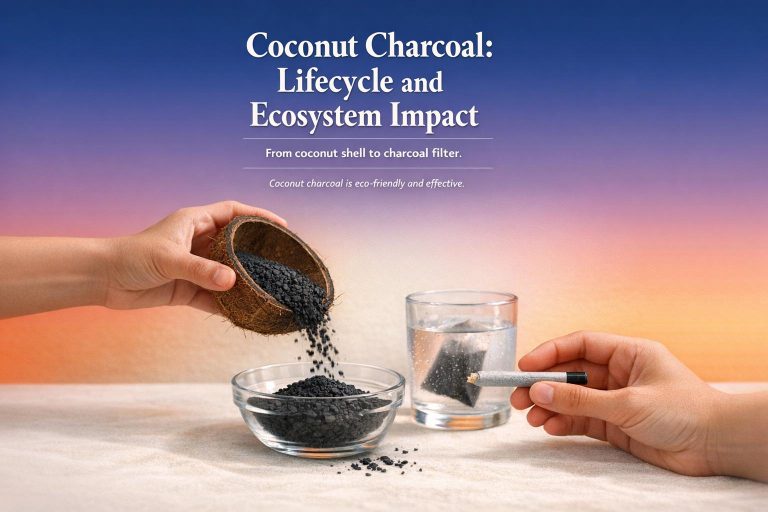
From discarded shells to activated carbon: lower-emission production, waste-to-resource benefits, and uses in water and smoking filtration.
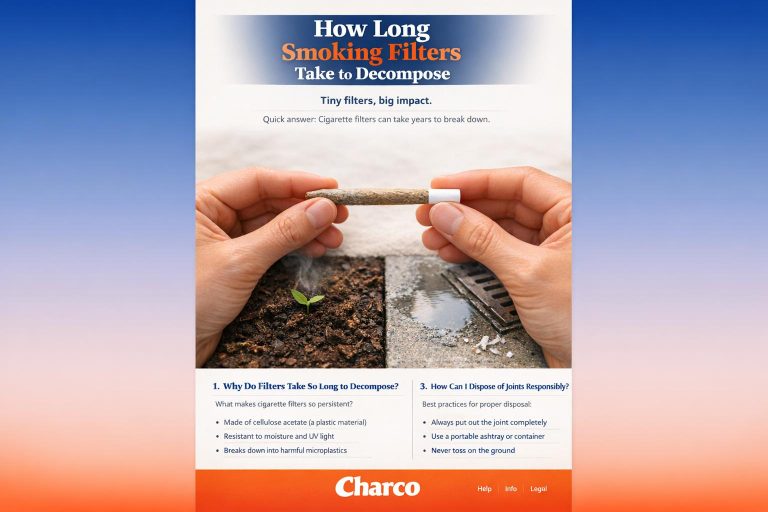
Cigarette filters can persist for years, fragment into microplastics, and only decompose fast in managed compost—material and disposal shape their harm.

Charcoal-driven smoke rituals blend spiritual meaning with practical purification—from Indigenous ceremonies to modern activated charcoal filters.
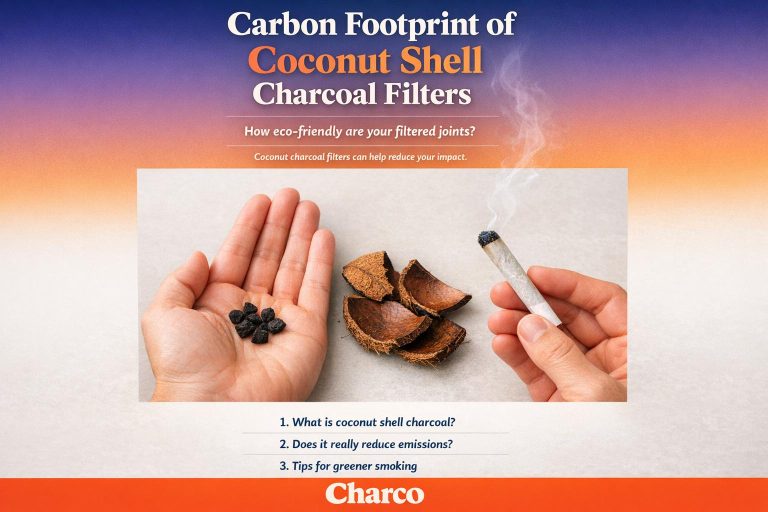
Coconut shell charcoal filters cut lifecycle emissions versus coal, but pyrolysis and pit charring remain the largest sources of carbon impact.