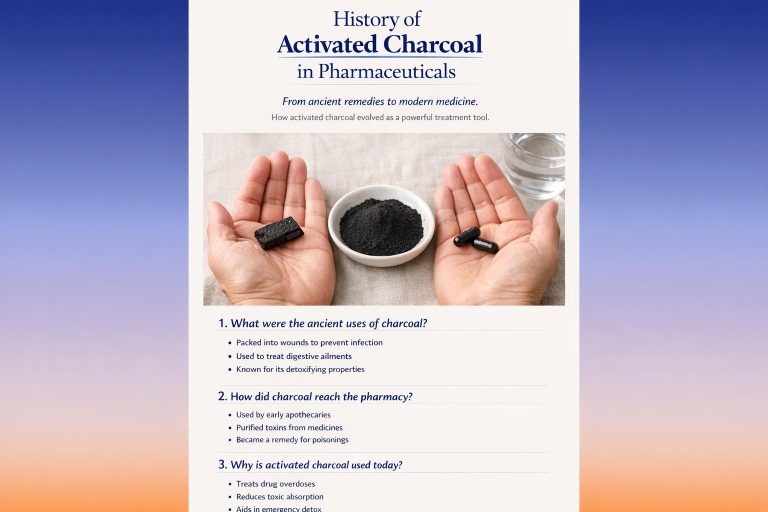
History of Activated Charcoal in Pharmaceuticals
A concise history of activated charcoal’s medical use, from ancient wound care to modern poison treatment, drug purification, and activation methods.

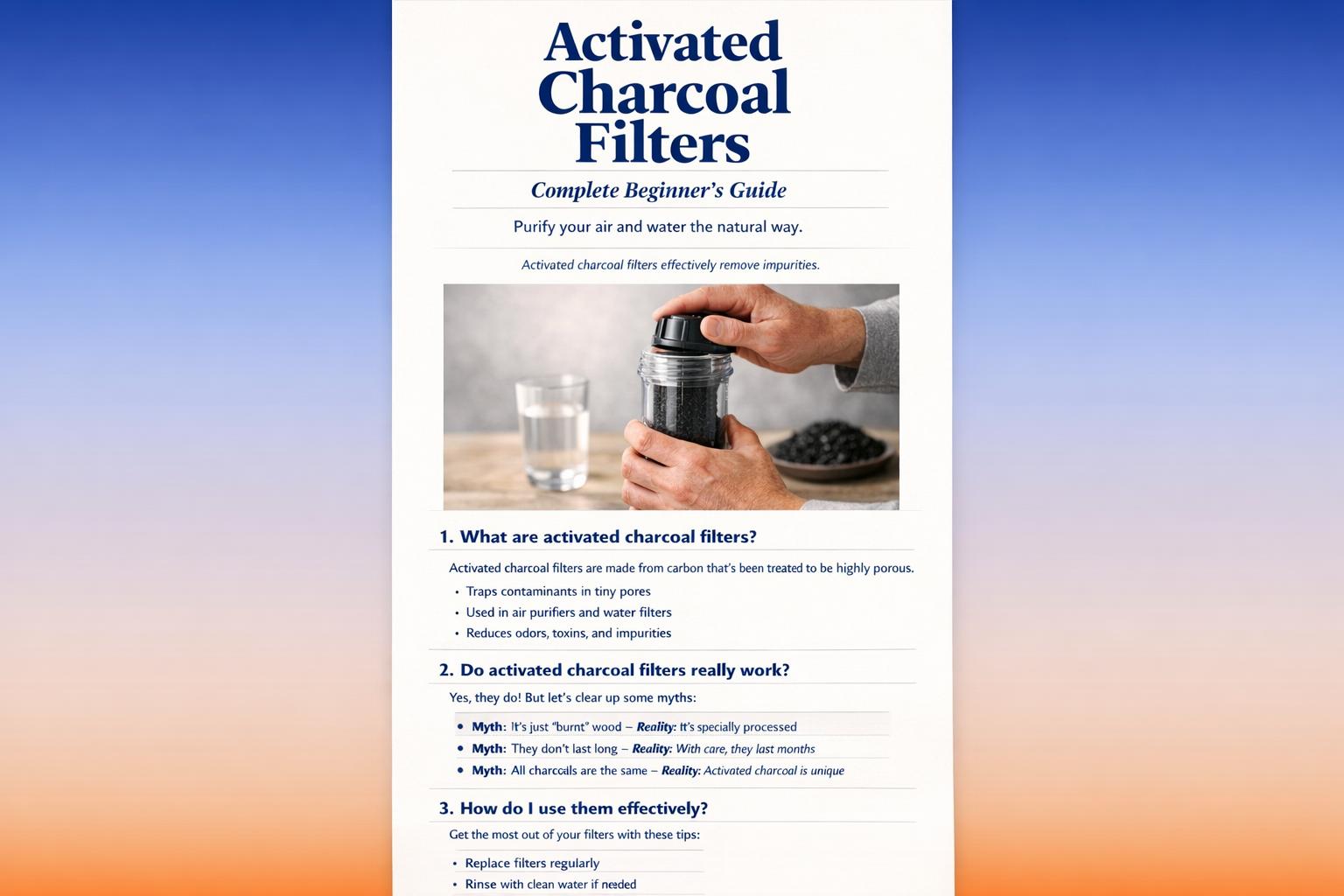
Activated charcoal filters improve smoking by reducing toxins like tar, benzene, and formaldehyde through a process called adsorption. These filters use porous carbon, often from coconut shells, to trap harmful compounds, making the smoke smoother and less harsh on the throat. Compared to standard filters, they lower gas-phase radicals by up to 40% and reduce carbonyls by nearly 99%, offering a cleaner experience. Additionally, they are made from renewable materials, aligning with eco-conscious practices. Charco‘s filters, featuring dual ceramic tips and unbleached paper, are available in packs of 10 ($7.00) or 30 ($12.00), designed for single use to maintain effectiveness. Insert the filter, enjoy smoother draws, and replace after each session for optimal performance.
Activated charcoal filters are made from highly porous carbon designed to trap contaminants through a process called adsorption. This means pollutants stick to the surface of the charcoal rather than being absorbed into it. Thanks to their intricate network of microscopic pores, these filters are incredibly effective at capturing impurities.
Typically, these filters are constructed in a "plug-space-plug" design, where the charcoal granules sit between filter plugs. Premium versions often include unbleached casings and heat-resistant ceramic tips, adding to their functionality and durability.
The magic lies in the "activation" process. Raw materials, usually coconut shells, are exposed to temperatures between 600–900°C (1,112°F–1,652°F). This process creates an extensive network of micropores, dramatically increasing the surface area available to trap pollutants. To put it in perspective, top-grade coconut shell charcoal can have a surface area of up to 1,200 m²/g. Imagine this: a single teaspoon of activated carbon has more surface area than a football field. This incredible surface area allows these filters to capture volatile organic compounds (VOCs), odors, and gaseous pollutants that standard filters often miss.
"Activated carbon filters are some of the most effective filters on the market for contaminant removal." – Brian Campbell, Founder, WaterFilterGuru.com
The next sections will explain how these filters are made and what sets them apart from standard options.
The production of activated charcoal filters starts with renewable materials, with coconut shells being a popular choice. Coconut shells are ideal because they produce charcoal with a high concentration of micropores – 85% to 90% of the total surface area – perfectly suited to trap common contaminants like those found in smoke.
There are two main methods of production: physical activation and chemical activation.
The result is a vegan-friendly filter that doesn’t rely on animal products or harsh synthetic chemicals during production. Since carbon is one of the Earth’s most abundant elements and can be sourced from renewable materials like coconut shells, these filters are also more eco-conscious than many synthetic alternatives.
In lab tests, modified cigarette filters containing activated charcoal showed a reduction in harmful carbonyl compounds by nearly 99%. Knowing how these filters are made helps explain why they outperform many standard options.
The main difference between activated charcoal filters and standard filters lies in how they capture contaminants. Standard filters, usually made from cellulose acetate, rely on mechanical straining. Think of it like a sieve that catches larger particles such as dust, lint, and tar droplets. In contrast, activated charcoal filters use adsorption, where contaminants bind chemically to the carbon surface.
| Feature | Standard Filters | Activated Charcoal Filters |
|---|---|---|
| Primary Mechanism | Mechanical Straining | Adsorption (Surface binding) |
| Target Contaminants | Large particles, tar droplets | VOCs, carbonyls, benzene, formaldehyde |
| Surface Area | Low | Extremely high (500+ m²/g) |
| Material Source | Synthetic fibers (Cellulose Acetate) | Natural (Coconut shells, wood) |
| Environmental Impact | Often non-biodegradable | Renewable, vegan-friendly materials |
Standard filters often fail to capture VOCs and gaseous pollutants, which can easily pass through their fibers. On the other hand, activated charcoal filters are specifically designed to target gas-phase compounds like formaldehyde and acrolein. This gives them an edge in filtering out harmful toxins.
Another benefit is the smoother, cooler inhalation experience they provide. However, there’s a trade-off: because terpenes are also VOCs, activated charcoal can adsorb some of these flavorful compounds. This might slightly diminish the strain-specific flavor profile.
"Activated charcoal is extremely effective at removing gas-phase compounds. It is far less effective at removing particulate-bound compounds." – High Times
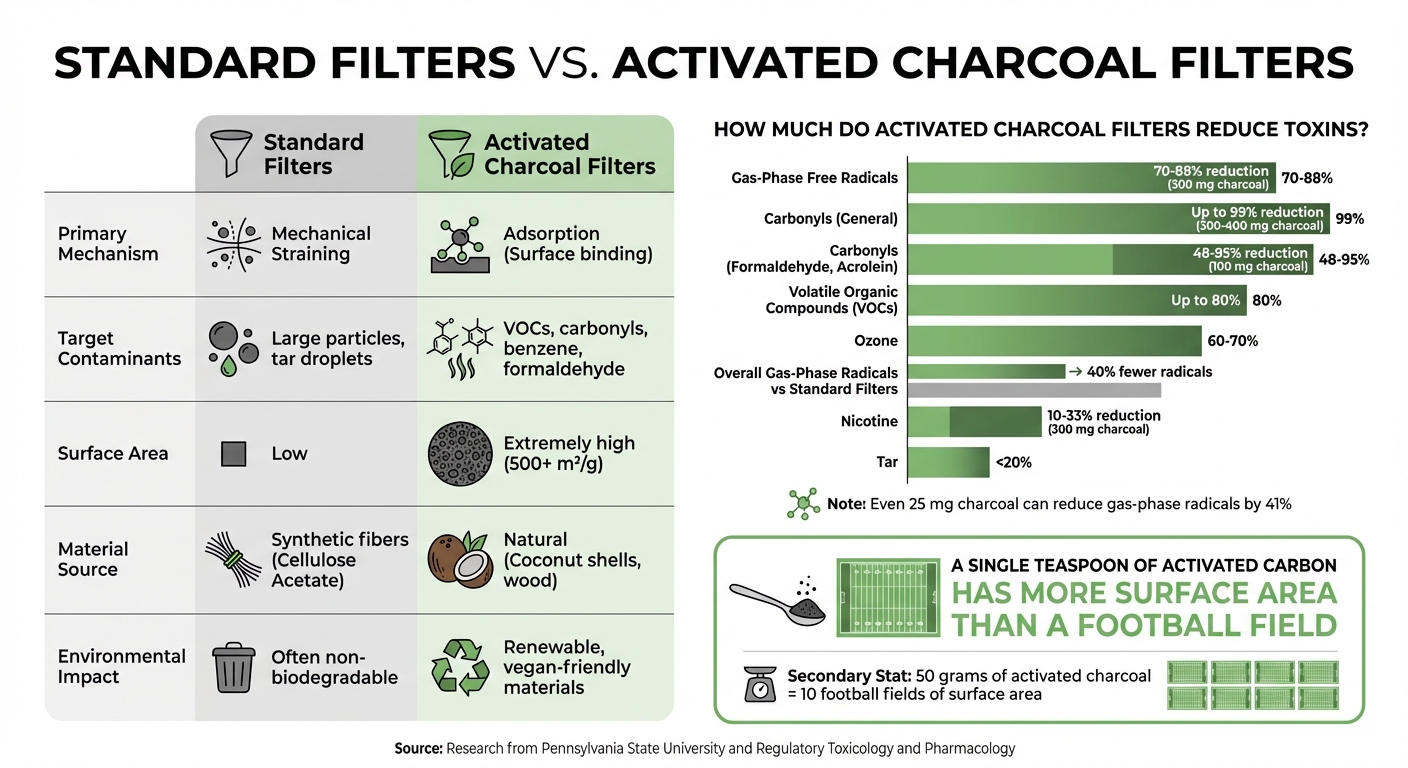
Standard vs Activated Charcoal Filters: Key Differences and Toxin Reduction Rates
Let’s break down how activated charcoal filters function when smoke passes through them. The process is rooted in some fascinating chemistry.
The magic of these filters lies in a process called adsorption. Unlike absorption, where substances are soaked into a material, adsorption happens at the surface level. Instead of being absorbed, molecules cling to the surface of the material.
"Adsorption happens on the surface level and does not create a new substance, but rather two substances hanging on to each other." – Oransi
As smoke moves through the filter’s intricate network of microscopic pores, volatile compounds and free radicals chemically bind to the carbon. To give you an idea of how effective this can be, just 50 grams of activated charcoal can provide a surface area equal to 10 football fields. The charcoal is especially good at targeting gas-phase toxins like formaldehyde, acrolein, and benzene. However, it’s less effective at trapping larger particles, such as tar droplets. This is why these filters are often paired with mechanical filtration systems.
"Activated carbon is ‘excellent for most organic chemicals.’" – Centers for Disease Control (CDC)
The success of adsorption depends heavily on contact time. High-quality filters are designed to maximize this interaction by evenly distributing the charcoal. However, once the charcoal becomes saturated, the filter’s effectiveness drops, and it needs to be replaced. And no, you can’t reactivate them at home – your oven simply doesn’t get hot enough. It takes a staggering 1,652°F (900°C) to regenerate the carbon safely.
With this understanding of how adsorption works, let’s look at how much these filters can reduce harmful toxins.
So, how well do these filters actually work? Research shows that cigarettes with charcoal filters produce 40% fewer gas-phase radicals compared to those with standard cellulose acetate filters. The more charcoal in the filter, the better the results.
| Toxin Category | Reduction Effectiveness | Charcoal Loading |
|---|---|---|
| Carbonyls (Formaldehyde, Acrolein) | 48% – 95% | 100 mg |
| Carbonyls (General) | Up to 99% | 300–400 mg |
| Gas-Phase Free Radicals | 70% – 88% | 300 mg |
| Volatile Organic Compounds (VOCs) | Up to 80% | Standard |
| Ozone | 60% – 70% | Standard |
| Nicotine | 10% – 33% | 300 mg |
| Tar | < 20% | Standard |
"100 mg charcoal reduced most carbonyls investigated by between 48% and 95%." – Regulatory Toxicology and Pharmacology
Even a small amount of charcoal – around 25 mg – can cut gas-phase radicals by 41%. But when you increase the loading to 300–400 mg, harmful carbonyls like formaldehyde and acrolein can be reduced by nearly 99%.
"The removal efficiency of a compound from cigarette smoke depends on the activity, amount, and distribution pattern of charcoal in the filter." – Reema Goel, Department of Public Health Sciences, Pennsylvania State University
While charcoal filters are excellent at removing gas-phase toxins, they don’t work as well for tar and nicotine. These substances exist primarily in the particulate phase, where mechanical filtration is more effective. As a result, charcoal filters typically reduce tar and nicotine by less than 20% to 33%.
Activated charcoal filters offer a range of advantages, from improving health and reducing toxins to promoting eco-conscious practices and preserving flavor.
Activated charcoal filters are highly effective in reducing harmful substances in smoke. They can cut gas-phase free radicals by 70–88% and nearly eliminate carbonyls, which are known irritants. This reduction helps ease throat irritation and lowers health risks associated with smoking.
"Activated carbon filters are better at capturing carcinogenic compounds than standard cigarette filters." – Royal Queen Seeds
These filters work by removing irritants like ash and tar, resulting in a smoother, cooler inhale that’s gentler on the throat and lungs. By reducing these toxins, they help minimize coughing and discomfort, making smoking less harsh. This aligns with harm reduction practices aimed at lowering the risks of smoking.
"The addition of charcoal in cigarette filters may be an effective means of reducing many toxicants from tobacco smoke." – Reema Goel, Department of Public Health Sciences, Pennsylvania State University
In addition to health benefits, these filters contribute to a more environmentally friendly approach to smoking.
Activated charcoal filters are often made from biodegradable coconut shell carbon, a material that stands out for its renewable and sustainable qualities. Unlike traditional methods involving mining or deforestation, coconut shells provide a year-round, renewable source of carbon.
"The raw material, coconuts, is a renewable source of carbon that grows throughout the year and can be harvested up to four times annually. There is no mining required, and unlike wood activated carbon, you don’t need the entire tree, only the coconuts." – Oransi
Many premium filters, such as those from Charco, incorporate unbleached paper and ceramic components alongside the charcoal. This combination reduces waste and environmental impact while maintaining high performance. Additionally, these filters last up to three times longer than standard fiberglass models, leading to less frequent disposal.
While their eco-friendly design is impressive, another standout feature is their ability to retain flavor.
One of the key advantages of activated charcoal filters is their ability to remove toxins without compromising the natural aroma of your herbs.
"If your priority is smoother smoke and fewer harsh compounds, charcoal filters may make sense." – High Times
This balance of toxin reduction and flavor retention ensures a better smoking experience, making these filters a popular choice for those seeking a cleaner, smoother inhale without sacrificing taste.

Charco brings premium activated charcoal filters to the table, offering an excellent balance of toxin reduction and flavor retention. Designed for all types of users, these filters are a reliable choice for both casual and frequent smokers.
Charco keeps it simple with two product options, catering to different needs and budgets. Both options feature the same high-quality construction: 6mm diameter filters made from coconut-shell activated charcoal, wrapped in unbleached paper, and finished with dual ceramic tips on both ends. These ceramic tips not only resist heat but also help cool the smoke, while the compact 6mm size works perfectly with standard and thin rolls.
For those just starting out, the Pack of 10 is priced at $7.00, making it a low-commitment way to try activated charcoal filtration. Regular smokers, on the other hand, can save more with the Pack of 30, priced at $12.00. This larger pack reduces the cost per filter from $0.70 to $0.40 – a 43% savings that adds up quickly for daily users.
The coconut-shell carbon in these filters is highly effective, with 85% to 90% micropores that are sized to trap harmful compounds like tar and benzene while allowing cannabinoids and terpenes to pass through. To put it into perspective, a single gram of this activated charcoal boasts an internal surface area of up to 1,500 square meters – roughly the size of six tennis courts.
Both filter packs are identical in design but differ in quantity and overall value. They are intended for single-use only, as the charcoal pores become saturated with tar and impurities after one session. To ensure maximum filtration efficiency, it’s best to replace the filter after each use rather than reusing it.
Here’s a handy tip: in cold or damp weather, warm the filter briefly between your fingers before using it. This prevents condensation from clogging the charcoal pores, ensuring smooth airflow and consistent filtration performance.
| Feature | Pack of 10 | Pack of 30 |
|---|---|---|
| Price | $7.00 | $12.00 |
| Quantity | 10 Filters | 30 Filters |
| Price per Filter | $0.70 | $0.40 |
| Diameter | 6mm | 6mm |
| Carbon Source | Coconut Shell | Coconut Shell |
| Paper Type | Unbleached | Unbleached |
| End Caps | Dual Ceramic | Dual Ceramic |
| Best For | Beginners / Occasional use | Experienced / Daily smokers |
One thoughtful design feature is the reversible ceramic tips, which allow you to insert the filter from either end without impacting its performance. This small but practical detail makes them especially user-friendly for beginners who might still be getting the hang of filter placement. Charco filters are crafted to seamlessly enhance the smoking experience, combining ease of use with excellent value.
To get the most out of your activated charcoal filtration, selecting the right filter is key. Charco’s 6mm filters are tailored for hand-rolled joints and standard rolling papers, fitting perfectly without requiring any extra tools or adjustments.
If you’re just starting out with activated charcoal filters, the Pack of 10 for $7.00 is a great way to test the waters. It provides enough filters to see the benefits without a big upfront investment. Once you’re on board – and many users are – you can upgrade to the Pack of 30 for $12.00. This larger pack offers better value, costing roughly $0.40 per filter compared to $0.70 per filter in the smaller pack.
To use, simply insert the filter into one end of your rolling paper before packing in your herb. The ceramic tips are reversible, making it easy to insert regardless of orientation, which is especially helpful for beginners.
For the best experience, take slow, steady draws. The activated charcoal works through a process called adsorption, where toxins cling to the surface of the carbon as the smoke passes through. By slowing your inhale, the smoke has more time to interact with the carbon, improving toxin removal. Proper placement and technique ensure the filter performs at its best until it’s time to replace it.
Swap out your Charco filter after each use. Over time, the activated charcoal’s pores become saturated with tar and other impurities, which reduces its ability to filter effectively. You’ll know it’s time for a new filter when you notice restricted airflow or harsher smoke.
Be sure to let used filters cool completely before disposing of them. For storage, keep unused filters in their original packaging or a sealed glass jar. As long as they stay dry and free from ambient odors, they won’t expire.
Charco filters are crafted using coconut-shell activated charcoal, a resource that can be harvested up to four times a year. This makes it a more renewable and eco-friendly option compared to carbon sourced from coal, which involves mining and leaves behind a much larger environmental footprint.
To further minimize waste, Charco packages its filters in upcycled glass jars, which can either be reused or recycled. When disposing of used filters, ensure they are completely cooled. It’s important to note that reactivating filters at home is not safe – industrial reactivation requires controlled chambers reaching temperatures of around 900°C (1,652°F). Attempting this in a home oven could release concentrated toxic gases.
In addition to being environmentally conscious, these filters offer clear health benefits.
Activated charcoal filters are effective at reducing exposure to harmful toxins. Research shows that these filters can lower gas-phase radicals by 40% compared to standard cellulose acetate filters. When the charcoal content is increased, levels of harmful carbonyl compounds can drop by nearly 99%.
"Commercial cigarettes containing charcoal filters produced 40% fewer gas-phase radicals than did regular cellulose acetate filter cigarettes."
- Reema Goel, Pennsylvania State University Tobacco Center of Regulatory Science
The filters operate through adsorption, a process where toxin molecules adhere to the vast surface area of the activated charcoal. This creates an efficient system for trapping organic non-polar molecules like benzene, acetone, and p-benzosemiquinone. However, they are less effective at capturing smaller, polar molecules such as carbon monoxide and hydrogen cyanide.
For maximum safety and effectiveness, use filters with ceramic end caps, like Charco’s design, to prevent any leakage of charcoal granules. Filters should be replaced after each use, as once the pores are saturated, they can no longer trap toxins effectively.
Activated charcoal filters offer a cleaner and safer smoking experience by effectively capturing harmful toxins such as tar, benzene, and formaldehyde through a process called adsorption. With their massive surface area, these filters can reduce free radicals by up to 40% compared to traditional cellulose filters. The result? A smoother, cooler inhale that cuts down on irritation and lingering odors.
Beyond performance, these filters are designed with environmental responsibility in mind. Charco uses coconut shell-based carbon, a renewable resource that can be harvested multiple times a year. Plus, the upcycled glass jar packaging helps minimize waste, making these filters an excellent choice for smokers looking to reduce their environmental impact without compromising quality.
For the best results, simply insert the filter, discard it after use, and store any extras in a sealed container.
The lifespan of an activated charcoal filter largely depends on how frequently it’s used and its specific application. For smoking, it’s typically advised to replace the filter after each session or whenever you notice signs of reduced performance – like restricted airflow or less effective filtration.
Replacing the filter regularly helps maintain its ability to remove impurities and ensures a smoother, more enjoyable experience. Be sure to check and follow the manufacturer’s recommendations for optimal use.
Activated charcoal filters made from coconut shells offer a smart and eco-conscious option with several environmental perks. These filters are crafted using discarded coconut shells, a renewable byproduct that would otherwise go to waste. By repurposing agricultural leftovers, they eliminate the need for mining non-renewable resources like coal, making them a cleaner and more sustainable choice.
What sets coconut-shell charcoal apart is its exceptional ability to filter impurities. Thanks to its high microporosity and large surface area, it’s incredibly effective, which means these filters last longer and need fewer replacements. This not only cuts down on waste but also conserves valuable resources. Opting for coconut-shell-based filters is a simple way to support greener practices while promoting cleaner air and a healthier environment.
Activated charcoal filters can subtly change the taste of smoking by removing harsh or unwanted flavors. By adsorbing impurities and certain compounds, they help deliver a smoother, more pleasant experience. Many smokers notice that this process reduces bitterness and harshness, which can improve the overall flavor.
A concise history of activated charcoal’s medical use, from ancient wound care to modern poison treatment, drug purification, and activation methods.

Biodegradable smoking filters use coconut-shell charcoal, unbleached paper and ceramic tips to reduce toxins and decompose in 1–3 years.
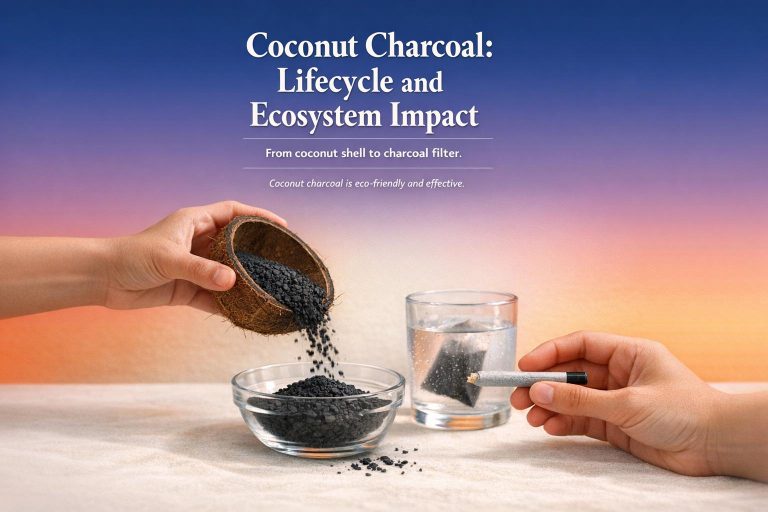
From discarded shells to activated carbon: lower-emission production, waste-to-resource benefits, and uses in water and smoking filtration.
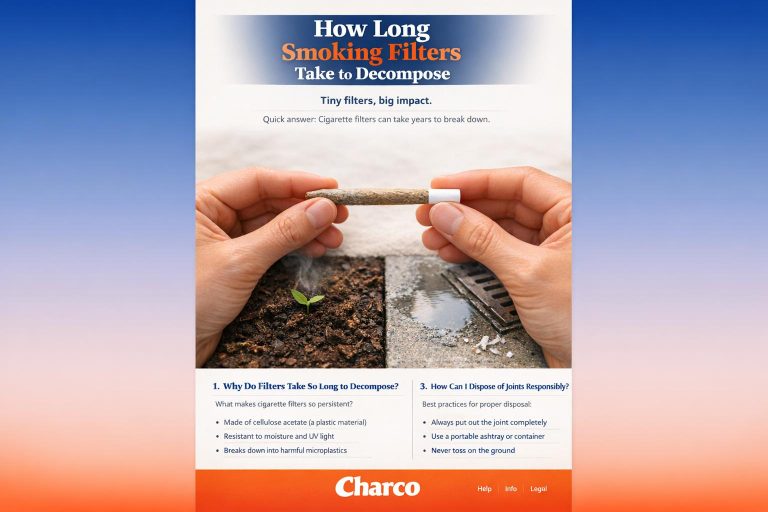
Cigarette filters can persist for years, fragment into microplastics, and only decompose fast in managed compost—material and disposal shape their harm.
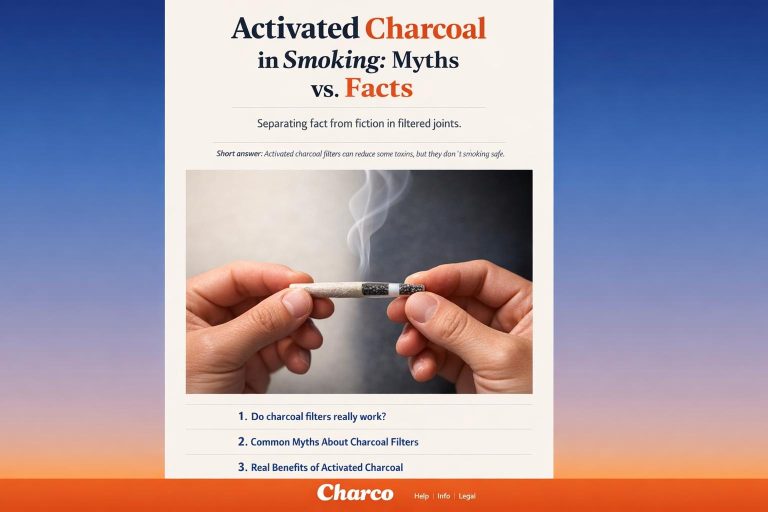
Activated charcoal filters trap many gas-phase toxins, reduce throat irritation and preserve THC/CBD, but they don’t remove gases like CO or eliminate smoking risks.

Charcoal-driven smoke rituals blend spiritual meaning with practical purification—from Indigenous ceremonies to modern activated charcoal filters.