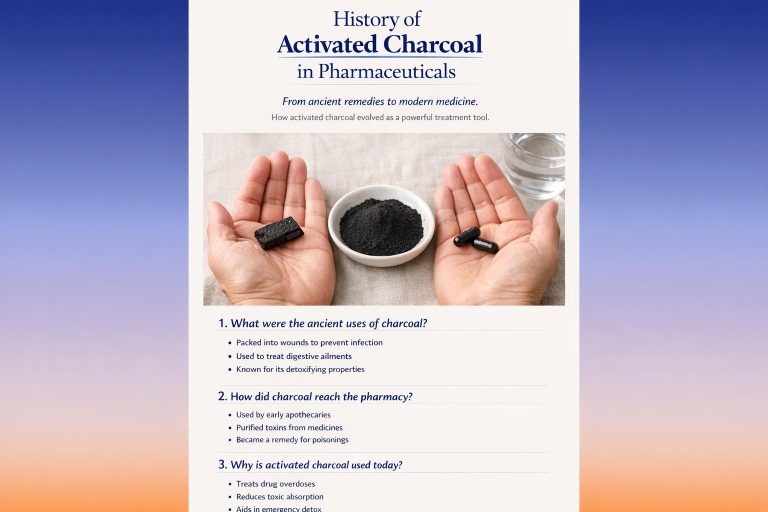
History of Activated Charcoal in Pharmaceuticals
A concise history of activated charcoal’s medical use, from ancient wound care to modern poison treatment, drug purification, and activation methods.

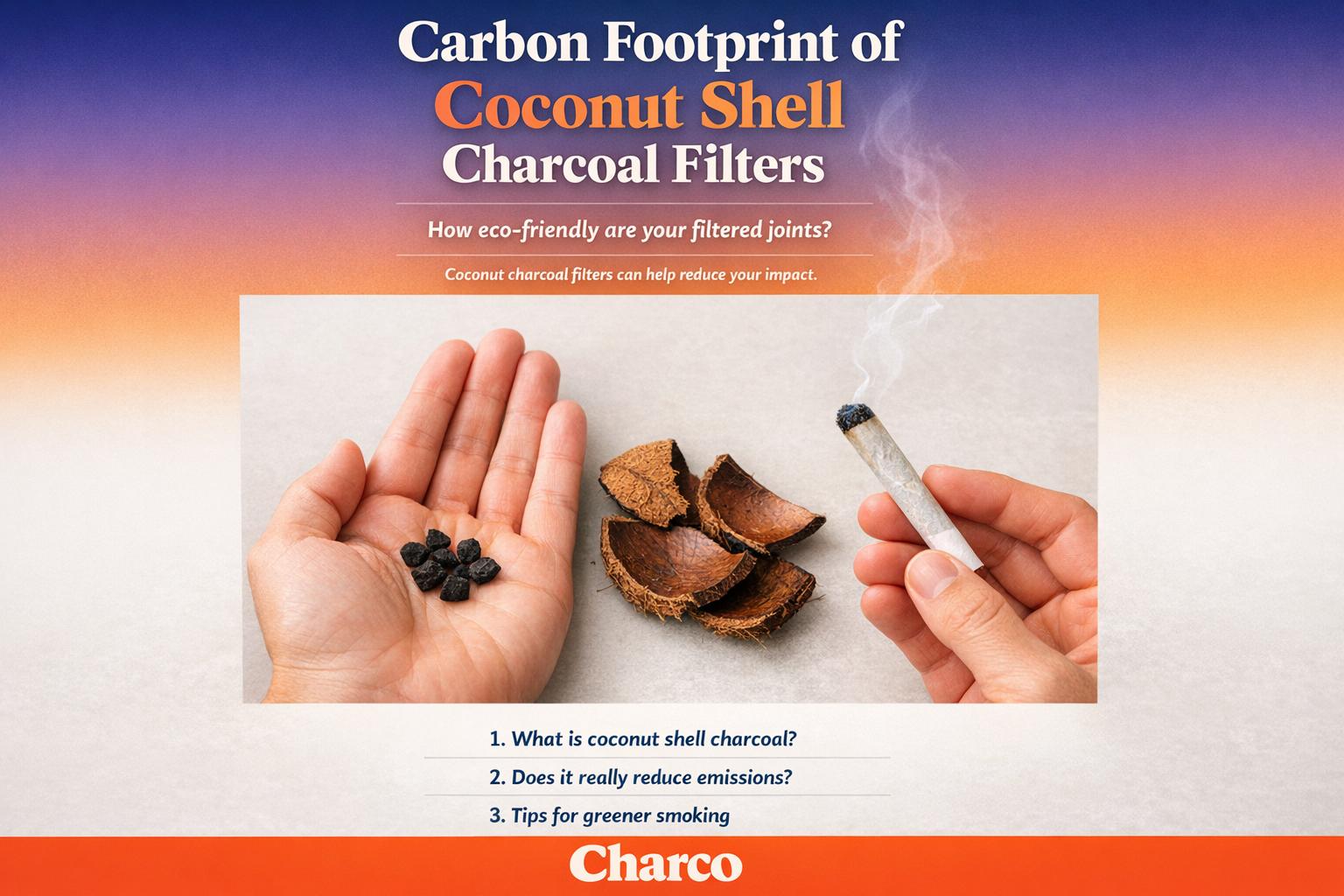
Coconut shell charcoal filters are popular for their efficiency and renewable material source, but their production process has environmental impacts worth examining. Here’s what you need to know:
Quick Tip: Choosing filters made from coconut shell charcoal supports lower emissions and renewable materials. For example, Charco Filters use this material and cost $12 for 30 filters or $7 for 10.
Transforming coconut shells into activated carbon involves two main stages. The first stage, carbonization (or pyrolysis), heats raw coconut shells in an oxygen-free environment at temperatures ranging from 750°F to 1,560°F. During this process, around 70% of the shell’s mass is lost as volatile compounds, leaving behind a porous carbon-based material.
The second stage, activation, can follow one of two methods: physical or chemical. In physical activation, the carbonized material is subjected to high temperatures (about 1,110°F to 2,010°F) using agents like steam, CO₂, or air. By contrast, chemical activation involves soaking the raw shells in activating chemicals – such as phosphoric acid, potassium hydroxide, or zinc chloride – before heat-treating them at lower temperatures (approximately 750°F to 1,110°F). Chemical activation often combines carbonization and activation into a single step, making it more energy-efficient. Additionally, this method achieves a higher yield, with phosphoric acid activation reaching about 51%, compared to the 24–28% yield from the two-step physical process.
These production techniques play a significant role in shaping the environmental impacts of coconut shell activated carbon, as discussed below.
One major environmental concern arises from pit carbonization, which releases 26–33 pounds of methane per metric ton of coconut shells. Methane, being roughly four times more potent as a greenhouse gas than CO₂, significantly amplifies the environmental impact. Dr. P.A. Shankar, Chief Technology Officer at Filtrex Holdings Group, highlights the scale of this issue:
"A conservative estimate is that in the four leading countries, about 350 MT/year of methane is emitted to the atmosphere by the pit method of charring. This is the equivalent of the CO2 emitted by 350,000 mid-size cars driven 20,000 miles per year."
Although chemical activation requires less energy, it poses its own challenges, such as the risk of pollution from chemical waste. However, advancements like modern char reactors are helping to address these issues. These reactors use a controlled air supply to capture greenhouse gases and convert them into "producer gas", which is then utilized to generate the heat needed for the process. This innovation helps cut down on overall emissions.
By examining these environmental factors, we can better understand the broader carbon footprint of producing coconut shell-based activated carbon.
| Feature | Physical Activation | Chemical Activation |
|---|---|---|
| Temperature | High (1,110°F – 2,010°F) | Lower (750°F – 1,110°F) |
| Agents | Steam, CO₂, air | H₃PO₄, KOH, ZnCl₂ |
| Energy Cost | Higher due to extreme heat | Lower energy requirements |
| Environmental Concern | High GHG emissions from charring | Chemical waste risks |
| Yield | 24–28% | ~51% |
Understanding the environmental footprint of coconut shell charcoal filters means evaluating their impact from the moment coconuts are harvested to their eventual disposal. This is done using several key metrics: climate change impact (measured in CO₂ equivalents), energy use (megajoules), terrestrial ecotoxicity (linked to agricultural chemicals), and human toxicity potential (due to emissions during production).
For every 2.2 pounds of activated carbon produced, approximately 2.75 pounds of CO₂ is released when potassium hydroxide (KOH) is used for activation. This figure drops slightly to 2.66 pounds with sodium hydroxide (NaOH) activation. Energy consumption is also high, with KOH requiring about 28.3 megajoules and NaOH needing 27.1 megajoules. Additionally, creating one ton of activated carbon demands around 6.7 tons of raw coconut shells.
The location of production plays a huge role in emissions. A 2023 study in Agrabinta and Sukabumi, Indonesia, led by T. Puspaningrum and colleagues, revealed that combining plantations with processing facilities slashed global warming potential from 3,866 pounds of CO₂ equivalent to just 205 pounds. When measured by functional unit (the impact per 2.2 pounds of dye removed), KOH activation emerged as 6% more carbon-efficient than NaOH, as it uses fewer materials to achieve similar results. These findings highlight areas where production processes could be improved to lessen their environmental toll.
The pyrolysis process stands out as the most energy-demanding stage. It requires extremely high temperatures – between 930°F and 1,110°F – under oxygen-starved conditions. As noted in Scientific Reports:
"The pyrolysis step emerges as the most energy-intensive and significant contributor to carbon emissions".
Following pyrolysis, the activation phase is another major source of emissions. Physical activation, which involves heating to even higher temperatures (1,380°F to 1,750°F) to produce steam, adds significantly to the carbon footprint. While chemical activation requires less heat, it leads to metal depletion rates that are 100 times higher than NaOH alternatives. Transportation also plays a role, especially when factories are located far from coconut plantations. During production, human toxicity has the greatest impact, while terrestrial ecotoxicity is most significant during coconut farming due to the use of pesticides and fertilizers.
The energy source used in production is another critical factor. Research by Noemi Arena from the University of Surrey highlights the potential for renewable energy to make a big difference:
"Using electrical energy produced from renewable sources, such as biomass, would reduce the contributions to human toxicity (by up to 60%) and global warming (by up to 80%)".
Finally, post-production processes – like acid washing, crushing, and tumbling to achieve specific particle sizes – add further energy demands, mainly through electricity use. These insights tie directly into the challenges of balancing efficiency with sustainability in charcoal production.
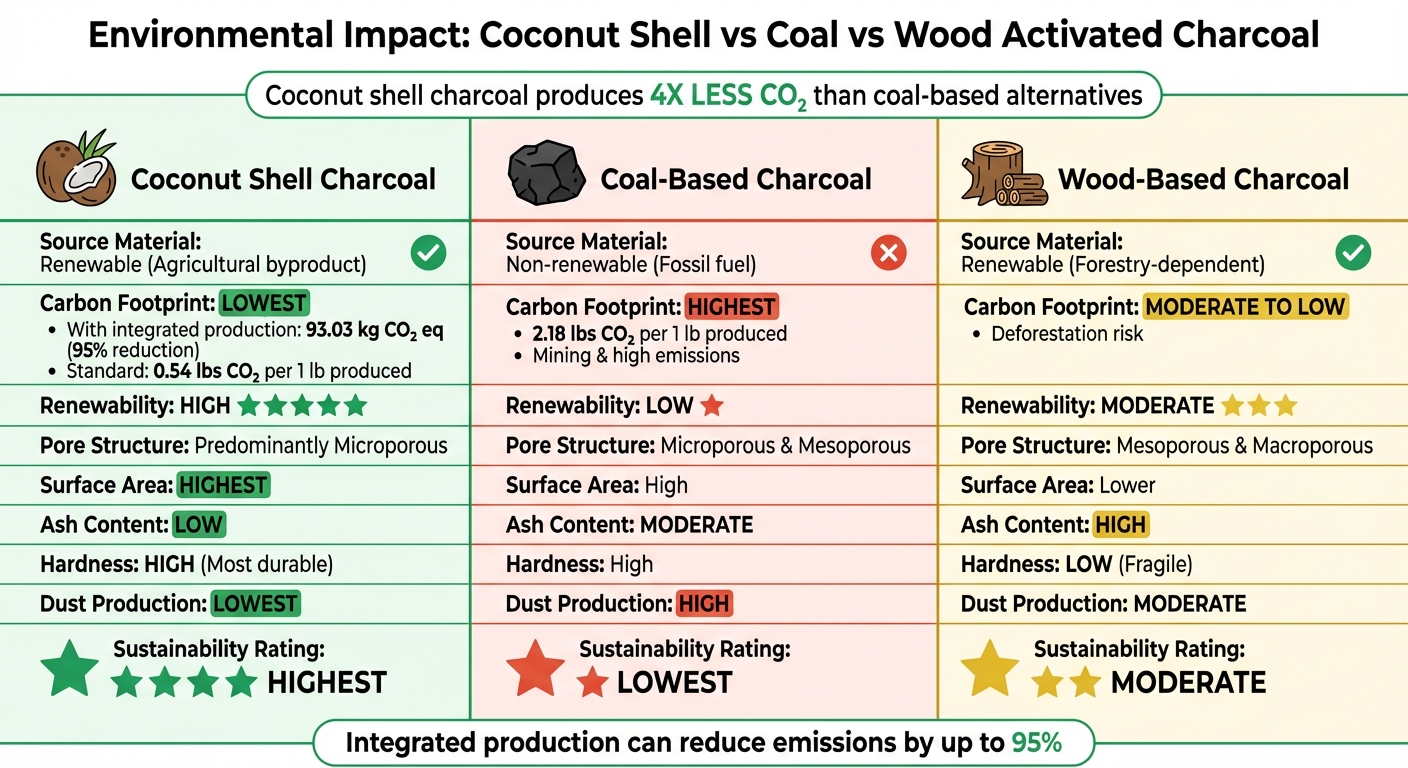
Environmental Comparison: Coconut Shell vs Coal vs Wood Activated Charcoal
Coconut shell activated charcoal stands out as a greener choice compared to coal- and wood-based options. Its edge comes from its source – coconut shells, a renewable byproduct of the coconut and copra industries. In contrast, coal-based charcoal depends on non-renewable fossil fuels, making it far less sustainable.
Recent studies highlight the environmental benefits of coconut shell carbon. For example, research published in August 2023 demonstrates that integrating coconut plantations with processing can cut the Global Warming Potential from 1,753.55 kg to just 93.03 kg CO₂ equivalent – a staggering reduction of over 94%.
Coconut shell charcoal also excels in terms of physical durability. It boasts the highest hardness among all activated carbon types, meaning it resists breakdown during use better than others. This durability reduces waste and extends the product’s lifespan. Additionally, it has a lower ash content compared to coal-based (moderate) and wood-based (high) alternatives, resulting in fewer impurities. Dr. P.A. Shankar, Chief Technology Officer at Filtrex Holdings Group, sums it up well:
"Coconut shell-based activated carbons are the least dusty. Predominantly microporous, they are well-suited for organic chemical adsorption. Coconut shell-based carbon has the highest hardness compared to other types of activated carbons, which makes it the ideal carbon for water purification".
While wood-based charcoal can also be renewable, it comes with risks like deforestation and generally has higher ash content and lower mechanical strength compared to coconut shell options. Coal-based charcoal, on the other hand, involves mining and high-temperature processes that significantly increase greenhouse gas emissions throughout its lifecycle.
These characteristics make coconut shell charcoal not only environmentally friendly but also more durable, which enhances filter performance and longevity. This combination of benefits reduces production emissions and lowers the overall environmental footprint. For a clearer picture, here’s a comparison of key environmental metrics across different carbon sources.
| Metric | Coconut Shell | Coal-Based | Wood-Based |
|---|---|---|---|
| Source Material | Renewable (Agricultural byproduct) | Non-renewable (Fossil fuel) | Renewable (Forestry-dependent) |
| Carbon Footprint | Lowest (with integrated production) | Highest (Mining & emissions) | Moderate to Low (Deforestation risk) |
| Renewability | High | Low | Moderate |
| Pore Structure | Predominantly Microporous | Microporous & Mesoporous | Mesoporous & Macroporous |
| Surface Area | Highest | High | Lower |
| Ash Content | Low | Moderate | High |
| Hardness | High (Most durable) | High | Low (Fragile) |
| Dust Production | Lowest | High | Moderate |
| Sustainability Rating | Highest | Lowest | Moderate |
Coconut shell charcoal also shines in activation efficiency. Under identical conditions, its activation rate is approximately five times higher than that of palm-shell-based char. For those aiming to lower their environmental impact while maintaining performance, coconut shell activated carbon offers a cost-effective and efficient solution.
These advantages make coconut shell activated charcoal a top choice for consumers and manufacturers prioritizing eco-friendly, high-performing filters. It’s no wonder Charco Filters integrates this material into their sustainable filtering solutions.
Switching to renewable energy during production can make a noticeable difference in reducing environmental harm. Studies highlight that using renewable sources like biomass can cut human toxicity levels by up to 60% and reduce global warming impacts by as much as 80%. For example, solar drying – where cleaned coconut shells are left to dry under natural sunlight for at least three days before carbonization – can lower energy consumption by 7.5% and emissions by 7.7%.
The pyrolysis stage, which transforms coconut shells into charcoal, is the most energy-demanding part of the process. By capturing and reusing the volatile gases (syngas) released during pyrolysis as fuel, manufacturers can reduce their dependence on external fossil fuels. Additionally, modern carbonization machines with advanced insulation ensure steady temperatures – ranging between 752°F and 1,112°F – making the process more efficient.
"Using renewable energy sources, such as biomass, could reduce human toxicity by up to 60% and global warming by up to 80%." – Nature Scientific Reports
When it comes to the activation phase, steam-based methods in rotary kilns are a cleaner choice compared to chemical soaking. These methods become even more efficient when powered by heat captured from earlier stages in the process. Coconut shells themselves are a valuable resource, with a calorific value of 19.4 MJ/kg, making them an excellent self-sustaining biomass during thermochemical conversion.
These energy-focused innovations pave the way for further improvements in process efficiency and material use.
Refining operational processes is equally crucial for minimizing environmental impact. For instance, integrating coconut plantations with processing facilities and converting pyrolysis smoke into liquid smoke can slash the Global Warming Potential by 95%, reducing emissions from 1,753.55 kg to just 93.03 kg CO₂ equivalent. Locating processing plants near coconut plantations also cuts down on transportation-related fuel use and emissions.
Proper cleaning of coconut shells before processing is another key step. This ensures that pores remain unblocked, improving the quality of activated carbon and reducing product waste. Smokeless kilns equipped with sealer belts can further enhance efficiency, boosting charcoal yields to about 48%, compared to traditional methods that produce between 21.4% and 37.2%.
Manufacturers can also use tools like Response Surface Methodology (RSM) to fine-tune production parameters. For example, chemical activation with phosphoric acid achieves optimal results with an impregnation ratio of 1.725 and an activation temperature of roughly 779°F. Similarly, using a one-step CO₂ process at 1,652°F during physical activation can yield surface areas up to 1,667 m²/g, all while consuming less energy and time.
These measures not only enhance production efficiency but also reduce the overall environmental load.
Sustainable end-of-life management is just as important for cutting down environmental impact. Coconut shell-derived activated carbon can be regenerated to restore its adsorption capacity, extending its lifecycle and reducing the need for new raw materials. If regeneration isn’t possible, spent charcoal can be repurposed into fuel briquettes or biofuels. To keep emissions in check, thermal treatments should use smokeless kilns, and pyrolysis smoke can be converted into liquid smoke.
Regeneration and repurposing efforts align with the broader goal of reducing the carbon footprint at every stage. Since coconut shells are a natural biomass, they offer a more sustainable alternative to coal-based options – provided that proper end-of-life management prevents methane emissions from landfill decomposition. Scenario analyses show that integrating facilities and effectively managing emissions can reduce environmental impacts by 68.35% to 99.62% across various categories.
Coconut shell charcoal stands out as a cleaner, greener alternative when it comes to filtration. From its production to its disposal, every step highlights its reduced environmental footprint compared to coal-based options. Coconut shell charcoal filters offer lower carbon emissions, reduced energy consumption, and decreased reliance on fossil fuels.
By adopting integrated production methods – like combining plantations with processing facilities and capturing emissions during pyrolysis – the global warming potential can be slashed by up to 95%. Transforming agricultural waste into efficient, low-emission filters not only addresses waste management challenges but also provides top-notch filtration performance.
Thanks to the microporous structure of coconut shell activated carbon, less material is required to achieve effective filtration. This efficiency, combined with the renewable nature of coconut shells, makes these filters a standout choice for reducing climate impact and conserving resources.
The production advantages of coconut shell charcoal translate into cleaner, more responsible products for consumers. With Charco Filters, sustainability doesn’t come at the cost of quality. Their filters, made from coconut shell-based activated charcoal, unbleached paper, and ceramic tips, effectively trap toxins and impurities while preserving the flavor of herbal smoking blends.
At $12 for a pack of 30 filters or $7 for a pack of 10, Charco Filters offer an affordable way to make an environmentally conscious choice. Designed with a 6mm diameter to fit standard setups, these filters are crafted to minimize environmental impact throughout their lifecycle. By choosing coconut shell-based filters, you’re supporting production models that can reduce environmental impacts by as much as 68.35% to 99.62%.
When you select coconut shell charcoal filters, you’re embracing a circular bioeconomy that prioritizes renewable resources, energy efficiency, and waste reduction. It’s an easy way to align your smoking habits with eco-conscious and health-focused values.
Coconut shell charcoal filters stand out for their smaller carbon footprint. They’re crafted from renewable coconut shells, which demand less energy during production. Plus, lifecycle assessments reveal that these filters have fewer environmental impacts compared to coal-based options.
The pyrolysis stage stands out as the largest source of emissions in the production process. This step demands the most energy, making it a major driver of carbon emissions, especially when compared to the activation phase. Lifecycle assessments of activated charcoal production consistently highlight the substantial environmental impact of this process.
Used coconut shell charcoal filters can be handled in an eco-conscious way by focusing on their lifecycle and potential for reuse. They can be transformed into other useful products through thermochemical processes or reactivated for continued use in adsorption. Since coconut shells come from a renewable resource, finding ways to regenerate or repurpose them helps minimize waste and reduce their overall impact. Taking a full-lifecycle approach encourages more sustainable disposal methods.
A concise history of activated charcoal’s medical use, from ancient wound care to modern poison treatment, drug purification, and activation methods.

Biodegradable smoking filters use coconut-shell charcoal, unbleached paper and ceramic tips to reduce toxins and decompose in 1–3 years.
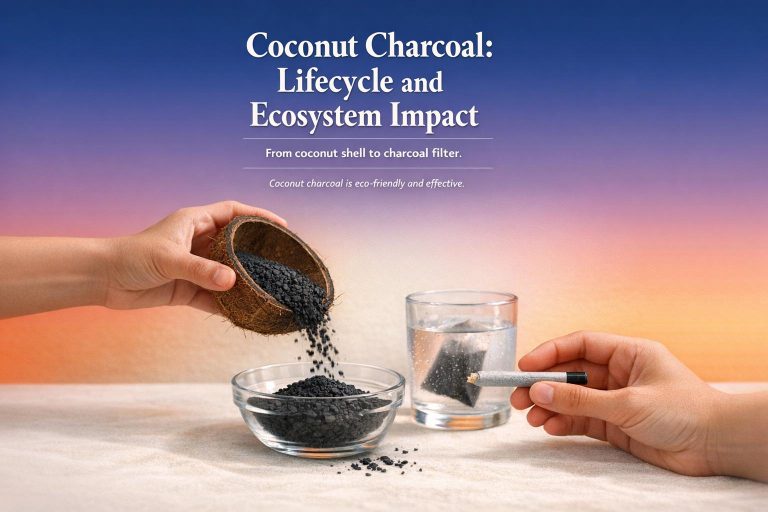
From discarded shells to activated carbon: lower-emission production, waste-to-resource benefits, and uses in water and smoking filtration.
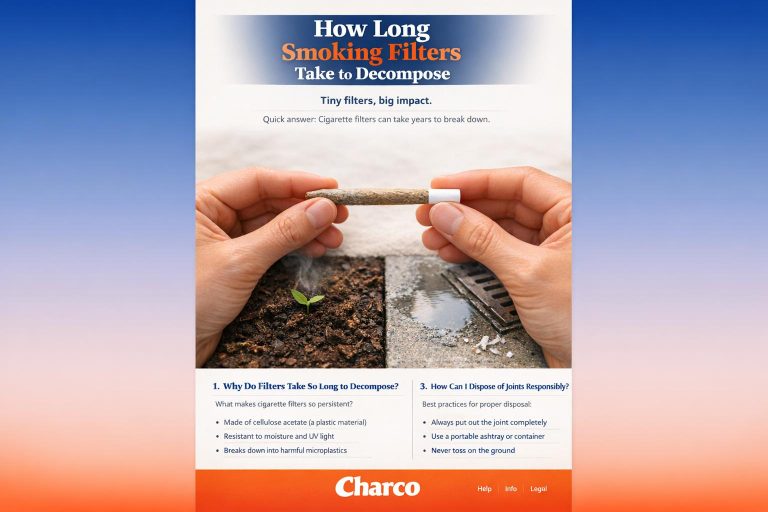
Cigarette filters can persist for years, fragment into microplastics, and only decompose fast in managed compost—material and disposal shape their harm.
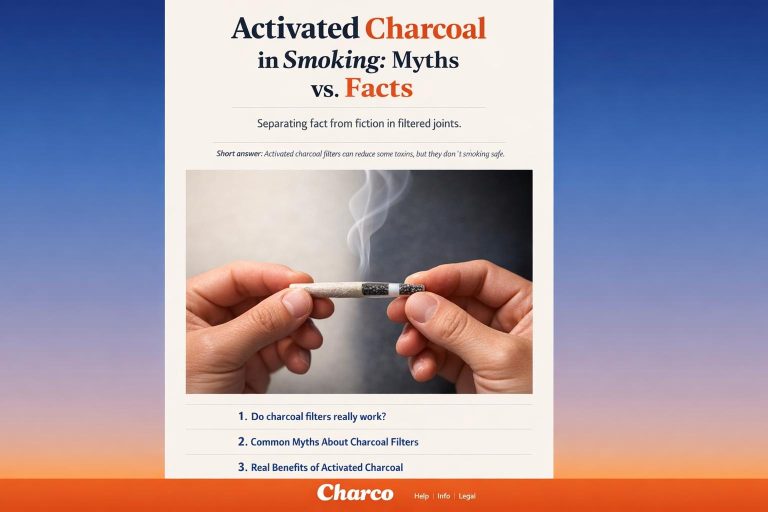
Activated charcoal filters trap many gas-phase toxins, reduce throat irritation and preserve THC/CBD, but they don’t remove gases like CO or eliminate smoking risks.

Charcoal-driven smoke rituals blend spiritual meaning with practical purification—from Indigenous ceremonies to modern activated charcoal filters.