
History of Activated Charcoal in Pharmaceuticals
A concise history of activated charcoal’s medical use, from ancient wound care to modern poison treatment, drug purification, and activation methods.

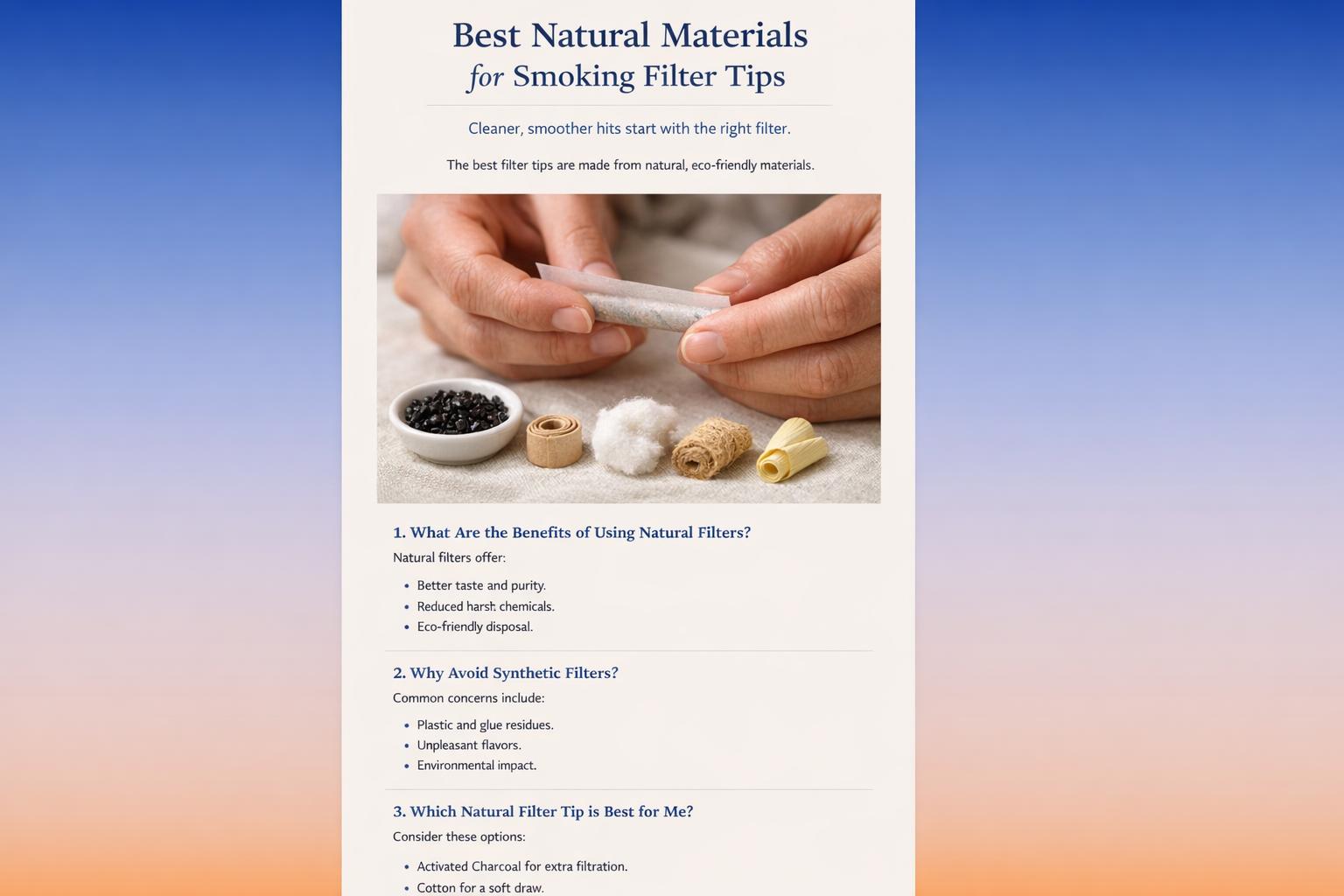
Switching to natural materials for smoking filters can improve flavor, reduce toxins, and help the environment. Unlike synthetic filters that linger in landfills for years, natural options break down quickly and enhance your smoking ritual. Here’s a quick look at five popular materials:
| Material | Filtration Efficiency | Smoothness | Flavor Neutrality | Eco-Friendliness | Cost (Approx.) |
|---|---|---|---|---|---|
| Activated Charcoal | High (Chemicals) | High (Cooling) | High | High | $7–$12 (30-pack) |
| Wood Pulp Cellulose | Moderate (Debris) | Moderate | Moderate | High | Low |
| Cotton Fibers | Moderate (Moisture) | High | High (Organic) | High | Low |
| Hemp Fibers | High (Particles) | High | High | High | Moderate |
| Corn Husk | Moderate (Resin) | Moderate | High | High | Low |
Each material has its strengths, from the toxin-reducing power of activated charcoal to the biodegradable charm of corn husk. Whether you prioritize flavor, filtration, or sustainability, there’s a natural filter for you.
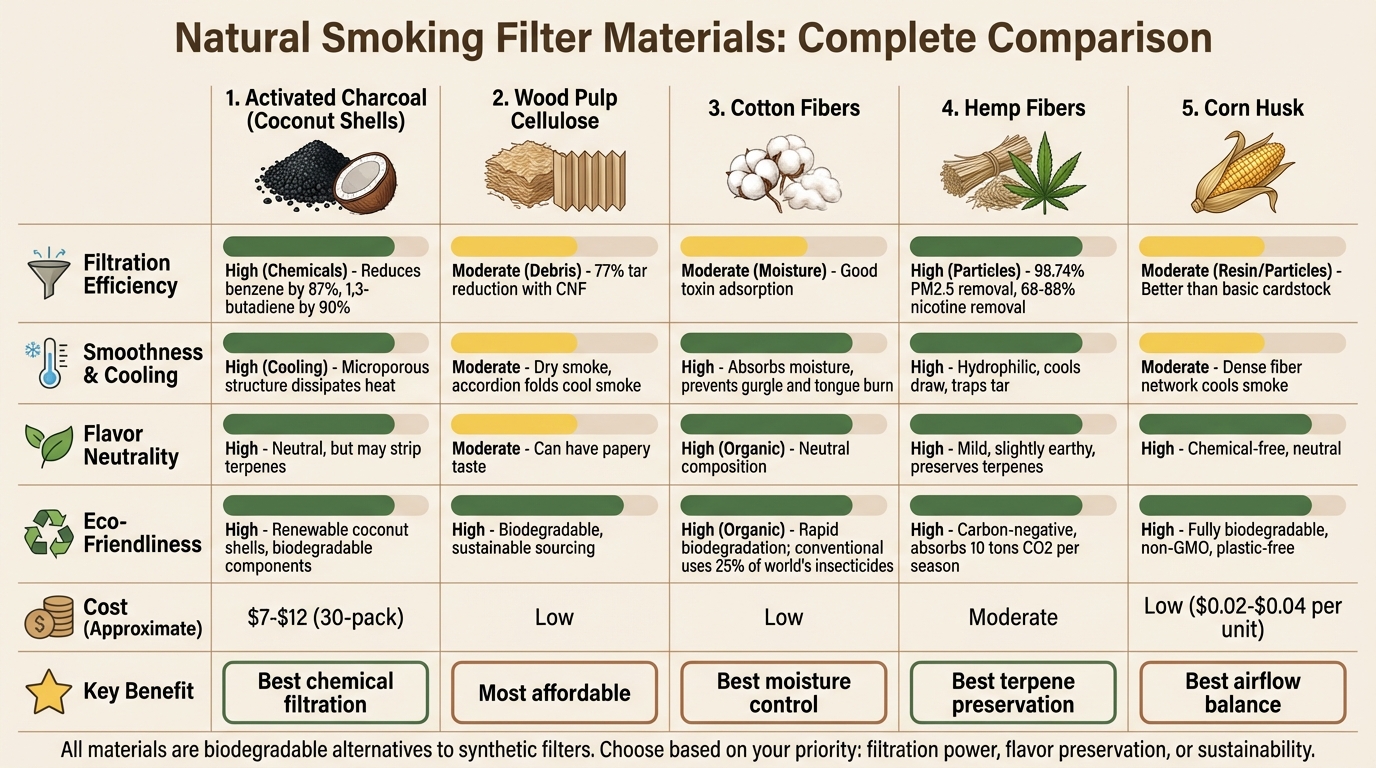
Natural Smoking Filter Materials Comparison Chart
Activated charcoal made from coconut shells stands out due to its microporous structure, which is perfect for capturing tiny gas molecules that might otherwise escape. The steam activation process, conducted at around 2,000°F, creates a balanced mix of micropores and mesopores, making it highly effective for filtering smoke. With a surface area of about 5,381 square feet per gram, this type of charcoal excels at adsorption.
"Activated charcoal produced from the coconut shell has a micropore structure that can deal with small air and gas molecules efficiently – making it the ideal choice for a filtration device." – Zamnesia
Studies reveal that coconut shell carbon can reduce benzene levels by up to 87% and 1,3-butadiene by up to 90%. Advanced 4-stage filter systems, which incorporate this material, are shown to filter about 38% more pollutants compared to standard loose-carbon filters. This superior filtration not only removes harmful compounds but also enhances the overall smoking experience.
The fine structure of coconut charcoal granules plays a crucial role in dissipating heat, resulting in a smoother draw. Ceramic caps work alongside the charcoal to cool the smoke further, ensuring a dry and pleasant inhalation. Extended filter designs add to this cooling effect by increasing the smoke path. To prevent condensation or clogging, preheat the filter by rolling it between your fingers before use. On average, it’s recommended to replace the filter after about 20 inhalations or when the draw becomes restricted due to tar build-up.
Coconut shell charcoal is naturally neutral in flavor, which means it effectively traps bitter byproducts without interfering with lighter molecules like terpenes. This allows for a cleaner, more natural taste, free from the influence of synthetic additives.
This charcoal is made from renewable coconut shells through steam activation, making it a more environmentally friendly option compared to fossil fuel–based alternatives. It’s reported to contain up to 50% more micropores, boosting both its filtration performance and sustainability. Many filters also incorporate biodegradable elements, such as unbleached paper and plant-based fiber caps, further reducing their environmental footprint.
| Feature | Coconut Shell Carbon | Coal/Wood-Based Carbon |
|---|---|---|
| Pore Structure | Primarily microporous | Larger macropores |
| Sustainability | High; renewable byproduct | Lower; often fossil fuel–based |
| Surface Area | ~500 m²/g (≈5,381 ft²/g) | Generally lower |
| Purity | High; steam-activated, food-grade | May require extra processing |
Using a coconut charcoal filter isn’t just about functionality – it’s also about elevating the smoking experience. The natural materials, including ceramic tips, bring a premium feel while ensuring a fresh, single-use draw every time. Many filters are packaged in upcycled glass jars, costing between $7 and $12 per pack, blending high performance with environmental care. By combining efficient filtration with thoughtful design, these filters offer a mindful and eco-conscious approach to smoking accessories.
Filters made from wood pulp cellulose are great at keeping tobacco or herb residue out of your mouth, though they lack the chemical filtration capabilities of activated charcoal. Standard paper filters mainly rely on mechanical filtration, capturing larger particles while letting smoke through. However, research has shown that filters made with cellulose nanofibers (CNFs) combined with powdered activated carbon can significantly reduce harmful substances compared to traditional filters. According to GC–MS analysis, CNF-based filters reduced tar by 77% and carbon monoxide by 59.6%, all while maintaining nicotine levels.
Thanks to their excellent moisture absorption, wood pulp filters produce a dry smoke. These filters can be folded into accordion-like shapes, which create air channels that help cool the smoke. The three-dimensional nanoporous network of cellulose nanofibers, with an average pore diameter of about 8.81 nm, allows for extended interaction between the smoke and the filter. Notably, these filters can withstand temperatures up to 316°F without losing their structural integrity.
Wood pulp filters are designed to stay neutral in flavor. While basic wood pulp, like that found in rolling papers, might leave a slight papery taste, well-crafted cellulose filters avoid this entirely. They also don’t significantly alter nicotine levels, ensuring the smoking experience remains satisfying. For a cleaner option, unbleached and organic cellulose filters are recommended, as they avoid the chemical additives sometimes present in bleached products.
"The main task of cellulose acetate (CA) in cigarettes is to cool the cigarette smoke and remove or reduce some harmful chemicals." – Hashem Rahamin, Researcher, University of Tehran
Cellulose, the Earth’s most abundant polysaccharide, can be sustainably sourced from wood pulp, plants, bacteria, and algae. Pure cellulose fibers and nanofibers are biodegradable and renewable, making them a much more environmentally friendly choice. In contrast, synthetic cellulose acetate filters, which are essentially plant-based plastics, degrade poorly and release around 100 microfibers daily. Wood pulp filters embrace a "from the environment, for the environment" ethos, combining sustainability with a refined smoking experience.
| Feature | Cellulose (Wood Pulp/Nanofibers) | Standard Synthetic Filters |
|---|---|---|
| Source | Natural wood/plant fibers | Chemically modified plant plastic |
| Biodegradability | High | Low (poorly degradable) |
| Tar Reduction | Up to 77% (in CNF studies) | Standardized |
| Environmental Impact | Sustainable/Eco-friendly | Major source of microplastics |
Wood pulp filters are incredibly versatile. They can be shaped into accordion-style folds, improving both structural stability and cooling. This customizability allows for better control of airflow and draw resistance. While standard paper filters are an affordable, single-use option, advanced cellulose nanofiber filters offer a premium experience with noticeable improvements in filtration. These advanced filters achieve a quality factor of at least 0.01 Pa⁻¹, striking a balance between effective filtration and a smooth draw. Their natural, biodegradable materials align perfectly with a more mindful and eco-conscious smoking experience.
Cotton filters sit between basic paper options and modern cellulose acetate when it comes to filtration performance. Thanks to their polar hydroxyl groups, cotton fibers are particularly good at adsorbing toxins. While traditional cotton filters are less common today, recent advancements in Cotton Cellulose Nanofibers (CCNF) show exciting potential. Lab tests reveal that a CCNF composite achieves a pressure drop of 1,867 Pa – almost identical to the industry benchmark of 1,870 Pa for an 88mm filter rod. Considering cotton makes up about 40% of global fiber production, it’s both accessible and practical for filtration needs. This efficiency also contributes to a smoother, cooler smoking experience.
Cotton is excellent at reducing moisture in smoke, which directly leads to a smoother experience. By absorbing excess moisture, cotton filters eliminate issues like “gurgle” (when moisture blocks the draft hole) and “spitting” (when moisture reaches your mouth). They also help prevent “tongue burn,” caused by hot steam irritating the mouth. To get the best results, always unravel and fluff the cotton before placing it in the filter chamber. When prepared this way, cotton maintains an easy draw while effectively controlling moisture.
"Pipe filters are generally built around the concept of cooling the smoke and removing moisture as well as tar and other by-products of combustion." – E. Roberts
One of cotton’s standout qualities is its neutral composition, which means it won’t interfere with the flavor of your smoke. This is especially true for organic cotton, which is free from harsh whitening agents and dyes that could introduce unwanted tastes. Cotton filters work by trapping particulates and moisture without altering the natural characteristics of your smoking material. To keep the flavor pure and the filtration effective, replace the cotton filter as soon as it turns brown. This simple visual cue makes maintenance straightforward.
Cotton has some clear environmental advantages. Its sustainability depends on how it’s grown. Organic cotton stands out as a more sustainable option since it’s cultivated without GMO seeds, synthetic fertilizers, or harmful chemicals, and relies on natural defoliation methods. On the other hand, conventional cotton tells a different story – it accounts for about 25% of the world’s insecticide use and involves nine toxic pesticides, some of which are linked to cancer. Another win for cotton is its biodegradability. Unlike cellulose acetate filters that can linger in the environment for over a decade, cotton breaks down quickly. Cotton cellulose nanofibers are also gaining attention for their low toxicity, compatibility with the environment, and rapid decomposition.
| Feature | Organic Cotton | Conventional Cotton | Cellulose Acetate |
|---|---|---|---|
| Biodegradability | High / Rapid | High / Rapid | Low (up to 10 years) |
| Chemical Usage | None (Natural methods) | High (9 toxic pesticides) | Plasticizers & solvents |
| Global Impact | Low (Sustains soil health) | High (25% of insecticides) | Microplastic pollution |
Cotton filters add a mindful element to the smoking experience. The act of fluffing and preparing the cotton before use creates a small ritual of care and preparation. As the cotton darkens during use, it provides a clear visual signal that it’s time for replacement. This simple maintenance step ensures a consistently clean and enjoyable experience. Cotton also offers flexibility – you can adjust the amount used to suit your preferences. For stronger blends or particularly moist aromatic materials, adding more cotton provides extra filtration, while using less allows for a more open draw.
Hemp fibers bring a natural advantage to filtration thanks to their composition – 40–80% cellulose, 15–22% hemicellulose, and 2.4–10% lignin. This structure creates a porous material ideal for trapping particles. In March 2025, researchers at the Hemp Research Institute of Ondokuz Mayıs University developed a biodegradable hemp composite membrane using electrospinning with 15% hemp hurd powder. The result? A 98.74% efficiency in removing PM2.5 and 98.73% for PM10 during cigarette smoke tests. This impressive performance stems from hemp’s rough surface texture, which increases particle collisions. When processed into activated carbon, hemp stems also remove 68–88% of nicotine from mainstream smoke. A study in Scientific Reports highlighted that carboxylic groups on hemp-derived carbon surfaces offered the lowest adsorption energy, making them highly effective for nicotine capture.
"The addition of hemp efficiently enhances the effective contact area by increasing the specific surface area… and it improves the possibility of a collision between the particles and nanofibers, which improves PM collection." – Arabian Journal for Science and Engineering
These qualities make hemp filters an excellent choice for a cleaner, smoother smoking experience.
Hemp’s hydrophilic nature helps absorb moisture, creating a cooler draw while trapping tar and ash without removing desirable compounds [41,43,46]. For the best performance, look for hemp filters with a tight, accordion-style fold. This design balances airflow with filtration, keeps plant fragments out of your mouth, and ensures the filter holds its shape during use [43,44].
One of hemp’s standout features is its mild, slightly sweet or earthy flavor profile, which doesn’t interfere with the natural taste of your smoking material [6,50]. Unlike wood pulp filters that can leave a papery aftertaste, hemp filters allow terpenes and other natural flavors to shine. In a 2015 study published in the Journal of Industrial Textiles, hemp root bast paper achieved an oil filtration efficiency of 99.7%–99.975% for 0.33 µm particles while maintaining strength. Choosing unbleached, organic hemp filters can further enhance flavor by avoiding chemical additives like chlorine or calcium carbonate [6,49].
"Hemp fibers offer a neutral flavor profile, allowing you to enjoy the pure taste of your smoking material without any harsh additives or chemicals found in traditional papers." – Windy City Cigars
Hemp stands out as one of the most sustainable filter materials available. This fast-growing plant can absorb around 10 tons of CO2 from the atmosphere during a single growing season, making it carbon-negative. Its dense growth suppresses weeds, reducing the need for pesticides, and it supports soil health through anti-erosion properties and phytoremediation. Hemp fibers are fully biodegradable and compostable, offering a clean alternative to synthetic filters. Globally, the hemp fiber market is booming, with a value of $4.46 billion in 2019 and projections reaching $43.75 billion by 2027.
"Hemp is an annual plant characterised by a well-developed leaf system and is one of the fastest growing plants on Earth. It can absorb approximately 10 t of CO2… from the atmosphere during one vegetation period." – Malgorzata Zimniewska, Institute of Natural Fibres and Medicinal Plants
These environmental benefits make hemp filters a thoughtful choice for eco-conscious users.
Hemp filters bring a tactile and mindful element to the smoking experience. Their textured surface provides a firm grip, making them easier to handle and roll, which is especially helpful for beginners. Hemp’s natural durability keeps the filter intact throughout the session, preventing uneven burning and ensuring a smooth experience [6,43]. For larger joints, King Size Slim hemp tips reduce excess paper while maintaining a balanced ratio of smoking material to filter. Additionally, hemp’s long history in smoking culture, paired with its appeal to users who prioritize organic, GMO-free, and vegan materials, adds a sense of connection and satisfaction to the ritual [49,50].
Corn husk filters stand out for their tightly woven fibrous structure, which efficiently traps resin, tar, and fine debris while still maintaining excellent airflow. Unlike standard paper spiral tips that may let smaller particles slip through, corn husk filters capture more tar and nicotine than basic cardstock options. This sturdy design doesn’t just filter better – it also delivers a cooler, smoother smoking experience.
The dense fiber network in corn husk filters cools the smoke as it passes through, reducing throat irritation and creating a smoother draw. This cooling effect is often compared to the sensation of vaping. For an even cooler draw, you can gently pinch the filter, and thanks to its durability, it holds its shape without collapsing – even when exposed to moisture.
Since corn husk filters are all-natural and free of chemicals, they don’t introduce any synthetic or "paper" taste to your smoke. This ensures that the natural terpenes in your material take center stage. As King Palm highlights, these filters provide a clean, smooth draw "without any harsh chemicals or additives".
Made from sustainably sourced, non-GMO plant materials, corn husk filters are fully biodegradable and offer a plastic-free option for eco-conscious smokers. With a cost of around $0.02–$0.04 per unit, they combine affordability with a commitment to environmentally friendly practices.
Corn husk tips are often hand-rolled for precision, ensuring they hold their shape throughout your session. Their rigid structure not only makes rolling easier but also provides a firm grip, elevating the overall smoking ritual. King Palm’s 10mm 100-pack has earned high customer ratings, showcasing how these filters enhance both usability and enjoyment.
Each natural filter material brings its own set of strengths and weaknesses, making them suited for different preferences and needs. Here’s a closer look at the trade-offs:
Activated charcoal is a powerhouse for filtration. It can eliminate 70% to 88% of gas-phase free radicals and reduce toxic compounds like p-benzosemiquinone by 73% to 80%. However, this impressive filtration can come at the cost of flavor, as it may strip away flavorful terpenes. As High Times explains:
"Activated charcoal is not a neutral material. It is engineered to remove volatile organic compounds from air and smoke."
Cellulose (wood pulp) filters are a budget-friendly option that provides moderate filtration. However, they can introduce a papery taste and may result in a harsher draw.
Cotton filters offer a soft texture and moderate tar and ash filtration. While effective, they can slightly alter the flavor of the smoke.
Hemp filters strike a balance by capturing particles effectively while also absorbing moisture. They deliver a cooler draw and preserve natural terpenes, adding a mild, earthy flavor to the experience.
Corn husk filters are excellent for blocking particles and ensuring good airflow. However, their ability to retain moisture means they require careful handling to maintain hygiene.
| Material | Filtration Efficiency | Smoothness | Flavor Preservation | Eco-Friendliness | Ritual Enhancement |
|---|---|---|---|---|---|
| Activated Charcoal | High (Chemicals/Gases) | High (Cool/Clean) | Low/Moderate (Strips Terpenes) | Moderate (Renewable) | Moderate |
| Cellulose (Wood Pulp) | Low (Debris only) | Low (Can be harsh) | Low (Paper-like taste) | High (Biodegradable) | Low (Standard) |
| Cotton Fibers | Moderate (Tar/Ash) | Moderate (Soft feel) | Moderate (Slight alteration) | High (Biodegradable) | Moderate |
| Hemp Fibers | High (Particles/Nicotine) | High (Cools smoke) | High (Neutral, terpene-rich) | High (Carbon-negative) | High (Tactile/Durable) |
| Corn Husk | Moderate (Resin/Particles) | Moderate (Good airflow) | High (Neutral) | High (Natural) | Moderate |
This breakdown highlights how each material contributes differently to the smoking experience. Whether it’s the high filtration of activated charcoal, the terpene-preserving properties of hemp, or the airflow benefits of corn husk, every option offers a distinct balance of functionality, flavor, and environmental care.
When deciding on the best natural filter material, it all comes down to your top priorities: filtration performance, smoothness, flavor retention, and environmental considerations. Among the options, activated charcoal from coconut shells consistently stands out. It offers exceptional filtration by capturing harmful compounds and reducing gas-phase free radicals, providing a level of chemical filtration that hemp fibers and corn husks simply can’t match. As ender1204 from Pipe Smokers Dens puts it:
"Activated charcoal is the gold standard. Nothing filters more moisture and particles than charcoal, and nothing prevents tongue bite better."
This effectiveness is why products like Charco filters have become a go-to choice. These filters pair coconut shell-derived activated charcoal with eco-friendly features like unbleached paper and ceramic caps, which also help reduce carbon dust. Priced at $12 for a pack of 30, they offer excellent adsorption capacity and are designed for single-use efficiency, ensuring top-tier performance with every session.
Choosing natural smoking filter tips comes with several environmentally conscious advantages. Materials like biodegradable paper or ceramic break down much faster than traditional plastic filters, which can linger in the environment for years. Ceramic tips, in particular, stand out as a reusable and long-lasting choice, helping to cut down on waste over time.
On top of that, natural filter tips often steer clear of synthetic chemicals and plastics that can negatively impact ecosystems. Biodegradable paper tips decompose quickly, making them a cleaner alternative that reduces litter and pollution. Switching to natural materials not only creates a better smoking experience but also aligns with efforts to protect the planet.
Activated charcoal derived from coconut shells takes the smoking experience to the next level by offering exceptional filtration. Thanks to its naturally porous structure, it captures harmful substances and impurities, allowing for smoother, cleaner inhalation. The result? A better taste and an overall improved quality with every session.
What’s more, coconut shell activated charcoal is made from a renewable resource, making it an eco-friendly option for those who prioritize sustainable choices. Its blend of effective filtration and natural origins makes it an ideal material for premium filter tips, perfect for anyone seeking a cleaner and more refined smoking ritual.
Activated charcoal has earned its reputation as one of the best natural materials for smoking filter tips. Why? It strikes the perfect balance between preserving flavor and providing effective filtration. Thanks to its porous structure, activated charcoal traps harmful compounds like tar and benzene, delivering a smoother, cleaner draw without compromising the natural taste of the smoke.
While other natural materials, like sepiolite granules, are known for their filtration strength, they often fall short when it comes to maintaining flavor. For those who want a more refined smoking experience that combines health-conscious benefits with flavor integrity, activated charcoal remains the go-to option.
A concise history of activated charcoal’s medical use, from ancient wound care to modern poison treatment, drug purification, and activation methods.

Biodegradable smoking filters use coconut-shell charcoal, unbleached paper and ceramic tips to reduce toxins and decompose in 1–3 years.
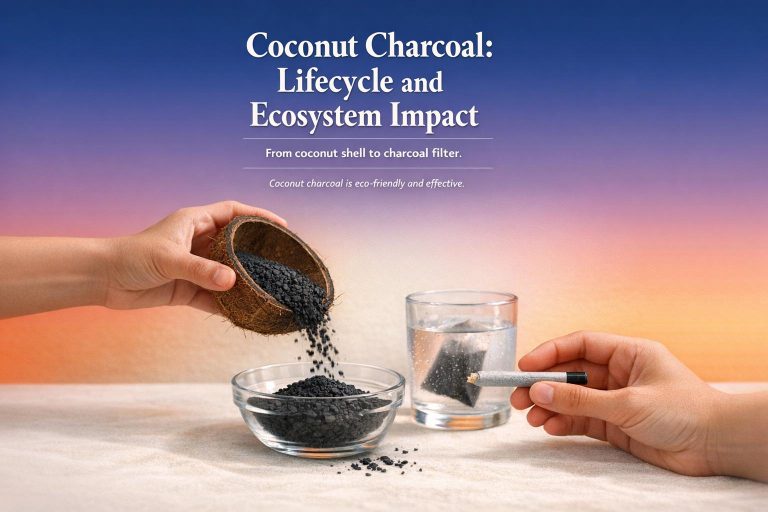
From discarded shells to activated carbon: lower-emission production, waste-to-resource benefits, and uses in water and smoking filtration.
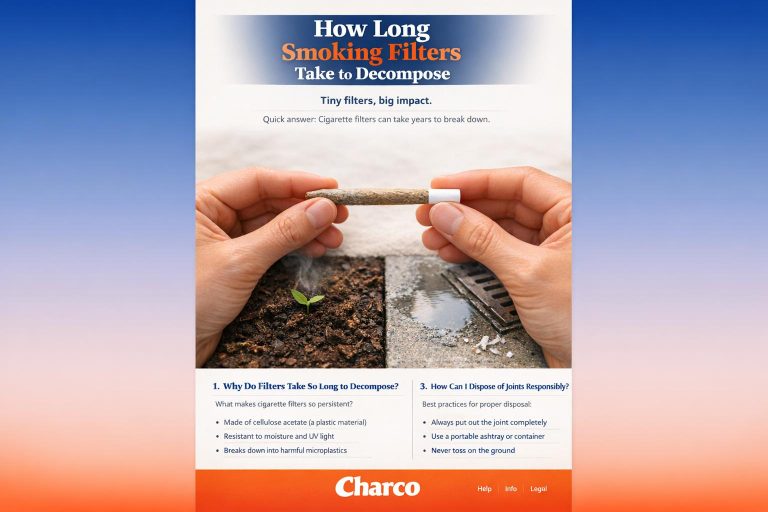
Cigarette filters can persist for years, fragment into microplastics, and only decompose fast in managed compost—material and disposal shape their harm.
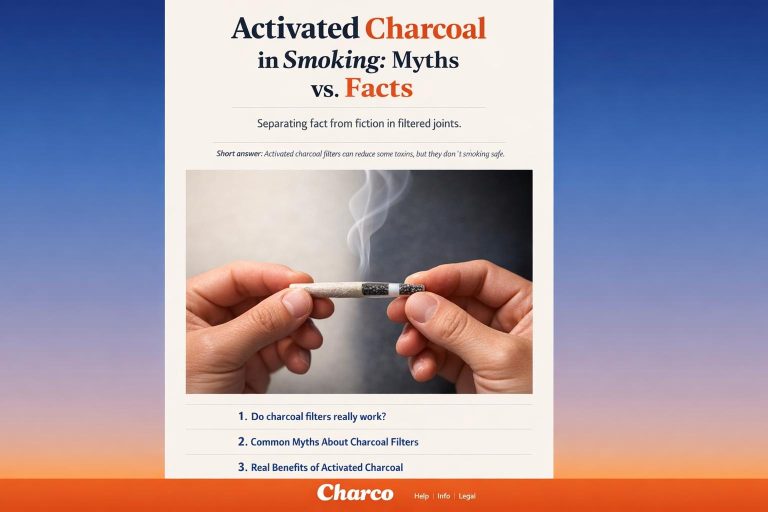
Activated charcoal filters trap many gas-phase toxins, reduce throat irritation and preserve THC/CBD, but they don’t remove gases like CO or eliminate smoking risks.

Charcoal-driven smoke rituals blend spiritual meaning with practical purification—from Indigenous ceremonies to modern activated charcoal filters.