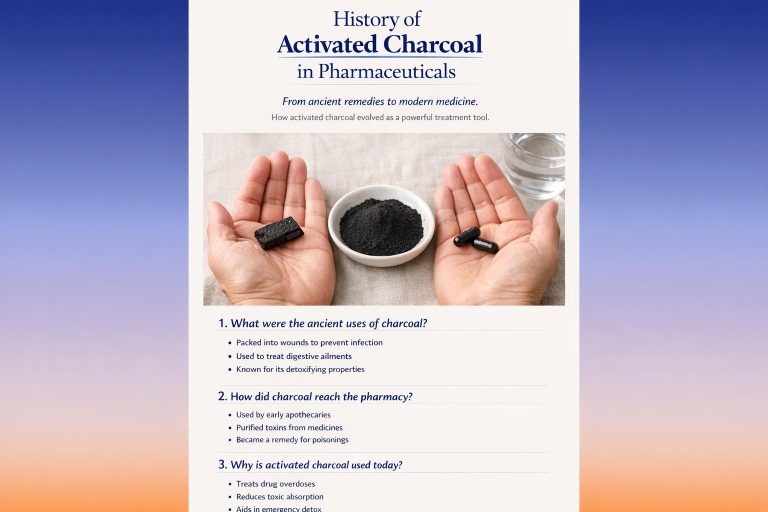
History of Activated Charcoal in Pharmaceuticals
A concise history of activated charcoal’s medical use, from ancient wound care to modern poison treatment, drug purification, and activation methods.

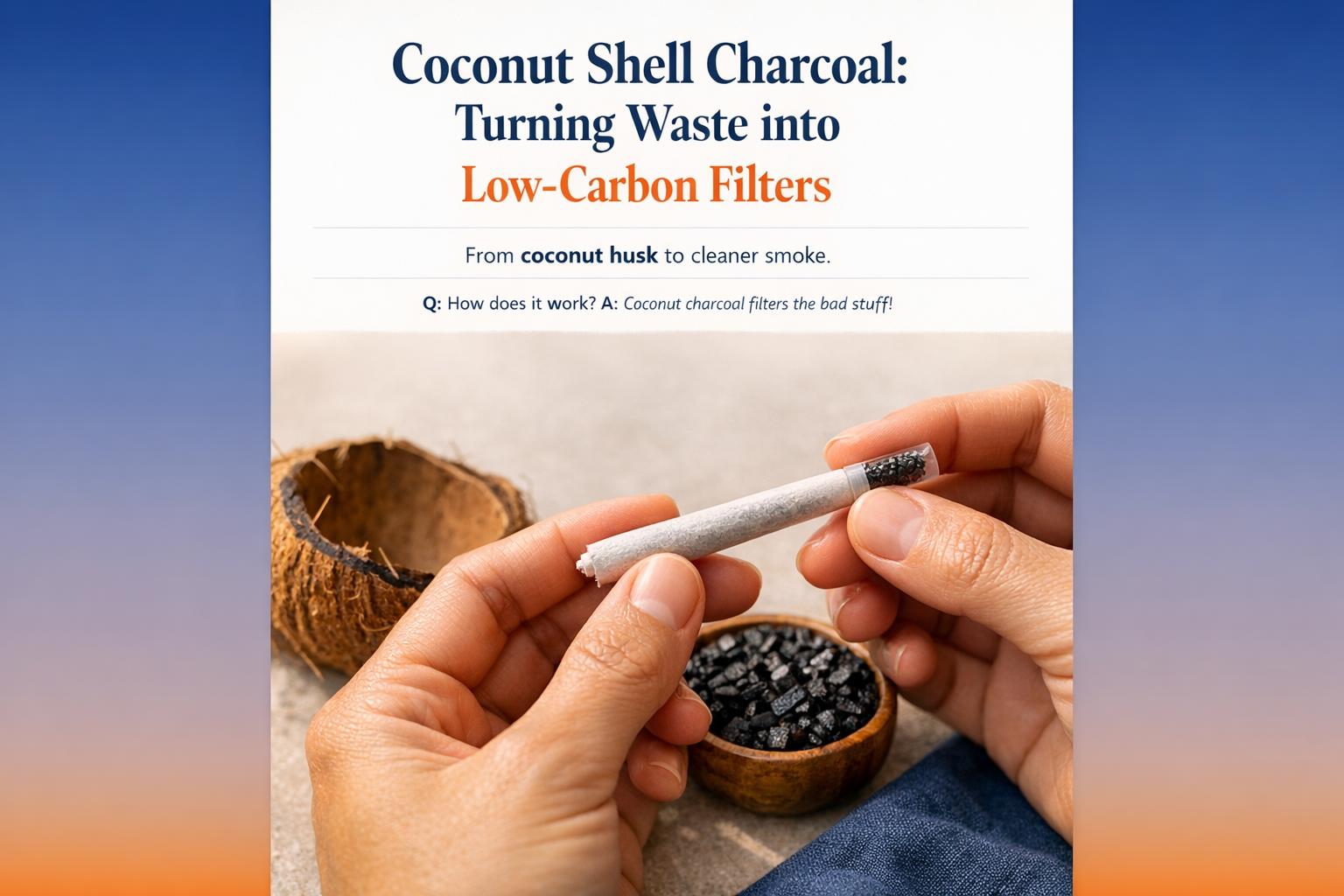
Coconut shell charcoal is changing the game by transforming agricultural waste into effective smoking filters, reducing waste and emissions in the process. Here’s why it matters:
Charco Filters uses this material to create smoking filters that combine activated coconut shell charcoal, unbleached paper, and ceramic tips. These filters provide a cleaner, more efficient smoking experience while promoting a lower-carbon footprint. At $7 for a 10-filter pack or $12 for a 30-filter pack, they offer an accessible way to support eco-conscious practices.
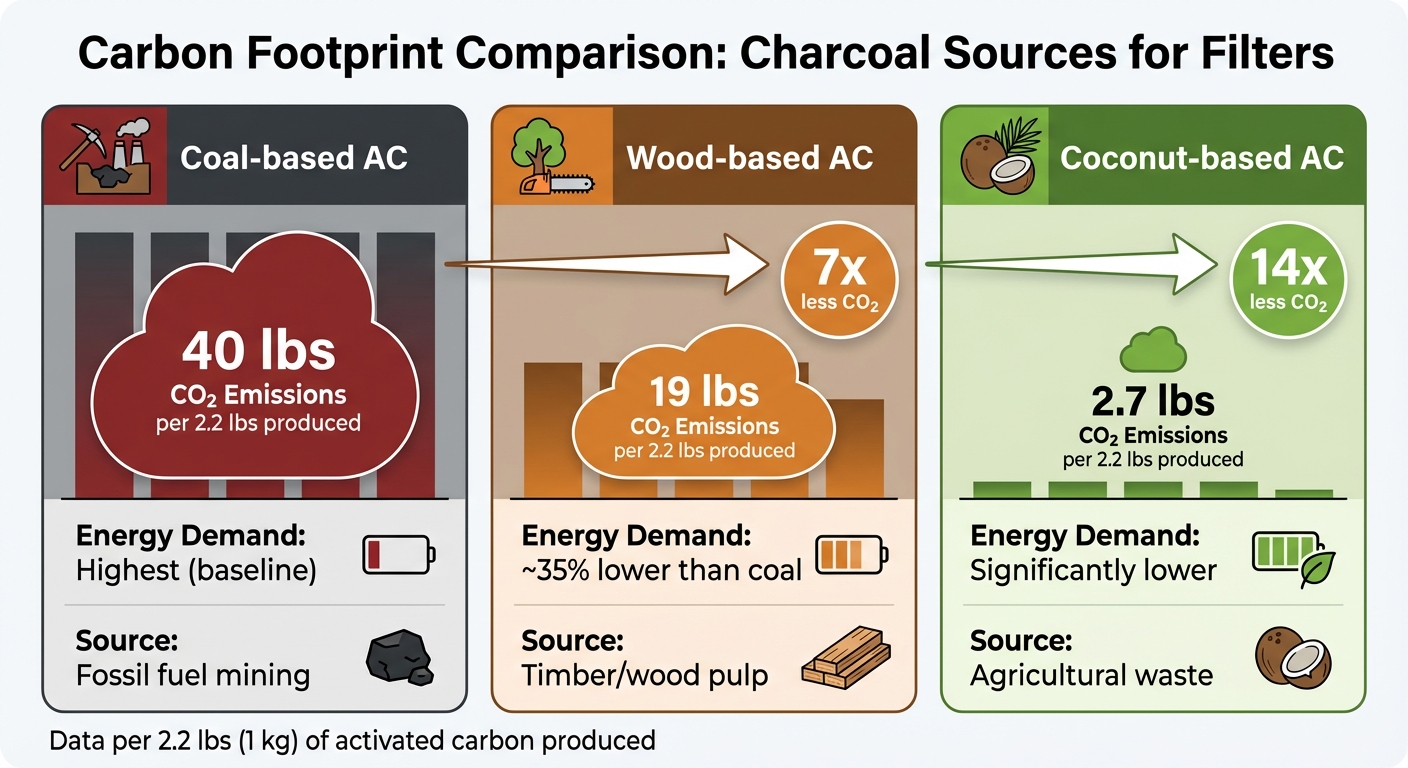
CO2 Emissions Comparison: Coconut Shell vs Wood vs Coal Charcoal
Conventional smoking filters come with a hefty environmental price tag that goes far beyond just being thrown away. Most of these filters are made from cellulose acetate (CA) fibers, which are derived from wood pulp treated with acetic anhydride. This process not only requires a significant amount of forest resources but also contributes to deforestation and the destruction of wildlife habitats. Adding charcoal to these filters only worsens the environmental impact, especially when the charcoal is sourced from coal or hardwood.
The numbers are staggering: producing 2.2 lbs (1 kg) of coal-based activated carbon releases 40 lbs (18.28 kg) of CO2 – that’s over 10 times its own weight in greenhouse gases. Even wood-based charcoal isn’t much better, emitting 19 lbs (8.60 kg) of CO2 per 2.2 lbs (1 kg) and requiring fresh timber to be harvested. The production process, known as pyrolysis, releases harmful pollutants like carbon dioxide, carbon monoxide, nitrogen oxides, and particulate matter into the air. On top of that, the disposal of these filters adds another layer of environmental damage.
Once discarded, about 98% of filter materials barely degrade over time. These filters trap some of the 7,000+ chemicals found in smoke – nearly 70 of which are carcinogens – then release these toxins back into the soil and water after disposal. They can linger in landfills for years, perpetuating environmental contamination. In contrast, coconut shell charcoal offers a cleaner alternative, repurposing agricultural waste to create low-carbon filters.
| Material Type | CO2 Emissions per 2.2 lbs (1 kg) | Energy Demand | Primary Source |
|---|---|---|---|
| Coal-based AC | 40 lbs (18.28 kg) | Highest (baseline) | Fossil fuel mining |
| Wood-based AC | 19 lbs (8.60 kg) | ~35% lower than coal | Timber/wood pulp |
| Coconut-based AC | 2.7 lbs (1.21–1.26 kg) | Significantly lower | Agricultural waste |
Traditional charcoal-making methods only make things worse. Open-fire pits and inefficient kilns, which are still commonly used for wood charcoal, release uncontrolled emissions and consume hardwood at an unsustainable rate. What could potentially be a renewable resource instead becomes an environmental burden, requiring constant forest harvesting to keep up with production demands.
Coconut shell charcoal offers a smart way to repurpose waste. Instead of allowing billions of coconut shells to pile up in landfills or decompose in open pits, this process turns them into high-performance activated carbon, ideal for filtration. With millions of acres of coconut plantations worldwide, the industry generates a massive amount of shell waste. Transforming these shells into charcoal is an example of "waste valorization" – essentially turning waste into something valuable.
"Coconut shells have emerged as a particularly advantageous feedstock due to the substantial waste generated by the coconut industry, which can be transformed into high-quality adsorbents." – Junaid Saleem et al.
The environmental benefits are clear. When coconut shells are left in landfills or burned in traditional open-pit methods, they release methane – a potent greenhouse gas. To put it in perspective, processing one million tons of coconut shells this way releases between 12 and 15 kilograms of methane. Across major coconut-producing nations, this adds up to approximately 350 million tons of methane emissions annually. By converting these shells into charcoal, this method not only reduces harmful emissions but also lays the foundation for several eco-friendly advantages.
Coconut shell charcoal stands out for its renewable and sustainable qualities. Coconut shells are an abundant agricultural byproduct, and using them doesn’t involve mining or deforestation, unlike coal- or wood-based charcoal. Coconut palms continue to grow and absorb CO₂ while producing shells, making this resource endlessly renewable.
"Coconut plantations with millions of acres of land continue to provide all the benefits of green trees to our environment in spite of using billions of coconut shells per year for activation." – Dr. P.A. Shankar, Chief Technology Officer, Filtrex Holdings Group
This charcoal also excels in performance. It’s highly durable, with minimal dust production, and its microporous structure (pores under 2 nm) is highly effective at trapping small organic molecules and toxins. A study found that coconut shell charcoal achieved an impressive 88.92% fixed carbon content, a 96% methylene blue removal efficiency, and a BET surface area of 1,000.15 m²/g, making it a superior choice compared to other agricultural waste materials.
| Material Source | Fixed Carbon Content | Methylene Blue Removal Efficiency | Surface Area (BET) |
|---|---|---|---|
| Coconut Shell | 88.92% | 96% | 1,000.15 m²/g |
| Groundnut Shell | N/A | 76.5% | N/A |
| Sugarcane Waste | N/A | 69.17% | N/A |
| Corn Cob | N/A | 64.7% | N/A |
| Rice Husk | N/A | 51.67% | N/A |
Modern production methods for coconut shell charcoal are far more efficient than traditional techniques. Advanced char reactors use controlled combustion with limited air (air-to-fuel ratios between 1.5:1 and 1.8:1) to capture greenhouse gases that would otherwise escape. These gases are then converted into "producer gas" – a mix of carbon monoxide, hydrogen, and methane – that powers the production process.
In 2012, Filtrex Holdings Group collaborated with the Indian Institute of Science in Bangalore to introduce this innovative technology. Their reactor system captures about 70% of the coconut shell mass, which would otherwise be released as volatile compounds like methane, CO₂, and organic vapors, and uses it to generate thermal energy. This self-sustaining process produces high-purity activated carbon under the brand names "GREENCARBON" and "GREENBLOCKS." Unlike traditional open-pit methods, this approach avoids contamination from soil and silica, ensuring cleaner, low-carbon filters.
"The char produced in this [reactor] process is of consistently good quality compared to that produced by the open pit method. It has a consistent, high iodine value and is free from contaminants coming from the pit, such as soil, silica and pebbles." – Dr. P.A. Shankar, Chief Technology Officer, Filtrex Holdings Group
The final step, steam activation at temperatures up to 2,012°F (1,100°C), creates the microporous structure that makes activated carbon so effective. This controlled process ensures that 80% to 88% of the carbonized material becomes usable activated carbon.
Coconut shell charcoal stands out for its microporous structure, which features 50% more pores under 2 nm compared to coal-based alternatives. This unique property allows it to effectively trap VOCs, chlorine, and heavy metals. The result? A massive surface area often exceeding 1,000 square meters per gram.
What makes it even more appealing is that it filters out impurities without disrupting the flavor. Its combination of micropores and mesopores ensures efficient adsorption and transport, particularly targeting volatile compounds in smoke.
"Coconut shell-based activated carbons are the least dusty. Predominantly microporous, they are well-suited for organic chemical adsorption." – Dr. P.A. Shankar, Chief Technology Officer, Filtrex Holdings Group
Durability is another key advantage. Coconut shell carbon has the highest hardness among activated carbons, meaning it holds up well during use and generates minimal dust. This feature is especially important for smoking filters, where structural integrity matters.
Coconut shell charcoal doesn’t just filter better – it also contributes to a cleaner smoking experience. Thanks to its low nitrogen content (ranging from 1% to 2%), it produces fewer toxic nitrogen oxides (NOx) during the carbonization process compared to other biomass sources. This means fewer harmful chemicals end up in the final product.
Additionally, its hard, stable particles ensure a smoother draw with less irritation. Industrial tests reveal that coconut shell activated charcoal achieves iodine adsorption rates between 876.2 mg/g and 973.9 mg/g, showcasing its exceptional ability to capture contaminants.
Coconut shell charcoal isn’t just effective – it’s also a sustainable choice. By using coconut shells, manufacturers contribute to a circular economy, turning agricultural waste into a valuable product. With global coconut production surpassing 62 million tons in 2022, this process helps repurpose massive amounts of shell waste that might otherwise end up in landfills or be burned in open pits. Transforming these shells into activated carbon also prevents the release of 12–15 kg of methane per million tons, a gas with four times the environmental impact of CO₂.
Another bonus? The material is biodegradable, aligning with eco-friendly waste management practices. Unlike synthetic or mineral-based filters derived from coal or petroleum, coconut shell charcoal comes from a renewable resource that regenerates naturally.
"The transformation of CS [coconut shell] into activated carbon represents an efficient valorization strategy, converting a low-value waste into a technologically relevant adsorbent while reducing dependence on fossil-based precursors." – Vanda María Cachola Maldito Lowden, Researcher, Universidad de Extremadura
This eco-conscious approach reflects Charco Filters’ dedication to creating smoking products with a lower environmental footprint.
Charcoal comes from various sources, and these origins shape their environmental and functional impact. Coconut shell charcoal is derived from agricultural waste, making it a byproduct of the coconut industry. On the other hand, wood-based charcoal often involves timber harvesting, which can contribute to deforestation, while coal-based charcoal relies on non-renewable fossil fuels. These differences in sourcing are just the beginning.
Coconut shell charcoal stands out as carbon-neutral because the carbon it releases during burning equals the amount absorbed by coconut trees during their growth, creating a closed-loop system. By contrast, coal-based charcoal has a much larger carbon footprint due to the energy-intensive processes of mining and refining. Wood charcoal, while renewable, is frequently linked to deforestation concerns.
When burned, coconut charcoal emits far less smoke, fewer volatile organic compounds (VOCs), and lower amounts of carbon monoxide compared to wood or coal-based options. Its nitrogen content is also notably low (1%-2%), which helps limit the production of nitrogen oxides (NOx).
"Coconut charcoal produces less carbon monoxide and fewer harmful emissions, making it a safer option for both indoor and outdoor use." – Activated Charcoal Depot
Let’s break down the key differences:
| Metric | Coconut Shell Charcoal | Wood-Based Charcoal | Coal-Based Charcoal |
|---|---|---|---|
| Source | Renewable agricultural waste | Timber (can lead to deforestation) | Fossil fuels (non-renewable) |
| Carbon Footprint | Low / Carbon Neutral | Moderate to High | High |
| Smoke & Odor | Minimal to none | High smoke and distinct odor | High pollutants and smoke |
| Ash Content | Minimal | High | High |
| Burn Duration | Long and steady | Shorter than coconut | Variable with high emissions |
| Pore Structure | Microporous (ideal for VOCs) | Macroporous / Mesoporous | Predominantly Mesoporous |
The microporous structure of coconut shell charcoal is a game-changer for applications like smoking filters, where capturing small molecules such as VOCs is essential. Wood charcoal, with its larger macropores, serves other purposes better, while coal-based charcoal comes with the environmental burden of fossil fuel extraction. Additionally, coconut charcoal’s minimal ash production and longer burn time make it a practical and eco-conscious choice. These qualities highlight why it excels in both performance and sustainability.
Charco Filters has created a line of smoking filters designed for those who care about the environment. These filters are made with activated coconut shell charcoal, unbleached paper, and ceramic tips, offering an option that’s not just effective but also eco-friendly. By repurposing coconut shell waste into high-quality filters, Charco promotes a shift toward more sustainable consumption habits. Their thoughtful material choices ensure both functionality and environmental consciousness.
At the heart of every Charco filter is activated coconut shell charcoal, known for its excellent filtering properties. The charcoal’s microporous structure captures volatile organic compounds and other impurities, enhancing the smoking experience. Measuring 6 mm in diameter, these filters include dual ceramic tips and unbleached paper, which help reduce exposure to harmful chemicals during use.
The coconut shell carbon used in these filters features a low ash content of just 3–5%, meaning fewer inorganic impurities make their way into the final product. Additionally, its high hardness and resistance to abrasion minimize dust, ensuring a cleaner, more enjoyable smoking experience. Dr. P.A. Shankar, Chief Technology Officer at Filtrex Holdings Group, highlights the durability and efficiency of this material:
"Coconut shell-based carbon has the highest hardness compared to other types of activated carbons, confirming its superior durability and effective filtration."
Charco Filters keeps things simple with two straightforward product options, both offering the same high-quality materials and design. The 10-filter pack is priced at $7, while the 30-filter pack is available for $12, providing a cost-effective choice for frequent users. Both options feature activated coconut shell charcoal, unbleached paper, and ceramic tips, and are designed for single use with legal smoking herbs.
| Product Option | Price | Key Features |
|---|---|---|
| 10‑Filter Pack | $7 | Activated coconut charcoal, unbleached paper, ceramic tips |
| 30‑Filter Pack | $12 | Activated coconut charcoal, unbleached paper, ceramic tips |
These filters are biodegradable and vegan-friendly, further reflecting their commitment to sustainability. As Activated Charcoal Depot notes:
"Since coconuts are a renewable resource, using the shells to produce activated charcoal reduces waste, making it a sustainable option compared to other charcoal sources, such as coal or wood."
Coconut shell charcoal turns agricultural waste into highly effective, low-emission filters. Thanks to its microporous structure, it captures volatile organic compounds and toxins efficiently, while manufacturing produces far fewer emissions compared to traditional methods. By converting coconut shells – materials that would otherwise be discarded – into activated carbon, this process contributes to a circular economy.
Modern production techniques further enhance sustainability by capturing methane and CO₂ during carbonization, repurposing these gases into energy. This is a significant improvement over older open-pit methods, which released 12–15 kg of methane per million tons processed. These advancements make it possible to create filters that are genuinely eco-friendly.
Charco Filters exemplifies this approach by combining activated coconut shell charcoal with unbleached paper and ceramic tips. This design provides consumers with an easy way to reduce their carbon footprint. The filters’ durable, microporous construction ensures consistent filtration throughout their use. As Air Clean Systems explains:
"Coconut shell-based carbon is more efficient for the adsorption of small molecules and offers a more sustainable and environmentally friendly option".
Coconut shell charcoal offers an eco-friendlier option compared to traditional charcoal because it comes from agricultural waste – specifically, discarded coconut shells. This means fewer trees are cut down, and the production process emits far less greenhouse gas.
By transforming what would otherwise be waste into a useful product, coconut shell charcoal reduces environmental harm and promotes a circular economy. It’s a small but impactful step toward a cleaner and greener future.
Coconut shell charcoal is an impressive material for filtering toxins, thanks to its high porosity and extensive surface area. These characteristics enable it to absorb impurities and contaminants far more effectively than many alternatives.
What makes it even better is its eco-conscious origin. By transforming agricultural waste into something practical, coconut shell charcoal offers a greener option. Its natural structure is perfect for capturing toxins while maintaining the flavor of legal smoking herbs, delivering a cleaner and smoother experience.
Coconut shell charcoal transforms agricultural leftovers into practical, eco-conscious products. Instead of tossing coconut shells aside, they’re converted into activated charcoal using processes like pyrolysis. The result? High-quality materials perfect for water filtration, air purification, and even smoking filters – offering an alternative to non-renewable resources.
This method not only cuts down on waste but also reduces greenhouse gas emissions that come from burning or decomposing coconut shells. Plus, it boosts local economies by creating opportunities for communities to produce and sell these products. It’s a great example of a circular economy in action, turning waste into something reusable and valuable.
A concise history of activated charcoal’s medical use, from ancient wound care to modern poison treatment, drug purification, and activation methods.

Biodegradable smoking filters use coconut-shell charcoal, unbleached paper and ceramic tips to reduce toxins and decompose in 1–3 years.
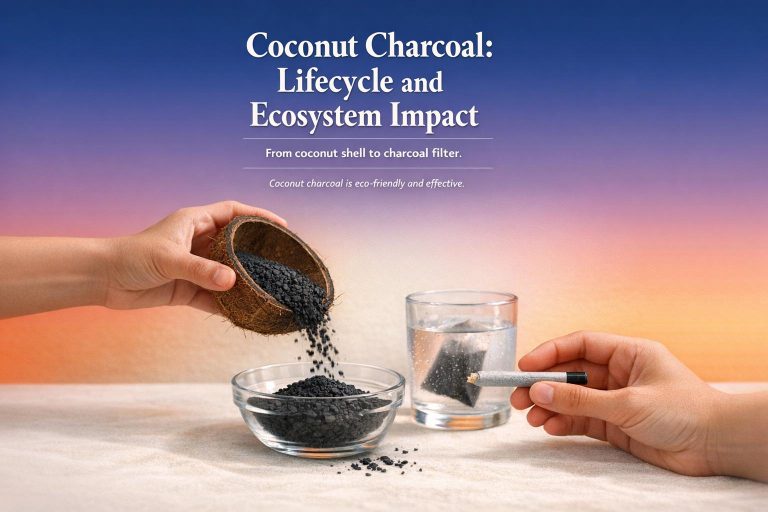
From discarded shells to activated carbon: lower-emission production, waste-to-resource benefits, and uses in water and smoking filtration.
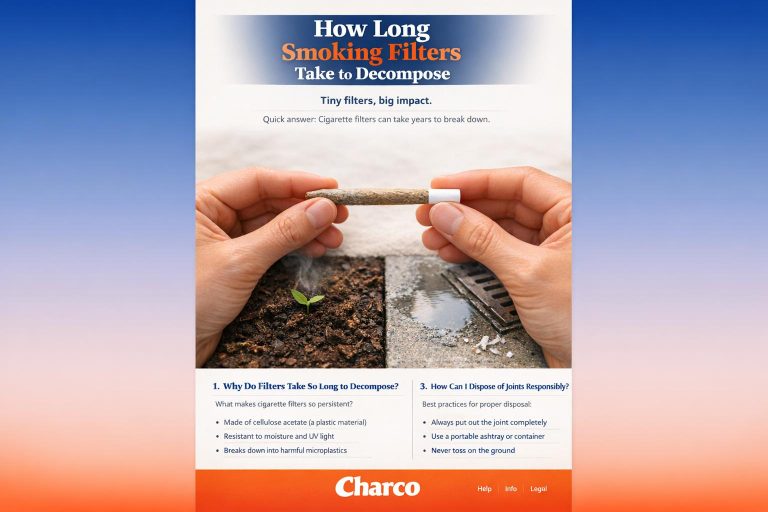
Cigarette filters can persist for years, fragment into microplastics, and only decompose fast in managed compost—material and disposal shape their harm.
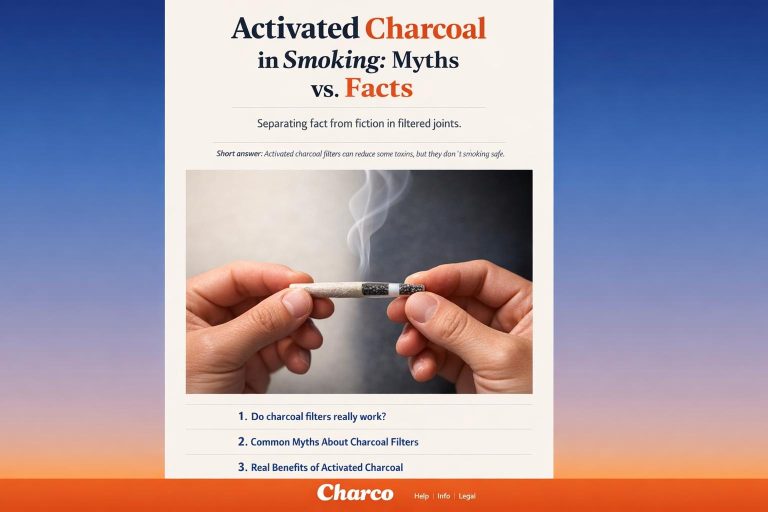
Activated charcoal filters trap many gas-phase toxins, reduce throat irritation and preserve THC/CBD, but they don’t remove gases like CO or eliminate smoking risks.
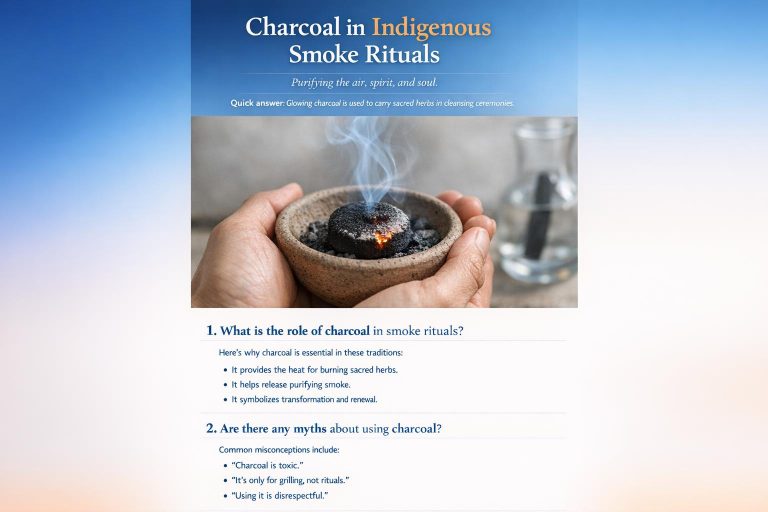
Charcoal-driven smoke rituals blend spiritual meaning with practical purification—from Indigenous ceremonies to modern activated charcoal filters.